Support our educational content for free when you purchase through links on our site. Learn more
💎 What is the Value of a Crypto Coin? (2026 Guide)

Remember the guy who bought two pizzas for 10,0 Bitcoin in 2010? Today, that transaction would have cost him over $60 million. It sounds like a fever dream, but it perfectly illustrates the wild, unpredictable, and often baffling nature of crypto valuation. If you’ve ever stared at a chart wondering why a coin with a “useless” name like Dogecoin can be worth billions while a project with revolutionary tech languishes at pennies, you are not alone. The answer isn’t just in the code; it’s in the psychology, the scarcity, and the sheer power of network consensus.
In this deep dive, we’re stripping away the jargon to reveal the 7 Pillars of Cryptocurrency Valuation that actually move the needle. From the math behind tokenomics to the red flags that signal an impending rug pull, we’ll guide you through the chaos. We’ll also tackle the burning question: Is crypto real money? or just a digital casino? By the end, you’ll know exactly how to spot a diamond in the rough and avoid the coal that looks like it’s shining.
Key Takeaways
- Value is Subjective: Unlike gold or stocks, a crypto coin’s value is driven primarily by market consensus, utility, and scarcity, not intrinsic worth.
- Market Cap > Price: Never judge a coin by its price per unit; always analyze the Market Cap (Price × Circulating Supply) to understand true size and growth potential.
- The 7 Pillars: A coin’s worth is determined by Tokenomics, Utility, Community Strength, Development Activity, Security, Liquidity, and Regulatory Landscape.
- Volatility is Inherent: Be prepared for massive swings; crypto is a high-risk asset class where FOMO and FUD often dictate short-term price action.
- Security First: Always use hardware wallets like Ledger or Trezor and never share your seed phrase; if you lose access, your funds are gone forever.
Table of Contents
- ⚡️ Quick Tips and Facts
- 🕰️ From Satoshi to You: A Brief History of Crypto Valuation
- 🤔 What Actually Determines the Value of a Crypto Coin?
- 📊 The 7 Pillars of Cryptocurrency Valuation Explained
- 💎 1. Tokenomics: Supply, Demand, and the Magic of Scarcity
- 🛠️ 2. Utility and Use Cases: More Than Just a Digital Token
- 👥 3. Community Strength and Network Effects
- 👨 💻 4. Development Activity and Team Credibility
- 🔐 5. Security, Consensus Mechanisms, and Trust
- 📈 6. Market Liquidity and Exchange Availability
- 🌍 7. Regulatory Landscape and Macro Economic Factors
- 📉 How to Read Crypto Charts: Market Cap vs. Price Per Coin
- 🧮 The Math Behind the Madness: Calculating Intrinsic Value
- 🚀 Why Do Some Coins Pump and Others Dump? Understanding Volatility
- 🏦 Is Cryptocurrency Real Money? A Deep Dive into Fiat vs. Crypto
- 🏛️ What is Central Bank Digital Currency (CBDC) and How Does It Compare?
- ⚖️ Public Policy Implications: Taxes, Regulations, and the Future of Finance
- 🔑 Key Features of the Bitcoin System That Define Its Value
- 🛡️ Red Flags: How to Spot a Scam or Low-Value Project
- 📝 Quick Tips and Facts for New Investors
- 🏁 Conclusion
- 🔗 Recommended Links
- ❓ FAQ: Your Burning Questions About Crypto Value Answered
- 📚 Reference Links
⚡️ Quick Tips and Facts
Before we dive into the deep end of the crypto ocean, let’s grab a life vest and look at the surface currents. Here at Coin Value™, we’ve seen fortunes made and lost in the blink of a block time. If you’re asking, “What is the value of a crypto coin?”, the short answer is: it’s whatever the market says it is right now. But the long answer? That’s where the magic happens.
- No Intrinsic Value? Technically, yes. Unlike a gold bar you can melt down or a dollar bill backed by a government, a crypto coin is just code. Its value is 10% derived from consensus and market demand.
- Volatility is the Norm: Don’t be surprised if your portfolio swings 20% in a day. This isn’t a bug; it’s a feature of a young, speculative asset class.
- Supply Matters: A coin priced at $0.01 isn’t necessarily “cheaper” than one at $1,0. You have to look at the Market Cap (Price × Circulating Supply) to see the real value.
- Scams Abound: If a project promises guaranteed returns or has anonymous team with no code on GitHub, run. Fast.
- Not Legal Tender (Mostly): Except for a few nations like El Salvador, crypto is generally not recognized as legal tender by major governments.
For a deeper dive into how we assess these digital assets, check out our guide on crypto coin value.
🕰️ From Satoshi to You: A Brief History of Crypto Valuation

To understand where we are, we have to look at where we started. The story begins in 208, amidst the global financial crisis, when a mysterious figure (or group) named Satoshi Nakamoto published a whitepaper titled “Bitcoin: A Peer-to-Peer Electronic Cash System.”
Before Bitcoin, digital cash attempts like DigiCash and E-Gold failed because they relied on central authorities. Satoshi solved the “double-spend problem” without a bank.
- The Genesis Block: On January 3, 209, the first block was mined. It contained a hidden message: “The Times 03/Jan/209 Chancellor on brink of second bailout for banks.” This wasn’t just a timestamp; it was a manifesto.
- The First Real Value: For years, Bitcoin had no price. Then, in 2010, a programmer named Laszlo Hanyecz famously bought two pizzas for 10,0 BTC. That transaction, known as “Bitcoin Pizza Day,” gave Bitcoin its first real-world valuation.
- The Rise of Altcoins: As Bitcoin proved the concept, others followed. Ethereum introduced smart contracts in 2015, shifting the narrative from “digital cash” to “programmable money,” which skyrocketed the valuation of utility tokens.
- The Bull and Bear Cycles: We’ve seen Bitcoin go from cents to nearly $70,0, crash to $3,0, and climb back up. Each cycle has taught us that market sentiment often overrides fundamentals in the short term.
🤔 What Actually Determines the Value of a Crypto Coin?
So, you’re staring at a chart, wondering why Dogecoin can surge while a project with better tech tanks. It’s a question we get daily. The value of a crypto coin is a complex alchemy of supply and demand, utility, speculation, and narrative.
Unlike traditional stocks, which are valued based on earnings (P/E ratios), or bonds, which are valued on interest rates, crypto is often valued on adoption metrics and network effects.
“A cryptocurrency is basically a ledger where the unit of value being publicly available announcements of payment records.” — Professor Andrew Wu, University of Michigan
As Professor Wu notes in our featured analysis, the value comes from the collective agreement that the ledger is trustworthy. But what makes people agree?
- Scarcity: Is the supply limited?
- Utility: Can I actually do something with it?
- Security: Is the network un-hackable?
- Community: Is there a cult-like following?
We’ll break down these pillars in the next section, but remember: fear and greed are the primary drivers of short-term price action.
📊 The 7 Pillars of Cryptocurrency Valuation Explained
To truly understand what is the value of a crypto coin, we need to dissect the anatomy of a project. We’ve identified 7 critical pillars that determine whether a coin is a diamond or a dud.
💎 1. Tokenomics: Supply, Demand, and the Magic of Scarcity
Tokenomics is the economics of a token. It’s the first thing we analyze.
- Max Supply: Does the coin have a hard cap? Bitcoin is capped at 21 million. This scarcity mimics gold. Ethereum, historically, had no cap, though recent updates (EIP-159) burn fees, making it potentially deflationary.
- Circulating Supply: This is the number of coins currently in the market. A coin with a low circulating supply but a massive total supply (like XRP or Cardano in the past) can be dangerous if those locked tokens are released suddenly, causing inflation.
- Inflation Rate: How many new coins are minted per year? High inflation dilutes the value of existing holders.
| Feature | Bitcoin (BTC) | Ethereum (ETH) | Solana (SOL) |
|---|---|---|---|
| Max Supply | 21 Million | No Hard Cap (Deflationary potential) | No Hard Cap |
| Inflation Mechanism | Halving every 4 years | EIP-159 (Fee Burning) | Staking Rewards |
| Scarcity Model | Digital Gold | Digital Oil | High Throughput Utility |
🛠️ 2. Utility and Use Cases: More Than Just a Digital Token
A coin with no use case is a speculative bubble waiting to burst.
- Payment: Is it used to buy goods? (e.g., Litecoin, Bitcoin Cash)
- Smart Contracts: Does it power decentralized apps (dApps)? (e.g., Ethereum, Solana, Avalanche)
- Governance: Can you vote on the future of the protocol? (e.g., Uniswap, MakerDAO)
- Staking: Can you earn interest by locking it up? (e.g., Cardano, Polkadot)
If a project claims to be the “future of finance” but has no working product, be skeptical.
👥 3. Community Strength and Network Effects
In crypto, community is king. A strong community drives adoption, creates content, and defends the project during FUD (Fear, Uncertainty, Doubt).
- Social Sentiment: Check Twitter (X), Reddit, and Discord. Is the community active and building, or just shilling prices?
- Developer Activity: A large community means little if no one is coding. We look at GitHub commits to gauge real development.
👨 💻 4. Development Activity and Team Credibility
Who is building this?
- Doxxed vs. Anonymous: While Satoshi is anonymous, most successful modern projects have doxxed (publicly identified) teams.
- Track Record: Have the founders built successful projects before? Or are they serial scammers?
- Code Quality: Is the code open-source? Has it been audited by firms like CertiK or OpenZeppelin?
🔐 5. Security, Consensus Mechanisms, and Trust
Security is the bedrock of value. If a chain gets hacked, the value often plummets.
- Consensus: Proof of Work (PoW) (Bitcoin) is secure but energy-intensive. Proof of Stake (PoS) (Ethereum) is energy-efficient but relies on economic security.
- History of Hacks: Has the protocol been exploited? How did they recover?
📈 6. Market Liquidity and Exchange Availability
You can’t sell what you can’t trade.
- Liquidity: High liquidity means you can buy/sell large amounts without moving the price.
- Exchange Listings: Is it on Binance, Coinbase, or Kraken? Being listed on a top-tier exchange often boosts value due to increased accessibility.
🌍 7. Regulatory Landscape and Macro Economic Factors
Crypto doesn’t exist in a vacuum.
- Regulation: A ban in a major economy (like China’s mining ban) can crash prices. Favorable laws (like the EU’s MiCA) can boost them.
- Macro Economics: When interest rates rise, risk assets like crypto often fall. When inflation is high, some view Bitcoin as a hedge.
📉 How to Read Crypto Charts: Market Cap vs. Price Per Coin
One of the biggest mistakes new investors make is looking only at the price per coin.
- The Trap: “Coin A is $0.01, Coin B is $1,0. Coin A has more room to grow!”
- The Reality: If Coin A has 10 billion supply and Coin B has 1 million supply, Coin A has a Market Cap of $1 billion, while Coin B is also $1 billion. For Coin A to reach $1, its market cap would need to be $10 billion—massive growth!
Market Cap Formula:
Price per Coin × Circulating Supply = Market Cap
Always compare Market Caps, not just prices, to gauge true size and growth potential.
🧮 The Math Behind the Madness: Calculating Intrinsic Value
Can you calculate the intrinsic value of a crypto coin?
According to the Reserve Bank of Australia (RBA), cryptocurrencies possess no legislated or intrinsic value. Unlike a stock, which represents a claim on future cash flows, a crypto coin’s value is purely subjective.
However, we can estimate fair value using models:
- Metcalfe’s Law: Value is proportional to the square of the number of users ($n^2$). More users = exponentially higher value.
- NVT Ratio (Network Value to Transactions): Similar to P/E ratio. High NVT might mean the coin is overvalued relative to its usage.
- Stock-to-Flow (S2F): Used for Bitcoin, measuring scarcity based on production rate.
Note: These models are guides, not crystal balls.
🚀 Why Do Some Coins Pump and Others Dump? Understanding Volatility
Why does Hyperliquid jump 70% in a year while others crash?
- Narrative Cycles: Crypto moves in trends. One year it’s “DeFi,” the next “NFTs,” then “AI tokens.” Being in the right narrative at the right time drives pumps.
- Whale Manipulation: Large holders (“whales”) can dump their bags on retail investors, causing a crash.
- FOMO (Fear Of Missing Out): When the news says “Bitcoin to $10k,” everyone buys, driving the price up irationally.
- Liquidity Crises: If a project runs out of liquidity, the price can drop to zero instantly.
As the RBA warns, the value of a cryptocurrency “could fall to zero at any time.” This is the price of admission for high rewards.
🏦 Is Cryptocurrency Real Money? A Deep Dive into Fiat vs. Crypto
Is it money? Let’s apply the three functions of money:
- Medium of Exchange: Can you buy coffee with it? In some places, yes. In most, no. Fiat (USD, EUR) is universally accepted.
- Store of Value: Does it hold purchasing power? Fiat inflates slowly. Crypto fluctuates wildly. As the RBA notes, “Large fluctuations… mean that their purchasing power is not maintained over time.”
- Unit of Account: Do people price goods in it? Rarely. Most prices are still in dollars.
Verdict: Crypto is currently more of a speculative asset or digital commodity than “money” in the traditional sense. However, stablecoins like USDT and USDC are designed to act as digital dollars, bridging the gap.
🏛️ What is Central Bank Digital Currency (CBDC) and How Does It Compare?
Enter the CBDC. This is digital cash issued by a central bank (like the Federal Reserve or ECB).
- Centralized vs. Decentralized: CBDCs are controlled by the government. Crypto is decentralized.
- Privacy: CBDCs offer zero privacy; the government can track every transaction. Crypto offers pseudonymity.
- Stability: CBDCs are peged 1:1 to fiat. Crypto is volatile.
The RBA has stated that “Reserve Bank staff have not been convinced to date that a strong policy case has emerged in Australia for a CBDC,” citing existing systems as safe and convenient. However, many other nations are racing to launch them.
⚖️ Public Policy Implications: Taxes, Regulations, and the Future of Finance
The rise of crypto has forced governments to rethink policy.
- Taxation: In most jurisdictions, crypto is treated as property, not currency. Selling, trading, or using it triggers a capital gains tax event.
- AML/KYC: Exchanges now require strict identity verification to prevent money laundering.
- Securities Laws: Is a token a security? The SEC in the US is currently suing major exchanges, arguing many tokens are unregistered securities.
The regulatory landscape is shifting from “wild west” to “regulated frontier.”
🔑 Key Features of the Bitcoin System That Define Its Value
Why does Bitcoin remain the king?
- Decentralization: No single point of failure.
- Imutability: Once a transaction is confirmed, it cannot be reversed.
- Predictable Supply: The halving event every 4 years reduces the supply of new coins, historically leading to price increases.
- Security: The Proof of Work consensus requires immense energy to attack, making it the most secure network in the world.
Resource Consumption: Bitcoin’s energy use is often criticized. It consumes as much electricity as a country like Thailand. However, proponents argue this energy is used to secure a global, trustless network.
🛡️ Red Flags: How to Spot a Scam or Low-Value Project
Not every project is legitimate. Here are the Red Flags we look for:
- Anonymous Team: No LinkedIn, no face, no code.
- Guaranteed Returns: “10% daily returns!” = Scam.
- Ponzi Structure: New investors pay old investors.
- Copy-Paste Code: The whitepaper and code are just copies of other projects.
- Liquidity Locks: If the developer can pull the liquidity, the coin will go to zero.
Always do your own research (DYOR). Check the contract address on Etherscan or Solscan.
📝 Quick Tips and Facts for New Investors
Ready to start? Here are our final golden rules:
- Never invest more than you can afford to lose.
- Use Hardware Wallets: Keep your coins off exchanges. Use Ledger or Trezor.
- Diversify: Don’t put everything into one coin.
- Ignore the Hype: FOMO is your enemy. Stick to your strategy.
- Secure Your Keys: If you lose your seed phrase, you lose your money. No customer support can help you.
For more on identifying genuine assets, visit our Coin Identification category.
🏁 Conclusion

So, what is the value of a crypto coin? It’s a mirror reflecting our collective belief, our fear, and our hope for a decentralized future. While it may lack the intrinsic value of gold or the legislated value of fiat, its value is real to the millions who use it, trade it, and build on it.
We’ve journeyed from the first pizza purchase to the complex world of tokenomics and CBDCs. The answer isn’t a single number; it’s a dynamic interplay of supply, demand, utility, and sentiment.
Our Recommendation:
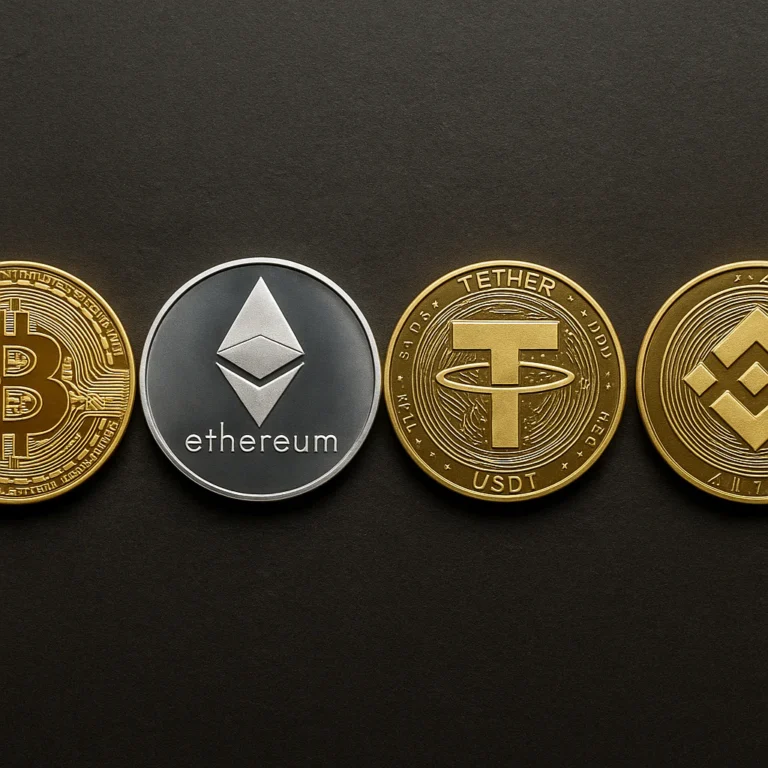
If you are new to this space, start small. Focus on Bitcoin and Ethereum as the “blue chips” of the crypto world. Understand the technology before you buy. And remember, the market is volatile, but the innovation is undeniable.
Don’t let the fear of missing out drive your decisions. Let knowledge be your compass. Whether you are a collector of rare digital assets or a long-term holder, the key is to stay informed, stay secure, and never stop learning.
🔗 Recommended Links
Ready to explore the world of digital assets? Here are some trusted resources and tools to get you started:
- 👉 Shop Hardware Wallets for Security:
Ledger Nano X: Amazon | Ledger Official
Trezor Model T: Amazon | Trezor Official - Books to Deepen Your Knowledge:
The Bitcoin Standard: Amazon
Mastering Ethereum: Amazon - Track Real-Time Prices:
Crypto.com App: Crypto.com Prices
CoinMarketCap: CoinMarketCap
CoinGecko: CoinGecko
❓ FAQ: Your Burning Questions About Crypto Value Answered

What gives a crypto coin its value?
The value is derived from market consensus, scarcity, utility, and network effects. Unlike fiat, it has no government backing, so its worth is purely based on what people are willing to pay for it.
Read more about “10 Best Apps to Scan Coins for Value (2026) 🪙”
How much crypto is worth a dollar?
This fluctuates constantly. You can check live rates on Crypto.com or CoinMarketCap. For example, if Bitcoin is $60,0, then 1 BTC = $60,0, and 1 USD = 0.016 BTC.
Read more about “🏆 Top 12 Gold Coin Auctions: The Ultimate 2026 Guide”
How is the market value of a cryptocurrency determined?
It is determined by supply and demand on exchanges. If more people want to buy than sell, the price goes up. If more want to sell, the price goes down. Market Cap (Price × Circulating Supply) is the standard metric for total value.
What factors cause crypto coin prices to fluctuate?
- Regulatory News: Bans or approvals.
- Adoption: Major companies accepting crypto.
- Technology Upgrades: Hard forks or new features.
- Macroeconomics: Interest rates, inflation, and stock market trends.
- Social Sentiment: Hype on social media.
Read more about “Amazon Coins Uncovered: 7 Secrets You Didn’t Know (2026) 🎮”
Can I find the current value of a rare collectible crypto coin?
Yes, but it depends on the platform. For NFTs (Non-Fungible Tokens), check marketplaces like OpenSea or Blur. For rare crypto tokens, check their specific DEX (Decentralized Exchange) liquidity pools.
Read more about “🕵️ ♂️ PCGS Coin Lookup: The Ultimate 2026 Guide to Verifying Your Treasures”
How do I calculate the intrinsic value of a digital asset?
There is no single formula. Analysts use models like NVT Ratio, Metcalfe’s Law, or Stock-to-Flow. However, as the RBA states, crypto has no intrinsic value in the traditional sense; its value is subjective.
What tools can I use to track real-time crypto coin values?
- Crypto.com App: For live charts and news.
- CoinGecko: For detailed metrics and community data.
- TradingView: For advanced charting and technical analysis.
Read more about “Bitcoin Price Uncovered: 17 Secrets Every Investor Must Know (2026) 🚀”
Why do some collectible tokens have higher values than others?
Scarcity, rarity traits, historical significance, and community demand drive the value of collectible tokens (NFTs). A “1/1” unique piece is often worth more than a mass-produced item.
How does supply and demand affect the price of a crypto coin?
- Fixed Supply: If supply is capped (like Bitcoin) and demand rises, price increases.
- High Inflation: If new coins are minted rapidly, it can dilute value unless demand grows equally fast.
- Liquidity: Low liquidity can cause massive price swings with small trades.
Read more about “🏆 Buying Gold Coins Online: The Ultimate 2026 Guide to 12 Top Picks”
📚 Reference Links
- Reserve Bank of Australia: Cryptocurrencies Explainer
- Yahoo Finance: Cryptocurrency Markets
- Crypto.com: Cryptocurrency Prices, Live Charts, Market Cap, News
- Coin Value™ Categories:
- Coin Values
- Crypto Coins
- Crypto Coin Mining
- Coin Collecting
- Coin Identification
- University of Michigan: Professor Andrew Wu on Crypto Value (Conceptual reference)