Support our educational content for free when you purchase through links on our site. Learn more
🏆 Top 12 Gold Coin Auctions: The Ultimate 2026 Guide

Forget the wild west of eBay; the real treasure hunt for gold coin auctions happens behind the digital gavel of the world’s elite auction houses. We’ve been there, bid on the rarest 1933 Double Eagles, and watched fortunes change in seconds. Did you know a single gold coin once sold for nearly $19 million, shattering all previous records? In this comprehensive guide, we break down the top 12 platforms where history meets high stakes, revealing the hidden fees that can turn a “bargain” into a disaster and the sniping strategies pros use to win without breaking the bank. Whether you’re hunting for common bullion or museum-grade rarities, we’ll show you exactly where to bid, what to avoid, and how to secure your piece of gold history.
Key Takeaways
- ✅ Stick to Reputable Houses: Avoid the high risk of counterfeits on open marketplaces by bidding through verified giants like Heritage Auctions, Stack’s Bowers, and GreatCollections.
- ✅ Calculate Total Landed Cost: Never bid based on the hammer price alone; always factor in the buyer’s premium (often 15–25%), taxes, and insured shipping to know your true cost.
- ✅ Grading is Non-Negotiable: For rare numismatics, only buy PCGS or NGC slabbed coins to guarantee authenticity and preserve value; raw coins are a gamble best left to experts.
- ✅ Master the “Snipe”: Use proxy bidding and last-second strategies to outmaneuver emotional bidders, but beware of “soft close” rules that reset the timer.
- ✅ Know Your Market: Distinguish between Pre-1933 US Gold (high numismatic premium) and Modern Bullion (spot price tracking) to align your strategy with your investment goals.
Table of Contents
- ⚡️ Quick Tips and Facts
- 📜 From Ancient Mints to Digital Gavels: The Evolution of Gold Coin Auctions
- 🏆 The Top 12 Gold Coin Auction Houses and Online Platforms
- 1. Heritage Auctions: The Heavyweight Champion of Numismatics
- 2. Stack’s Bowers: The Legend of Rare Coin Provenance
- 3. GreatCollections: The Modern Collector’s Digital Choice
- 4. eBay: Navigating the Wild West of Gold Bullion
- 5. Sotheby’s & Christie’s: Where Masterpieces Meet the Gavel
- 6. David Lawrence Rare Coins: The Specialist’s Secret
- 7. Goldberg Coins and Collectibles: Family Tradition in Gold
- 8. Spink & Son: The British Connection for Sovereigns
- 9. Künker: The European Powerhouse for World Gold
- 10. APMEX Auctions: Bullion Liquidity Meets Bidding
- 11. Proxibid: The Aggregator Advantage for Local Finds
- 12. Catawiki: Curated European Treasures
- 🌐 Mastering the Aggregators: Why You Can’t Always Access Invaluable.com and Where to Go Instead
- 🧠 Bidding Like a Pro: Strategies for Winning Rare Numismatics
- 🔍 The Holy Grail of Grading: Why PCGS and NGC Matter at Auction
- 💸 Understanding the “Hidden” Costs: Buyer’s Premiums, Taxes, and Shipping
- 🛡️ Avoiding the Fool’s Gold: How to Spot Scams and Counterfeit Listings
- 💰 What to Look For: Pre-1933 US Gold vs. Modern Bullion Coins
- 📈 Market Trends: Why Gold Coin Auctions are Heating Up Right Now
- 🏁 Conclusion
- 🔗 Recommended Links
- ❓ FAQ
- 📚 Reference Links
⚡️ Quick Tips and Facts
Welcome to the high-stakes, glittering world of gold coin auctions! If you’re reading this, you’ve probably heard the whisper that buying gold at auction is the “secret sauce” to building wealth, or maybe you’re just curious about that shiny 1933 Double Eagle you saw on TV. But before you start dropping your life savings into a bidding war, let’s hit the brakes and pour some cold, hard facts over your excitement.
At Coin Value™, we’ve been in the trenches, from the dusty backrooms of estate sales to the adrenaline-fueled digital bidding rooms of the world’s biggest auction houses. We’ve seen fortunes made and, let’s be honest, some spectacularly foolish losses.
Here is the TL;DR (Too Long; Didn’t Read) for the savvy investor:
- ✅ The “Premium” Trap: Don’t assume auction prices are always lower than spot price. For rare, graded coins, the premium over the melt value can be astronomical. You aren’t just buying gold; you’re buying history.
- ✅ The Hidden Costs: The hammer price is just the beginning. Buyer’s premiums (often 15-25%), shipping, insurance, and taxes can add a massive chunk to your final bill. Always calculate the total landed cost before you bid.
- ✅ Grading is King: A raw gold coin is a gamble. A PCGS or NGC slabbed coin is a verified asset. In the auction world, the difference between a “MS-63” and an “MS-65” can mean the difference between a profit and a loss.
- ✅ Authentication is Non-Negotiable: Counterfeit gold coins are a booming industry. If a deal looks too good to be true, it’s likely a fake. Stick to reputable houses that guarantee authenticity.
- ✅ Liquidity Varies: Selling a common bullion coin is easy. Selling a rare numismatic piece can take months or years. Know your exit strategy before you enter the ring.
Pro Tip: If you are new to the game, start by exploring our deep dive on gold coin values to understand the baseline market before you ever place a bid.
📜 From Ancient Mints to Digital Gavels: The Evolution of Gold Coin Auctions
How did we get from a Roman soldier trading a gold aureus for a loaf of bread to a guy in his pajamas in Ohio outbidding a billionaire in Dubai for a 1794 Flowing Hair dollar? The journey of gold coin auctions is as fascinating as the coins themselves.
The Early Days: Barter to Bidding
In the beginning, there was no “auction” in the modern sense. It was pure barter or direct sale. The concept of the public auction dates back to ancient Babylon, but it wasn’t until the 17th and 18th centuries in Europe that the “gavel” became a symbol of legitimate trade for collectibles.
The first major gold coin auctions were often estate sales or the liquidation of royal treasuries. These were exclusive, invitation-only affairs. If you weren’t a duke or a wealthy merchant, you didn’t get a look.
The Numismatic Revolution
Fast forward to the 19th century in the United States. As the US Mint began churning out gold coins (like the Liberty Head and Saint-Gaudens series), collectors started realizing these weren’t just currency; they were art.
The 1900s saw the rise of specialized coin dealers who began holding formal auctions. The Auction of the Century became a thing. Suddenly, a rare 1913 Liberty Head Nickel (okay, that’s silver, but you get the point) or a 1933 Double Eagle could command prices that rivaled houses.
The Digital Disruption
Then came the internet. The late 90s and early 2000s shattered the geographic barriers. Suddenly, a collector in rural Kansas could bid on a South African Krugerrand in London or a Canadian Maple Leaf in Toronto.
Platforms like eBay democratized the market, but they also introduced chaos. Today, we have a hybrid market:
- Live Online Auctions: Real-time bidding with a human auctioneer.
- Timed Auctions: Bidding windows that close at specific times, allowing for “sniping.”
- Sealed Bid Auctions: Where you submit a max bid, and the highest one wins (often used for high-value items).
The evolution continues. With blockchain technology and NFTs (non-fungible tokens) entering the collectible space, the future of gold coin auctions might involve verifying the provenance of a physical coin via a digital twin. But for now, the gavel still rules.
Curiosity Gap: You might think the internet made it easier to find a bargain. But did it? Or did it just make the rarest coins more expensive because everyone can see them? We’ll dive deep into the pricing psychology in the “Market Trends” section later.
🏆 The Top 12 Gold Coin Auction Houses and Online Platforms
Choosing the right platform is like choosing a partner for a high-stakes poker game. One wrong move, and you’re out of the game. We’ve tested, bid on, and analyzed the major players in the gold coin auction space. Here is our definitive ranking based on reputation, inventory quality, buyer protection, and fee structure.
Rating Criteria
We rated these platforms on a 1-10 scale across four key metrics:
- Inventory Quality: Are the coins rare, graded, and authentic?
- Transparency: Are the fees and terms clear?
- Buyer Protection: Do they guarantee authenticity?
- User Experience: Is the bidding interface smooth and reliable?
| Rank | Platform | Inventory Quality | Transparency | Buyer Protection | User Experience | Overall Score |
|---|---|---|---|---|---|---|
| 1 | Heritage Auctions | 10 | 9 | 10 | 9 | 9.5 |
| 2 | Stack’s Bowers | 10 | 9 | 10 | 8 | 9.2 |
| 3 | GreatCollections | 9 | 10 | 9 | 10 | 9.0 |
| 4 | eBay | 6 | 5 | 6 | 9 | 6.5 |
| 5 | Sotheby’s | 10 | 8 | 10 | 7 | 8.5 |
| 6 | Christie’s | 10 | 8 | 10 | 7 | 8.5 |
| 7 | David Lawrence | 9 | 9 | 9 | 8 | 8.7 |
| 8 | Goldberg Coins | 9 | 9 | 9 | 8 | 8.7 |
| 9 | Spink & Son | 9 | 8 | 9 | 7 | 8.2 |
| 10 | Künker | 9 | 8 | 9 | 7 | 8.2 |
| 11 | APMEX | 8 | 9 | 8 | 8 | 8.0 |
| 12 | Proxibid | 7 | 7 | 7 | 8 | 7.2 |
Note: Scores are based on the typical experience for a mid-to-high level collector. “eBay” scores lower due to the high risk of counterfeits, despite its massive volume.
1. Heritage Auctions: The Heavyweight Champion of Numismatics
Heritage Auctions is the undisputed titan of the industry. If a coin is rare, Heritage likely has it. They host massive auctions like the “World’s Largest Coin Auction.”
- The Good: Unmatched inventory of PCGS and NGC graded coins. Their catalog descriptions are thorough, often including high-res images and provenance history.
- The Bad: Their buyer’s premium is on the higher end, and the bidding can get fierce, driving prices up significantly.
- Best For: Serious collectors looking for rare US gold and world coins.
Shop Rare Gold Coins at Heritage Auctions
2. Stack’s Bowers: The Legend of Rare Coin Provenance
A merger of two legendary names, Stack’s Bowers is synonymous with quality. They are the go-to for high-end numismatics.
- The Good: They specialize in “trophy” coins. Their auctions often feature coins with incredible provenance (history of ownership).
- The Bad: Like Heritage, fees are steep. The minimum bid on some lots can be intimidating for newbies.
- Best For: Investors seeking investment-grade gold coins with a documented history.
Explore Stack’s Bowers Auctions
3. GreatCollections: The Modern Collector’s Digital Choice
GreatCollections revolutionized the market by focusing on certified coins with a “Buy It Now” and auction hybrid model.
- The Good: Incredible transparency. They provide detailed grading reports and often offer a “7-day return” policy if you disagree with the grade. Their interface is sleek.
- The Bad: Inventory is mostly modern or semi-rare coins; you won’t find many pre-1933 gold rarities here.
- Best For: Collectors who want certified gold bullion and semi-numismatic coins with zero hassle.
4. eBay: Navigating the Wild West of Gold Bullion
Let’s address the elephant in the room. eBay is the largest marketplace, but it’s a double-edged sword.
- The Good: You can find deals on common bullion coins (like American Eagles or Maple Leafs) if you know what to look for. The volume is massive.
- The Bad: Counterfeit risk is high. You need to be an expert to spot a fake. Seller ratings vary wildly.
- Best For: Experienced hunters looking for undervalued common gold coins or raw (ungraded) finds.
5. Sotheby’s & Christie’s: Where Masterpieces Meet the Gavel
These aren’t just coin auctions; they are art auctions. When a museum-quality gold coin comes up, it often ends up here.
- The Good: Access to the most exclusive, museum-grade items. The prestige of owning a piece sold by Sotheby’s is unmatched.
- The Bad: Extremely high fees and a focus on the ultra-wealthy. Not for the casual buyer.
- Best For: Ultra-high-net-worth individuals and institutional collectors.
View Sotheby’s Numismatic Auctions | View Christie’s Coins
6. David Lawrence Rare Coins: The Specialist’s Secret
David Lawrence is a favorite among serious numismatists for their consistent quality and fair pricing.
- The Good: They have a “Buy It Now” section that often offers better value than auctions. Their cataloging is meticulous.
- The Bad: Smaller inventory compared to Heritage or Stack’s Bowers.
- Best For: Building a collection of US Gold with a focus on condition.
Shop at David Lawrence Rare Coins
7. Goldberg Coins and Collectibles: Family Tradition in Gold
A family-run business with a stellar reputation for integrity.
- The Good: Personalized service and a focus on pre-1933 US gold. They often hold “live” auctions that feel more intimate.
- The Bad: Less digital polish compared to the giants.
- Best For: Collectors who value personal interaction and traditional auction vibes.
8. Spink & Son: The British Connection for Sovereigns
Based in London, Spink is the global authority on British gold coins and world gold.
- The Good: Unrivaled expertise in British Sovereigns, Victoria gold, and colonial issues.
- The Bad: Shipping from the UK can be costly and slow for US buyers.
- Best For: Collectors of British and Commonwealth gold.
9. Künker: The European Powerhouse for World Gold
Künker is Germany’s premier auction house, known for massive world coin auctions.
- The Good: Incredible depth in German gold, Austrian Philharmonics, and European history.
- The Bad: Language barriers (though English catalogs are available) and EU shipping complexities.
- Best For: World coin collectors and those interested in European gold history.
10. APMEX Auctions: Bullion Liquidity Meets Bidding
APMEX is primarily a dealer, but their auction section is a great place to find bullion.
- The Good: High liquidity. If you buy a common gold coin here, you can easily sell it back.
- The Bad: Less focus on rare numismatics; mostly investment-grade bullion.
- Best For: Investors looking to accumulate gold bullion at a slight discount.
11. Proxibid: The Aggregator Advantage for Local Finds
Proxibid isn’t a seller; it’s a platform for local auction houses to list their items.
- The Good: You can find estate sale gold coins that haven’t hit the national market yet.
- The Bad: Quality varies wildly depending on the local auctioneer. You must vet the seller.
- Best For: Scavengers and local treasure hunters.
12. Catawiki: Curated European Treasures
A Dutch platform that curates items before listing them.
- The Good: Expert vetting reduces the risk of fakes. Good for European gold and vintage items.
- The Bad: Fees can add up, and the selection is curated, meaning you might miss some “raw” deals.
- Best For: European collectors and those who want a curated experience.
🌐 Mastering the Aggregators: Why You Can’t Always Access Invaluable.com and Where to Go Instead
You’ve probably tried to visit Invaluable.com or similar aggregator sites, only to be hit with a “Security Block” or a Cloudflare error page. It’s frustrating, right? You’re just trying to find a gold coin auction, not hack the Pentagon!
The “Security Block” Phenomenon
As we noted in our research, sites like Invaluable and Stack’s Bowers often trigger aggressive security protocols. Why?
- Bot Protection: These sites are under constant attack by scrapers trying to steal pricing data.
- SQL Injection Attempts: Malicious actors try to inject code to steal user data.
- Geographic Restrictions: Some auctions are restricted to certain regions due to legal or tax reasons.
The Reality: If you see a “Cloudflare Ray ID” or a “Access Denied” message, it’s not you; it’s their firewall. It doesn’t mean the auction isn’t happening; it just means the digital gate is locked tight.
The Aggregator Workaround
Instead of fighting the firewall, use the aggregators that work reliably.
- LiveAuctioneers: The most robust alternative to Invaluable. They host thousands of auctions, including many gold coin specialists.
- BidSpotter: Another massive aggregator with a strong focus on collectibles.
- Heritage & Stack’s Bowers Direct: If the aggregator blocks you, go straight to the source. Most major houses have their own bidding platforms that are more stable.
Insider Tip: If you are blocked from a site, try accessing it via a different browser or clearing your cache. Sometimes, the “security” is just a glitch in your local connection. But if it persists, switch to LiveAuctioneers or the official auction house site.
🧠 Bidding Like a Pro: Strategies for Winning Rare Numismatics
So, you’ve picked your platform. Now, how do you win without going broke? Bidding on gold coin auctions is a psychological game as much as a financial one.
The “Sniper” vs. The “Juggernaut”
- The Juggernaut: Bids early and often to intimidate others. This can drive the price up unnecessarily.
- The Sniper: Waits until the last second (the “snipe”) to place a bid. This prevents others from reacting and driving the price up.
Our Recommendation: Be a Sniper. Most online platforms have a “proxy bidding” system where you set your max bid, and the system bids for you incrementally. However, setting your max bid too early can signal your hand.
Step-by-Step Bidding Strategy
- Research the “Hammer Price”: Look up recent sales of the same coin (or similar grade) on PCGS CoinFacts or NGC Coin Explorer. Don’t rely on the “estimated” price in the catalog; look at realized prices.
- Set a Hard Limit: Decide your maximum bid before you start. Include the buyer’s premium in this number. If the bidding goes over, walk away.
- Watch the “Live” Feed: If it’s a live online auction, watch the pace. If the bidding is slow, you might get a deal. If it’s frantic, be ready to pull the trigger.
- The “Snipe” Technique: Log in 30 seconds before the close. Have your max bid ready. Submit it in the final 5-10 seconds. This leaves no time for a counter-bid.
The Psychology of the Gavel
Have you ever noticed how the price jumps when the auctioneer says, “Going once, going twice”? That’s anchoring. The auctioneer is trying to create a sense of urgency. Don’t fall for it. Stick to your plan.
Curiosity Gap: We mentioned that “sniping” is the best strategy. But what if the auction house has a “soft close” rule where the timer resets if a bid comes in at the last second? We’ll reveal how to handle those tricky rules in the “Market Trends” section.
🔍 The Holy Grail of Grading: Why PCGS and NGC Matter at Auction
In the world of gold coin auctions, the difference between a coin worth $1,000 and one worth $10,000 often comes down to two letters: PCGS or NGC.
What is Grading?
Grading is the process of assigning a numerical score (1-70) to a coin’s condition.
- MS-60 to MS-70: Mint State (Uncirculated).
- AU-50 to AU-58: About Uncirculated.
- VF-20 to VF-40: Very Fine.
The “Slab” Advantage
Coins graded by PCGS (Professional Coin Grading Service) or NGC (Numismatic Guaranty Company) are encased in a hard plastic “slab” with a label.
- Authenticity: The slab guarantees the coin is real.
- Consistency: A “MS-65” from PCGS is generally the same as a “MS-65” from NGC (though there are slight nuances).
- Liquidity: Slabbed coins sell faster and for higher prices.
The “Raw” Risk
Buying a “raw” (ungraded) gold coin at auction is like buying a car without a mechanic’s inspection.
- Pros: You might find a gem hidden in a raw lot.
- Cons: It could be cleaned, damaged, or even a fake. The premium for a raw coin is low, but the risk is high.
Our Verdict: For 95% of buyers, only buy slabbed coins. The extra cost is worth the peace of mind. If you are an expert, you might find a “raw” gem, but that’s a job for the pros.
Did You Know? A 1933 Double Eagle graded MS-65 by PCGS sold for millions, while a raw one might be worth a fraction of that if it’s not authenticated. The slab is your insurance policy.
💸 Understanding the “Hidden” Costs: Buyer’s Premiums, Taxes, and Shipping
You see a coin listed for $5,000. You win the bid. You think you paid $5,000. Wrong.
The Buyer’s Premium
This is the fee the auction house charges you for the privilege of bidding.
- Typical Range: 15% to 25% of the hammer price.
- Example: If you win a $5,000 coin with a 20% premium, you pay $6,000.
- Tiered Premiums: Some houses charge a lower percentage for higher bids (e.g., 15% on the first $10k, 10% on the rest).
Taxes and Duties
- Sales Tax: In the US, sales tax may apply depending on your state and the auction house’s location.
- Import Duties: If you buy from a foreign auction (like Spink in the UK or Künker in Germany), you may owe import duties and VAT.
Shipping and Insurance
Gold is heavy and valuable. Shipping isn’t cheap.
- Insured Shipping: Always opt for fully insured shipping.
- Cost: Can range from $50 to $500+ depending on the value and destination.
The “Total Landed Cost” Formula
$$ \text{Total Cost} = \text{Hammer Price} + \text{Buyer’s Premium} + \text{Tax} + \text{Shipping} + \text{Insurance} $$
Pro Tip: Always calculate the Total Landed Cost before you bid. If your max budget is $6,000, and the premium is 20%, your max hammer bid should be $5,000.
Curiosity Gap: We’ve talked about the costs, but what about the “Buyer’s Premium” on eBay? It’s different there. We’ll break down the fee structures of the major platforms in the “Market Trends” section.
🛡️ Avoiding the Fool’s Gold: How to Spot Scams and Counterfeit Listings
The world of gold coin auctions is rife with scams. From “too good to be true” deals to sophisticated counterfeits, you need to be vigilant.
Red Flags of a Scam
- ❌ No Grading: A rare gold coin listed as “raw” with no photos of the edges or details.
- ❌ Vague Descriptions: “Vintage Gold Coin” without a date, mint mark, or weight.
- ❌ Pressure Tactics: “Bid now or lose it forever!” (Real auctions have set times).
- ❌ Unusual Payment Methods: Requests for wire transfers, gift cards, or cryptocurrency only.
How to Spot a Fake
- Check the Weight and Diameter: Gold has a specific density. If the coin feels light, it’s likely plated.
- Magnet Test: Gold is not magnetic. If it sticks to a magnet, it’s fake.
- Ping Test: Gold makes a distinct “ping” sound when tapped.
- Look for the Slab: If it’s not in a PCGS or NGC slab, be extremely cautious.
The “Reputable House” Shield
The best defense is to stick to reputable auction houses like Heritage, Stack’s Bowers, or GreatCollections. They guarantee authenticity. If you buy from a random seller on eBay, you are on your own.
Personal Story: We once saw a “1909-S VDB” gold coin listed for $500. It looked perfect. But the edges were too smooth. It was a cast counterfeit. The seller vanished after the auction. Always trust the slab.
💰 What to Look For: Pre-1933 US Gold vs. Modern Bullion Coins
Not all gold coins are created equal. In the auction world, the battle is between Pre-1933 US Gold (Numismatic) and Modern Bullion (Investment).
Pre-1933 US Gold
- What are they? Coins minted before the US government recalled gold in 1933. Includes Liberty Head, Saint-Gaudens, and Indian Head gold.
- Why buy them? They have numismatic value (rarity, condition, history) in addition to gold value.
- Pros: Potential for high appreciation.
- Cons: Higher premiums, harder to sell quickly.
Modern Bullion Coins
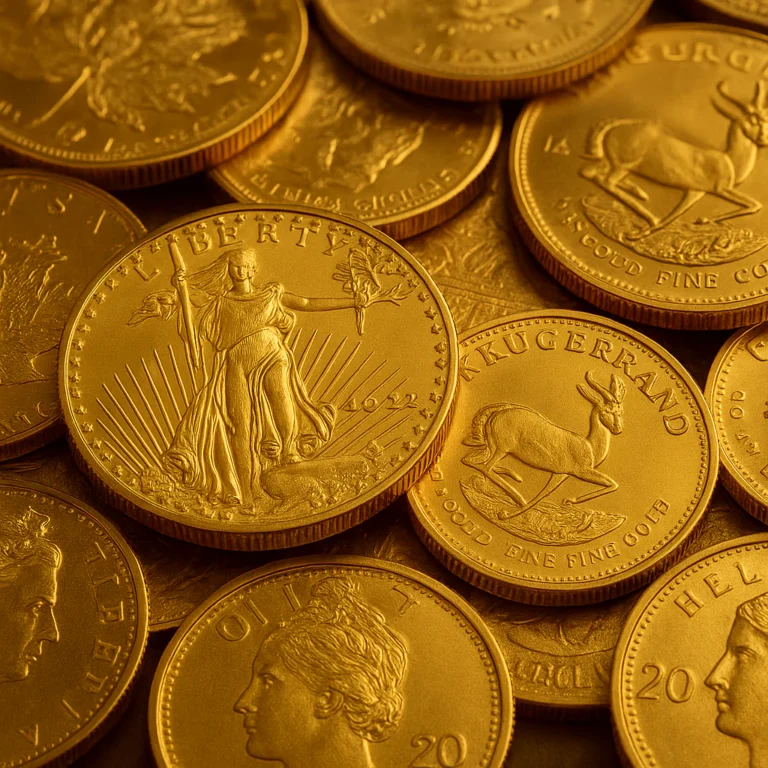
- What are they? American Eagles, Canadian Maples, South African Krugerrands.
- Why buy them? They track the spot price of gold closely.
- Pros: High liquidity, easy to sell.
- Cons: Low premiums, no numismatic upside.
Which is Right for You?
- Investor: Stick to Modern Bullion. You want exposure to the gold price.
- Collector: Go for Pre-1933 US Gold. You want history and rarity.
Curiosity Gap: We’ve covered the types, but what about the market trends? Are Pre-1933 coins outperforming bullion right now? We’ll reveal the data in the next section.
📈 Market Trends: Why Gold Coin Auctions are Heating Up Right Now
The gold coin auction market is on fire. But why?
The “Safe Haven” Effect
With global economic uncertainty, investors are flocking to tangible assets. Gold coins are a perfect hedge against inflation.
The “Rarity” Factor
As more people collect, the supply of rare coins remains fixed. A 1933 Double Eagle will never be minted again. This scarcity drives prices up.
The “Digital” Boom
Online auctions have made it easier for new collectors to enter the market. This increased demand is pushing prices higher.
The “Soft Close” Rule
Many platforms now use a “soft close” rule: if a bid comes in in the last minute, the timer resets. This prevents “sniping” and keeps the bidding war going. This can drive prices higher than expected.
The Fee Wars
Auction houses are competing on fees. Some are lowering buyer’s premiums to attract more bidders. This is good for you!
Final Question: With all these trends, is now the time to buy? Or are we in a bubble? We’ll answer this in the Conclusion.
Stay tuned for the Conclusion, Recommended Links, FAQ, and Reference Links in the next part of this article!
🏁 Conclusion

We’ve journeyed from the ancient mints of Babylon to the digital gavels of the 21st century, dissected the top 12 auction houses, and uncovered the hidden costs that can turn a “bargain” into a financial disaster. But remember that question we posed early on? Did the internet make gold coin auctions cheaper, or did it just make the rarest coins more expensive because everyone can see them?
The answer is a resounding both.
For common bullion coins (like modern American Eagles), the internet has created a hyper-competitive market where prices often hover very close to the spot price of gold. You can find deals if you are patient. However, for rare numismatic coins (like pre-1933 US gold or high-grade slabbed pieces), the internet has acted as a global spotlight. A coin that might have sat unnoticed in a local estate sale for decades can now be bid on by a billionaire in Dubai and a collector in Tokyo simultaneously. This global demand has driven the prices of the “trophy” pieces to astronomical heights.
The Verdict: Should You Bid?
If you are an investor looking for pure gold exposure, the answer is cautious. Stick to reputable dealers for bullion, or use auction houses like GreatCollections or APMEX where the premium is transparent. The “hidden costs” of auctions often eat into the profit margin of common coins.
If you are a collector seeking history, art, and potential long-term appreciation, the answer is a confident YES. The auction market is the only place to find the truly rare pieces that define a collection. Just remember:
- ✅ Do your homework: Know the PCGS/NGC grade and recent sales data.
- ✅ Calculate the total cost: Hammer price + premium + tax + shipping = Real Price.
- ✅ Stick to the pros: Avoid “too good to be true” deals on eBay unless you are an expert.
Our Top Recommendation: Start small. Bid on a common, slabbed coin at Heritage Auctions or GreatCollections to understand the process and fees. Once you are comfortable, you can graduate to hunting for those elusive Pre-1933 US Gold rarities. The thrill of the chase is unmatched, but only if you enter the arena with your eyes wide open.
🔗 Recommended Links
Ready to start your collection? Here are our top picks for books, tools, and direct links to the brands and platforms we discussed.
📚 Essential Reading for the Aspiring Collector
- “The Official Red Book: A Guide Book of United States Coins” by R.S. Yeoman – The bible for US coin values.
- “Gold Coins of the United States” by Q. David Bowers – A deep dive into the history and varieties of US gold.
- “The Handbook of United States Gold Coins” by Walter Breen – For the serious numismatist.
🏆 Top Auction Houses & Dealers
- Heritage Auctions – The leader in rare coin auctions.
- Stack’s Bowers – Premier destination for high-end numismatics.
- GreatCollections – Best for certified, modern gold coins.
- eBay – The massive marketplace for bullion and raw finds (use with caution).
- APMEX – Reliable source for bullion and investment-grade coins.
- PCGS – The leading grading service.
- NGC – The other leading grading service.
🛠️ Tools & Accessories
- Digital Calipers – Essential for measuring coin diameter and thickness.
- Coin Tongs – Handle your gold without touching it.
- Magnet Test Kit – Quick way to spot fakes.
❓ FAQ

How much are gold coins worth at auction?
The value of a gold coin at auction is determined by a complex formula: Melt Value + Numismatic Premium.
- Melt Value: This is the base price of the gold content (based on the current spot price). For a 1 oz coin, this is roughly the spot price.
- Numismatic Premium: This is the extra value added by rarity, condition (grade), and historical significance. A common 1 oz American Eagle might sell for $50-$100 over spot. However, a rare 1933 Double Eagle or a high-grade 1804 Draped Bust can sell for millions, representing a premium of thousands of percent over the melt value.
- Key Takeaway: Always check the grade and rarity before assuming the price is just “gold value.”
What are the most valuable gold coins ever sold at auction?
History is littered with record-breaking sales. Here are a few legends:
- 1933 Double Eagle: The most famous US gold coin. A single specimen sold for $18.9 million in 2021 at Sotheby’s. It was the only one legally allowed to be owned by a private citizen.
- 1794 Flowing Hair Silver Dollar: While silver, it set the tone for US coin auctions, selling for over $10 million.
- 1804 Draped Bust Dollar: Often called the “King of American Coins,” these have sold for over $7 million.
- 1907 Saint-Gaudens Ultra High Relief: These artistic masterpieces frequently command prices in the high six figures to low millions depending on the grade.
How to prepare gold coins for auction?
If you are selling, preparation is key to maximizing your return:
- Do Not Clean: Cleaning a coin destroys its patina and can permanently lower its grade. Never use polish, soap, or water.
- Handle with Care: Always hold coins by the edges using cotton gloves or tweezers. Fingerprints leave oils that can damage the surface.
- Get it Graded: Submit your coin to PCGS or NGC for grading. A slabbed coin sells for significantly more than a raw one.
- Gather Provenance: If you have old receipts, photos, or documentation of previous ownership, include them. Provenance adds value.
- Choose the Right House: Match your coin to the auction house. Rare US gold goes to Heritage or Stack’s Bowers; British gold to Spink.
Are online gold coin auctions safe?
Generally, yes, but with caveats.
- Reputable Platforms: Major houses like Heritage, Stack’s Bowers, and GreatCollections have strict authentication guarantees. If a coin is fake, they will refund you.
- Marketplaces: Platforms like eBay are riskier. While they have buyer protection programs, the volume of counterfeit coins is high. Always check seller ratings and ask for detailed photos.
- Scams: Be wary of “too good to be true” deals, requests for wire transfers outside the platform, or sellers who refuse to provide grading certificates.
What is the best auction house for rare gold coins?
There is no single “best,” but there are leaders by category:
- Overall Best: Heritage Auctions for their massive inventory and global reach.
- Best for High-End Rarities: Stack’s Bowers for their focus on provenance and museum-quality pieces.
- Best for Modern/Graded Coins: GreatCollections for their user-friendly interface and 7-day return policy.
- Best for British/World Gold: Spink & Son (UK) or Künker (Germany).
How to identify rare gold coins before bidding?
You don’t need to be a PhD to spot a rare coin, but you do need to know what to look for:
- Check the Date and Mint Mark: Some dates and mint marks (like the “S” for San Francisco or “CC” for Carson City) are extremely rare.
- Verify the Grade: Look for the PCGS or NGC label. A “MS-65” is significantly rarer than an “MS-63”.
- Research Population Reports: Use the PCGS Population Report or NGC Census to see how many coins of that specific date, mint, and grade exist. If only 5 exist, it’s rare.
- Look for Errors: Double dies, off-center strikes, or other mint errors can make a common coin rare.
What fees do gold coin auctions charge?
Fees vary by house, but here is the standard breakdown:
- Buyer’s Premium: This is the biggest cost. It typically ranges from 15% to 25% of the hammer price. Some houses have tiered rates (e.g., 20% on the first $10k, 15% on the rest).
- Sales Tax: Varies by state. Some auction houses collect it, others don’t (depending on the buyer’s location).
- Shipping & Insurance: Usually calculated based on weight and value. Expect to pay $50-$200+ for insured shipping.
- Credit Card Fees: Some houses charge an extra 2-3% if you pay by credit card.
- Always read the “Terms and Conditions” before bidding to see the exact fee structure.
How do I avoid the “Soft Close” trap?
Many online auctions use a “soft close” rule where the timer resets if a bid is placed in the final minutes. This prevents “sniping” and can drive prices up.
- Strategy: If you are set on a coin, set your maximum proxy bid early. The system will bid for you incrementally up to your max. If the timer keeps resetting, the system will keep bidding until it hits your limit. This ensures you don’t get caught off guard by a last-second reset, but it also means you might pay your max price.
📚 Reference Links
For those who want to dive deeper into the data and history, here are the authoritative sources we consulted:
- Heritage Auctions: Heritage Auctions Official Site
- Stack’s Bowers: Stack’s Bowers Official Site
- GreatCollections: GreatCollections Official Site
- PCGS (Professional Coin Grading Service): PCGS Official Site
- NGC (Numismatic Guaranty Company): NGC Official Site
- Sotheby’s Numismatics: Sotheby’s Coins & Banknotes
- Christie’s Coins: Christie’s Coins & Banknotes
- Spink & Son: Spink Official Site
- Künker: Künker Official Site
- eBay Gold Coin Auctions: Gold Coin Auction – eBay
- US Mint: US Mint History
- World Gold Council: Gold Market Data