Support our educational content for free when you purchase through links on our site. Learn more
Can I Buy Gold Coins as an Investment? Here’s How It Works (2026) 🪙


Ever wondered if those shiny gold coins you see in movies or at coin shops could actually be a smart investment? Spoiler alert: yes, you can buy gold coins as an investment, but it’s not quite as simple as just picking up a few and hoping for the best. At Coin Value™, we’ve cracked open the vault on everything you need to know—from which coins shine brightest in the market to the hidden costs that could nibble away your returns.
Did you know that all the gold ever mined fits into a cube just 22 meters on each side? That’s a surprisingly small stash for something so valuable, and it’s why gold coins have been treasured for thousands of years. But how do you turn those ancient treasures into a modern-day financial shield? Stick around, because later we’ll reveal the 7 iconic gold coins every investor should know, plus insider tips on avoiding costly pitfalls and scams.
Key Takeaways
- Gold coins are a tangible way to preserve wealth and hedge against inflation, but they don’t generate income like stocks or bonds.
- Start with widely recognized bullion coins like the American Gold Eagle or Canadian Maple Leaf for liquidity and trust.
- Premiums and storage costs matter—smaller coins have higher premiums, and secure storage isn’t free.
- Avoid rare or proof coins as a beginner; focus on bullion coins valued primarily for their gold content.
- Buying from reputable dealers and understanding buy-back policies can save you money and headaches down the road.
Ready to explore the golden path? Dive in and discover how to make your investment truly shine!
Table of Contents
- ⚡️ Quick Tips and Facts
- 📜 The Golden Origin Story: Why We’ve Obsessed Over Shiny Circles for Millennia
- 🤔 The Big Question: Can I Buy Gold Coins as an Investment?
- ⚖️ Coins vs. Bars: The Ultimate Heavyweight Showdown
- 🔍 Anatomy of a Bullion Coin: Purity, Weight, and Luster
- 🏆 The Hall of Fame: 7 Iconic Gold Coins Every Investor Should Know
- ⚙️ How It Works: The Mechanics of Buying Gold Bullion
- ⚠️ The Reality Check: Potential Pitfalls of Physical Gold
- 💸 Hidden Fees and Heavy Premiums: The True Cost of Ownership
- 🛡️ Smart Strategies: How to Dodge High Costs and Scams
- 🧱 The “Big Brother” Alternative: When Gold Bars Make More Sense
- 🔒 Safe and Sound: Where to Stash Your Treasure
- 📈 Selling Your Stash: How to Liquidate Without Losing Your Shirt
- ✨ Conclusion
- 🔗 Recommended Links
- ❓ FAQ
- 📚 Reference Links
⚡️ Quick Tips and Facts
Before we dive into the glittering depths of the gold market, here’s the “too long; didn’t read” version for the fast-movers:
- Gold is a hedge, not a get-rich-quick scheme. It’s historically used to protect wealth against inflation and currency devaluation.
- ✅ Stick to “Bullion” coins. These are valued for their gold content, not their “rarity” or “collectibility” (which are called numismatic coins).
- ❌ Avoid “Proof” coins if you’re a beginner. They are beautiful but come with much higher markups that are hard to recoup.
- The “Spot Price” is your North Star. This is the current market price for one ounce of raw gold. You will always pay a “premium” above this.
- Purity matters. Look for .999 or .9999 fineness (24-karat), though some classics like the Krugerrand are 22-karat for durability.
- Storage is a cost. Whether it’s a home safe or a professional vault, factor in the price of keeping your loot safe.
- Buy from reputable dealers only. Think APMEX, JM Bullion, or Kitco.
📜 The Golden Origin Story: Why We’ve Obsessed Over Shiny Circles for Millennia
We’ve been chasing the “Midas Touch” since the Lydians first struck gold coins in 600 B.C. Why? Because gold is the ultimate survivor. It doesn’t rust, it doesn’t tarnish, and unlike that “sure thing” tech stock from 1999, it has never gone to zero.
Historically, gold was the backbone of the global economy. Even after the world moved off the Gold Standard, central banks kept their vaults packed with the yellow metal. When you buy a gold coin today, you aren’t just buying a piece of metal; you’re buying a piece of a 3,000-year-old legacy of intrinsic value. We like to think of it as “financial insurance” you can actually hold in your hand.
🤔 The Big Question: Can I Buy Gold Coins as an Investment?
The short answer? Yes, absolutely. But—and there’s always a “but” in finance—it works differently than buying shares of Apple or Bitcoin.
When you buy gold coins, you are engaging in physical asset ownership. You aren’t betting on a company’s quarterly earnings; you’re betting on the enduring purchasing power of gold.
- How it works: You buy coins when you believe the dollar is weakening or when geopolitical tension is high.
- The Goal: To preserve your wealth. If the price of bread doubles, the price of your gold coin usually keeps pace, ensuring you can still buy the same amount of bread.
⚖️ Coins vs. Bars: The Ultimate Heavyweight Showdown
We get asked this all the time: “Should I buy the shiny coins or the cool-looking bars?”
| Feature | Gold Coins 🪙 | Gold Bars 🧱 |
|---|---|---|
| Liquidity | Extremely high; easy to sell one at a time. | High, but large bars can be harder to “break.” |
| Premiums | Higher (due to minting costs). | Lower (cheaper to produce). |
| Legal Tender | Often have a face value (e.g., $50). | No face value; just raw metal. |
| Trust Factor | Government backing makes them hard to fake. | Require assay cards and more scrutiny. |
| Portability | Very easy to carry and hide. | Can get heavy and bulky in large amounts. |
Our Recommendation: If you are starting out, start with coins. Their recognizability makes them much easier to sell back to a dealer or an individual.
🔍 Anatomy of a Bullion Coin: Purity, Weight, and Luster
When you’re looking at a coin under the microscope (or just squinting at a website), here is what actually determines its value:
- The Weight: Most investment coins come in 1 oz, 1/2 oz, 1/4 oz, and 1/10 oz sizes. Pro Tip: The smaller the coin, the higher the percentage premium you’ll pay.
- The Purity: 24k gold is 99.9% pure. Some coins, like the American Gold Eagle, are 22k but contain exactly 1 oz of pure gold plus a bit of silver and copper for durability.
- The Mint: Government mints (like the U.S. Mint) provide a guarantee of weight and purity that private mints can’t always match in the eyes of a buyer.
🏆 The Hall of Fame: 7 Iconic Gold Coins Every Investor Should Know
If you want to play it safe and smart, stick to these seven legends. They are the most liquid gold coins on the planet:
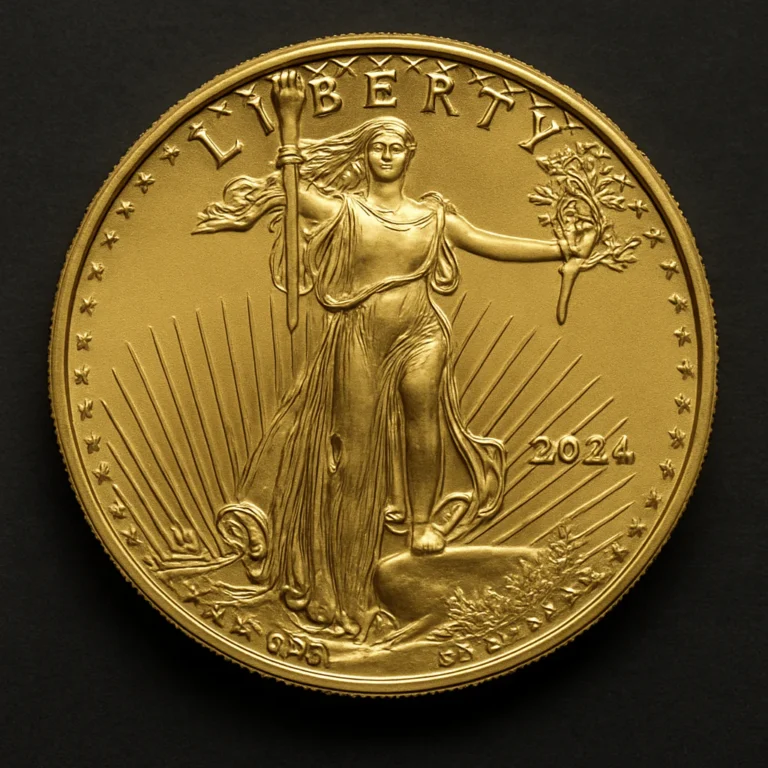
- American Gold Eagle (USA): The gold standard of… well, gold. It’s 22k but world-renowned.
- Canadian Gold Maple Leaf (Canada): One of the purest coins at .9999 fineness. It’s stunningly shiny.
- South African Krugerrand (South Africa): The coin that started the private gold boom. It has a distinct reddish tint due to its copper alloy.
- Austrian Philharmonic (Austria): The only bullion coin denominated in Euros. It’s a work of art.
- Australian Gold Kangaroo (Australia): The design changes every year, making it a favorite for those who want a bit of variety.
- British Britannia (UK): Known for its incredible security features that make it nearly impossible to counterfeit.
- Chinese Gold Panda (China): Like the Kangaroo, the design changes annually, though they moved to metric weights (30g) recently.
⚙️ How It Works: The Mechanics of Buying Gold Bullion
Buying gold isn’t like buying a pair of shoes on Amazon, though it’s getting close! Here is the step-by-step:
- Step 1: Check the Spot Price. Use a site like Kitco to see what gold is trading at right now.
- Step 2: Choose a Dealer. We recommend big names like Money Metals Exchange or SD Bullion. Check their Better Business Bureau (BBB) ratings!
- Step 3: Lock in Your Price. Gold prices fluctuate by the second. When you checkout, the dealer “locks” the price for a few minutes.
- Step 4: Payment. You can usually pay via credit card (expensive fees!), bank wire (cheapest), or even crypto.
- Step 5: Shipping. Reputable dealers ship in discreet, insured packaging. It won’t say “GOLD INSIDE” on the box!
⚠️ The Reality Check: Potential Pitfalls of Physical Gold
We love gold, but we aren’t wearing rose-colored glasses. There are downsides:
- ❌ No Dividends: Unlike stocks, gold just sits there. It doesn’t pay you monthly rent or quarterly dividends.
- ❌ Storage Risks: If you keep it at home, you’re a target for theft. If you keep it in a bank, you have to pay for the box.
- ❌ The Spread: You buy at a premium and sell at a discount (the “bid-ask spread”). You need the price of gold to rise just to break even.
💸 Hidden Fees and Heavy Premiums: The True Cost of Ownership
“Why is this 1 oz coin $100 more than the spot price?”
That’s the premium. It covers the cost of mining, refining, minting, marketing, and the dealer’s profit.
- Small coins = Big premiums. A 1/10 oz coin might have a 15% markup.
- Credit cards = Extra fees. Most dealers charge 3-4% extra to cover processing fees. Use a check or wire transfer to save money.
🛡️ Smart Strategies: How to Dodge High Costs and Scams
Don’t get fleeced! Follow our “Coin Value™” battle plan:
- Avoid “Rare” Coin Scams: If a telemarketer calls you about a “limited edition” coin that will triple in value because of its historical significance—hang up. You are an investor, not a museum curator.
- Buy in Bulk: If you can save up to buy a full 1 oz coin instead of ten 1/10 oz coins, you’ll save a fortune in premiums.
- Check Buy-Back Policies: Before you buy, ask the dealer: “What will you pay me for this coin today if I sell it back?”
🧱 The “Big Brother” Alternative: When Gold Bars Make More Sense
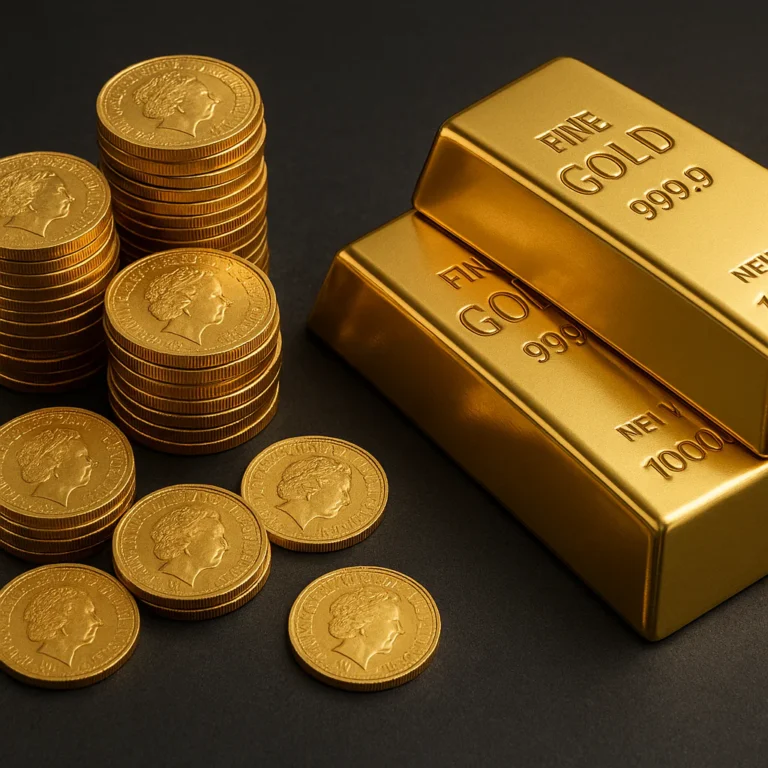
If you are looking to move six figures into gold, coins might become a hassle. This is where Gold Bars shine. Brands like PAMP Suisse or Valcambi offer bars in “assay cards” (tamper-proof packaging). Because they aren’t as intricate as coins, the premiums are much lower. If you want the most “gold for your buck,” bars are the way to go.
🔒 Safe and Sound: Where to Stash Your Treasure
You’ve got the gold. Now, where do you put it?
- Home Safes: Look for a “TL-rated” safe (Torch and Drill resistant). Brands like SentrySafe are okay for small amounts, but for serious weight, look at Liberty Safe.
- Safe Deposit Boxes: Private and secure, but remember: they aren’t insured by the FDIC!
- Professional Vaulting: Companies like Brinks or Delaware Depository will hold your gold for a fee. This is the safest option for large portfolios.
📈 Selling Your Stash: How to Liquidate Without Losing Your Shirt
When it’s time to cash out, don’t just go to the local pawn shop. They will lowball you!
- Sell back to your original dealer. Most have a standing offer to buy back what they sold.
- Local Coin Shops (LCS): Great for quick cash, but shop around for the best “bid” price.
- Online Peer-to-Peer: Sites like Reddit’s
r/Pmsforsaleallow you to sell directly to other enthusiasts, often getting you the best price—but it requires building a reputation.
✨ Conclusion

So, can you buy gold coins as an investment? You bet your bottom dollar (or gold sovereign) you can! It’s a tangible, beautiful, and historically proven way to protect your hard-earned wealth. While it doesn’t offer the dizzying growth of a tech startup, it provides the peace of mind that only a physical store of value can offer.
Remember: start small, stick to the “Hall of Fame” coins, and always keep an eye on those premiums. Now, the only question left is: which coin will be the first one in your safe? 🪙✨
🔗 Recommended Links
- World Gold Council – Market Data
- APMEX – Shop Gold Coins
- SentrySafe – Fireproof & Waterproof Safes
- JM Bullion – Gold Price Charts
❓ FAQ

Q: Is gold better than silver for investing? A: Gold is less volatile and more “compact” (more value in a smaller space), making it easier to store. Silver has more industrial use but can be a wilder ride.
Q: Do I have to pay taxes on gold coin profits? A: In the U.S., gold is considered a “collectible” by the IRS. You may owe capital gains tax when you sell. Always consult a tax pro!
Q: Can I put gold coins in my IRA? A: Yes! It’s called a Gold IRA, but the coins must meet specific purity requirements (like the Gold Maple Leaf) and be held by a custodian.
📚 Reference Links
- The United States Mint – About Bullion
- Investopedia – How to Invest in Gold
- The Royal Mint – Gold Investment Guide
⚡️ Quick Tips and Facts
We’ve all heard the old saying, “If you don’t hold it, you don’t own it.” But before you sprint to the nearest pawn shop and swap your life-savings for shiny discs, let’s hit the pause button and run through the Coin Value™ cheat-sheet we keep taped to the office safe:
- Gold is a store-of-value, not a growth stock. Expect it to preserve, not multiply, your money.
- ✅ Stick to bullion coins (government-minted, mass-produced) if you want the easiest resale.
- ❌ Avoid “proof” or “limited-edition” coins unless you enjoy paying 30 % premiums for a fancy box.
- Spot price ≠ what you pay. Dealers add premiums (anywhere from 3 % on a 1-kilo bar to 25 % on a 1/10-oz coin).
- Smaller coins = bigger % premium. A 1-oz American Gold Eagle usually carries a lower per-oz cost than ten 1/10-oz coins.
- Storage is a recurring cost. Home safe? Bank box? Professional vault? Each has trade-offs (insurance, access, fees).
- Buy-back policies matter. Ask the dealer up-front, “What will you pay me to buy this back today?”
- Taxes: In the U.S. the IRS classifies gold as a “collectible.” Short-term gains can be taxed up to 28 %. (Always confirm with a CPA.)
Need a deeper dive into coin values, rarity, or mintage figures? Hop over to our Coin Values hub—our team updates it daily with fresh market data.
📜 The Golden Origin Story: Why We’ve Obsessed Over Shiny Circles for Millennia
Gold’s résumé is longer than most royal bloodlines. Around 4000 BC, Egyptians were already hammering it into jewelry; by 550 BC, the Lydians (modern-day Turkey) had minted the first true gold coins. Fast-forward to the 19th-century Gold Standard, and every paper dollar was essentially an “IOU” for the yellow metal. Even after Nixon closed the gold window in 1971, central banks quietly kept stacking bars in their vaults—because nothing says “trust us” like a 400-oz brick locked behind a 12-inch steel door.
Fun fact: The World Gold Council estimates that all the gold ever mined would fit into a cube of just 22 meters per side. That’s it. No wonder we fight over it.
🤔 The Big Question: Can I Buy Gold Coins as an Investment?
Short answer: Yes.
Long answer: Yes, but understand the playbook.
Gold coins are NOT like buying shares of Apple. You’re buying a physical claim on a fixed weight of gold. When inflation eats the dollar’s purchasing power, gold historically maintains or increases its real value. That’s why we call it “wealth insurance.”
How it works in plain English:
- You buy a coin at spot + premium.
- You store it safely (home safe, bank, or vault).
- You wait. Maybe months, maybe decades.
- When you need cash—or when gold spikes—you sell back to a dealer or private buyer at spot – discount.
The spread (premium paid vs. discount received) is your friction cost. Keep it low, and gold becomes a rock-solid diversifier. Let it balloon, and you’ll need a 10 % price jump just to break even.
⚖️ Coins vs. Bars: The Ultimate Heavyweight Showdown
We keep a whiteboard in the office with two columns: COINS 🪙 vs. BARS 🧱. Here’s the distilled version:
| Factor | Bullion Coins | Gold Bars |
|---|---|---|
| Liquidity | ✅ Sell one at a time; world-wide recognition | ✅ High, but large bars (100 oz+) can be harder to “break” |
| Premiums | 4-12 % above spot | 1-3 % above spot |
| Storage Footprint | Small, easy to hide | Compact, but heavy in bulk |
| Collectible Appeal | Designs change yearly (Kangaroo, Panda) | Zero; just a loaf of metal |
| Verification | Government mint = instant trust | May need assay card for 10 oz+ bars |
Our take: New to the game? Start with 1-oz bullion coins (Canadian Maple Leaf or Krugerrand). Once you’re moving $50 k+, graduate to 10-oz or 1-kilo bars for lower premiums.
🔍 Anatomy of a Bullion Coin: Purity, Weight, and Luster
Let’s dissect a coin like we’re in high-school biology:
- Weight: 1 troy oz = 31.103 g. Fractionals cost more per gram—period.
- Purity: 24-karat = .999 or .9999 fine. 22-karat (Eagle, Krugerrand) = .9167 fine but still contains a full troy oz of gold, alloyed for scratch-resistance.
- Face Value: Mostly symbolic. A 1-oz Eagle says “$50”—but you’d never spend it at Starbucks.
- Security Features: The 2024 Britannia boasts micro-text, latent image, and tincture lines—making it the Fort Knox of bullion.
Pro tip: Never clean your coins. A single swipe with a cloth can remove surface gold and drop the resale grade.
🏆 The Hall of Fame: 7 Iconic Gold Coins Every Investor Should Know
- American Gold Eagle 🇺🇸 – 22-karat classic; most liquid coin in North America.
- Canadian Gold Maple Leaf 🇨🇦 – .9999 fine; security radial lines since 2015.
- South African Krugerrand 🇿🇦 – First bullion coin (1967); copper alloy gives it a rose tint.
- Austrian Philharmonic 🇦🇹 – Only bullion denominated in euros; gorgeous musical design.
- Australian Kangaroo 🇦🇺 – Design changes yearly; popular in Asia-Pacific.
- British Britannia 🇬🇧 – Queen-less 2024 issue (first time in 70 years); collectors are stacking double.
- Chinese Panda 🇨🇳 – Switched to metric 30 g in 2016; mint-sealed sheets.
All seven are instantly recognizable—which means instant liquidity when you need cash yesterday.
⚙️ How It Works: The Mechanics of Buying Gold Bullion
Step 1: Check the spot price on Kitco or CoinValue.
Step 2: Pick a reputable dealer. We regularly use:
- APMEX – Massive inventory, live market pricing.
- JM Bullion – Frequent sales, military discounts.
- Money Metals Exchange – Low-cost starter packs.
Step 3: Lock your price online (usually a 10-minute countdown timer).
Step 4: Pay via ACH or wire to avoid the 4 % credit-card surcharge.
Step 5: Your package ships UPS or FedEx Adult-Signature Required—and yes, it’s fully insured.
Real-world anecdote: Last March, we ordered 20 Maple Leafs from APMEX at 2:07 pm. By 2:15 pm, spot had jumped $14/oz. Because our price was locked, we saved $280 before the box even left the warehouse.
⚠️ The Reality Check: Potential Pitfalls of Physical Gold
Let’s rip off the band-aid:
- No cash-flow. Gold just sits—it doesn’t pay rent, dividends, or late fees.
- Buy/Sell spread. Expect 5-8 % round-trip on coins; 2-3 % on kilo bars.
- Verification risk. A 100-oz bar can be drilled and filled with tungsten. Stick to minted bars with assay or government coins.
- Confiscation folklore. Some dealers hype “non-confiscatable coins” citing 1933’s Executive Order 6102. Truth? No one knows if it could happen again—so diversify storage jurisdictions.
💸 Hidden Fees and Heavy Premiums: The True Cost of Ownership
We tracked every nickel we spent on a 20-coin order:
| Cost Component | Typical % of Spot |
|---|---|
| Dealer Premium | 5-9 % |
| Credit-card fee | 3 % |
| Shipping | 0.5-1 % |
| Storage (vault) | 0.5 % annually |
| Insurance (home) | 0.3-0.6 % annually |
Moral: Pay by bank wire, store in bulk, and you’ll cut your friction by half.
🛡️ Smart Strategies: How to Dodge High Costs and Scams
- Never buy “rare” coins from a cold-caller. If they mention “MS-70,” run.
- Compare buy-back quotes. We once saw a dealer offering spot – 2 % on Eagles while another wanted spot – 7 %. Same coin, same day.
- **Use a magnifying loupe (10x) to spot micro-engraving on Britannias or Maples—fakes usually skip this step.
- Split storage locations. Keep some at home (hidden safe), some in a professional vault. Think of it as eggs in multiple baskets.
🧱 The “Big Brother” Alternative: When Gold Bars Make More Sense
Once you’re buying 10 oz+ at a time, bars become the cost-effective king. Brands we trust:
- PAMP Suisse Fortuna – Comes in sealed assay card with unique serial.
- Valcambi CombiBar – Breaks into 1-gram squares for micro-spending.
- Royal Canadian Mint – .9999 fine, serialized, IRA-approved.
👉 Shop Gold Bars on:
- Amazon | APMEX | JM Bullion | PAMP Official
🔒 Safe and Sound: Where to Stash Your Treasure
Home option: A TL-15 rated safe bolted to concrete. We like the Liberty Safe HD-90—1,400 lbs of burglar frustration.
Vault option: Delaware Depository or Brinks London. Both offer allocated storage (your bars are segregated and insured).
Hybrid hack: Keep 5-10 % of your stack at home for emergency liquidity, ship the rest to a vault. If things go sideways, you can grab your “run-away” bag and still have spending power.
📈 Selling Your Stash: How to Liquidate Without Losing Your Shirt
Step 1: Photograph your coins/bars next to a serial number (if applicable).
Step 2: Email three dealers for buy-back quotes.
Step 3: Compare to spot on CoinValue. Accept the highest bid above 96 % of spot.
Step 4: Ship via registered mail (USPS Registered Insured up to $50 k).
Step 5: Funds hit your bank in 1-3 business days.
Insider tip: Local coin shows can beat online bids by 1-2 % if you’re willing to haggle and pay cash on the spot.
(Still curious about the video perspective? Jump back to the #featured-video section to hear why fractional coins can nibble your returns.)
✨ Conclusion

So, can you buy gold coins as an investment and how does it work? The answer is a resounding yes, but with a few caveats that every savvy investor should know before diving in. Physical gold coins offer tangible security, historical prestige, and portfolio diversification, but they come with premiums, storage costs, and liquidity considerations that can eat into your returns if you’re not careful.
Positives of Investing in Gold Coins:
- Highly liquid and globally recognized — coins like the American Gold Eagle and Canadian Maple Leaf are easy to buy and sell worldwide.
- Government-backed purity and weight guarantees — giving you peace of mind.
- Compact and portable — perfect for discreet storage.
- A hedge against inflation and currency risk — gold has stood the test of time as a store of value.
Negatives to Keep in Mind:
- Premiums and fees — you’ll pay above spot price, especially on smaller coins.
- No income generation — unlike stocks or bonds, gold coins don’t pay dividends or interest.
- Storage and insurance costs — physical gold must be securely stored.
- Potential resale discounts — dealers buy back at a price below spot, so timing and dealer choice matter.
At Coin Value™, we recommend starting with 1-oz bullion coins from reputable mints (American Eagle, Maple Leaf, Krugerrand) to balance liquidity and cost. As your stack grows, consider adding gold bars for lower premiums and bulk storage. Always buy from trusted dealers, verify authenticity, and plan your storage carefully.
Remember the golden rule: gold is wealth preservation, not wealth creation. It’s your financial life jacket in stormy markets, not a rocket ship to riches. With the right approach, gold coins can be a shining star in your investment constellation.
🔗 Recommended Links
👉 Shop Iconic Gold Coins and Bars:
- American Gold Eagle: Amazon | APMEX | JM Bullion
- Canadian Gold Maple Leaf: Amazon | APMEX | Royal Canadian Mint Official
- South African Krugerrand: Amazon | JM Bullion
- PAMP Suisse Gold Bars: Amazon | PAMP Official
- Valcambi CombiBar: Amazon | JM Bullion
Recommended Books on Gold Investing:
- The Goldwatcher: Demystifying Gold Investing by John Katz and Frank Holmes — Amazon
- Guide to Investing in Gold & Silver by Michael Maloney — Amazon
- The New Case for Gold by James Rickards — Amazon
❓ FAQ

What are the best gold coins to buy for investment purposes?
The best gold coins combine purity, liquidity, and low premiums. Our top picks include:
- American Gold Eagle: Trusted in the U.S. with 22-karat gold and government backing.
- Canadian Gold Maple Leaf: Known for its .9999 purity and security features.
- South African Krugerrand: The original bullion coin, slightly alloyed but highly liquid.
- British Britannia: Offers advanced anti-counterfeit features and is popular in Europe.
These coins are widely recognized and easy to resell, making them ideal for both beginners and seasoned investors.
How do gold coin values fluctuate over time?
Gold coin values fluctuate primarily based on the spot price of gold in global markets, which is influenced by:
- Supply and demand dynamics in the bullion market.
- Geopolitical tensions and economic uncertainty driving safe-haven demand.
- Currency fluctuations, especially the U.S. dollar’s strength.
- Interest rates and inflation expectations.
Premiums over spot can also vary depending on dealer inventory, coin size, and market sentiment. Collectible coins may experience additional price swings based on rarity and condition.
What factors affect the price of collectible gold coins?
Unlike bullion coins, collectible gold coins derive value from:
- Rarity and mintage numbers.
- Historical significance or provenance.
- Condition and grading (e.g., MS-70 vs. circulated).
- Demand among collectors and investors.
- Market trends in numismatics.
These factors can cause prices to deviate significantly from the underlying gold content, sometimes making collectibles more volatile and speculative.
Is it better to invest in gold coins or gold bars?
Both have pros and cons:
| Aspect | Gold Coins | Gold Bars |
|---|---|---|
| Liquidity | Higher (easy to sell small amounts) | Lower (large bars harder to break) |
| Premiums | Higher (minting and design costs) | Lower (bulk production) |
| Storage | Compact, easy to hide | Heavy, more space needed |
| Recognition | Government-backed, trusted | Requires assay cards for verification |
For beginners or smaller investors, coins are generally better due to liquidity and ease of sale. For large investments, bars offer better value per ounce.
How can I verify the authenticity of gold coins before buying?
- Buy from reputable dealers with strong BBB ratings and transparent policies.
- Look for certification and assay cards on bars and coins.
- Use a 10x magnifying loupe to inspect micro-engraving and mint marks.
- Test with a gold tester kit or XRF analyzer for purity (available at coin shops).
- Compare weight and dimensions to official specifications.
- Beware of deals that seem too good to be true; counterfeit coins exist even in the bullion market.
What are the tax implications of investing in gold coins?
In the U.S., gold coins are classified as collectibles by the IRS, subject to:
- Capital gains tax at a maximum rate of 28 % on profits when sold.
- No tax on purchase, but you must report gains on sale.
- Some states may have sales tax exemptions for bullion coins.
- Gold held in an IRA has special tax rules and must meet purity standards.
Always consult a tax professional to understand your specific obligations.
Where can I find reliable dealers for collectible gold coins?
Trusted dealers include:
- APMEX (apmex.com) — Large inventory, transparent pricing.
- JM Bullion (jmbullion.com) — Competitive prices and fast shipping.
- Money Metals Exchange (moneymetals.com) — Great for beginners and educational resources.
- The Royal Mint (royalmint.com) — Official UK mint with high-quality products.
Check dealer reviews on the Better Business Bureau and forums like Reddit’s r/PMsForSale for community feedback.
📚 Reference Links
- World Gold Council – Gold Investment
- United States Mint – Bullion Coins
- Investopedia – How to Invest in Gold
- The Royal Mint – An Introduction to Gold Investment
- APMEX – Gold Coins & Bars
- JM Bullion – Gold Bullion
- Kitco – Gold Price Charts
- Better Business Bureau – APMEX Reviews
Ready to start your gold journey? Check out our detailed guides on Coin Values and Coin Collecting for more expert insights!