Support our educational content for free when you purchase through links on our site. Learn more
💰 How to Determine Old Coin Value: The Ultimate 2026 Guide

You determine the true value of your old coins by cross-referencing their condition, rarity, and sold market data rather than relying on generic price guides or asking prices. If you are wondering how do I determine the value of my old coins?, the answer lies in a simple formula: identify the specific variety, grade the wear accurately, and check what similar items have actually sold for recently.
Many collectors make the fatal mistake of scrubing a rare coin with a toothbrush, instantly destroying thousands of dollars in value. We once watched a client nearly wipe out a potential $5,0 error coin because he thought it was just “dirty.”
The reality is that a common 1943 steel penny might be worth a few cents, while a 1909-S VDB Lincoln Cent in the same condition could fetch a small fortune. Understanding the difference between melt value and numismatic premium is the first step to unlocking your collection’s potential.
Key Takeaways
- Condition is Critical: A coin’s grade (from Poor to Mint State) often impacts its value more than its age; never clean your coins as it destroys the natural patina.
- Verify with Sold Data: Ignore “asking prices” on eBay; only sold listings and auction records reflect the true market value.
- Identify Key Varieties: Look for specific mint marks (D, S, CC) and rare dates that can turn a common coin into a valuable treasure.
- Professional Grading Matters: For coins potentially worth over $50, consider sending them to PCGS or NGC for authentication and encapsulation.
Table of Contents
- ⚡️ Quick Tips and Facts
- 🕰️ A Brief History of Numismatics: From Ancient Drachmas to Modern Mint Marks
- 🔍 The First Step: Identifying Your Old Coins and Understanding Rarity
- 💎 Grading Your Collection: How Condition Drives Coin Value
- 📊 Decoding the Numbers: Using Price Guides and Market Data
- 🏆 Professional Grading Services: When to Send Your Coins to PCGS, NGC, or ANACS
- 🛡️ Navigating the Authentication Process: Avoiding Counterfeits and Slabs
- 💰 Selling Strategies: Auctions, Dealers, and Online Marketplaces
- 🧹 Proper Storage and Preservation: Keeping Your Coins in Pristine Condition
- ❓ Frequently Asked Questions About Coin Valuation
- 🔗 Recommended Links for Serious Collectors
- 📚 Reference Links and Sources
- 🏁 Conclusion
⚡️ Quick Tips and Facts
Before we dive into the deep end of numismatic waters, let’s get the low-hanging fruit sorted. You might be holding a treasure or just a pocket change souvenir, and the difference often comes down to a few critical details.
- Condition is King: A coin in pristine, uncirculated condition can be worth thousands of times more than the same coin with heavy wear. Never clean your coins! Cleaning strips the natural patina (the protective oxide layer) and instantly destroys value.
- Mint Marks Matter: That tiny letter on the back (or sometimes the front) tells you where the coin was made. A “D” for Denver or an “S” for San Francisco can skyrocket value compared to a “P” or no mint mark for Philadelphia.
- The “Sold” Reality: Don’t trust the asking price on eBay. Only sold listings tell the truth about what collectors are actually willing to pay.
- Silver Content: Even if a coin isn’t rare, if it’s made of silver, it has a melt value based on the current spot price of silver.
For a deeper dive into how we calculate these values, check out our guide on Coin Value.
🕰️ A Brief History of Numismatics: From Ancient Drachmas to Modern Mint Marks

Understanding where your coin comes from is half the battle. Numismatics—the study and collection of currency—dates back to the 7th century BC in Lydia (modern-day Turkey), where the first metal coins were stamped with lion heads. Fast forward to the US, and the Mint Act of 1792 established the United States Mint, creating a standardized currency system that would eventually span from the humble copper cent to the majestic gold double eagle.
Why does history matter to your wallet? Because historical context drives demand. A coin minted during a war, a depression, or a specific president’s term often carries a premium simply because fewer were made or fewer survived.
- The Great Depression: Many coins from the 1930s were melted down for their metal content, making surviving examples rare.
- The 1964 Transition: This was the last year silver was used in circulating dimes, quarters, and half-dollars. After this, the US switched to copper-nickel clad.
- Mint Errors: Throughout history, mistakes happened. Double dies, off-center strikes, and missing mint marks are often the most sought-after items by collectors today.
If you’re curious about how these historical shifts affect modern Coin Values, you’ll find that the story behind the metal is just as valuable as the metal itself.
🔍 The First Step: Identifying Your Old Coins and Understanding Rarity
You’ve got a jar of change or an old cigar box in the attic. Now what? The first rule of coin valuation is identification. You cannot value what you cannot name.
The Three Pillars of Identification
- Date: The year the coin was struck.
- Mint Mark: The letter indicating the mint facility (Philadelphia, Denver, San Francisco, Carson City, etc.).
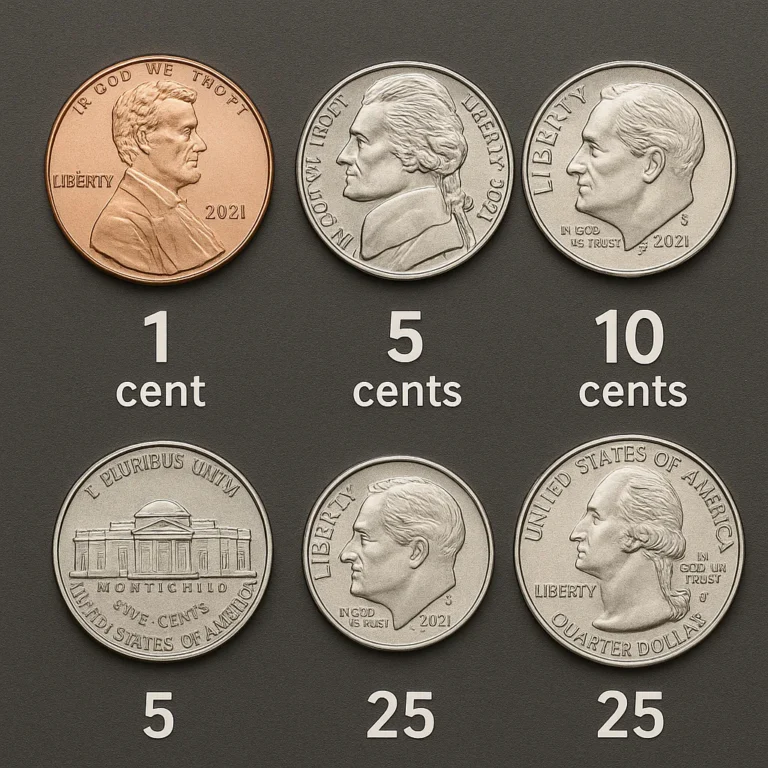
- Denomination: Is it a cent, nickel, dime, quarter, half-dollar, or dollar?
The “Rarity” Trap
Here is a common misconception: Old does not always mean rare.
- Common Dates: A 1943 steel penny is old, but millions were made. It’s worth a few dollars in good condition.
- Key Dates: A 1909-S VDB Lincoln Cent is old, but only a tiny fraction were made. It can be worth thousands.
We often see people bring in a 1921 Morgan Silver Dollar. It’s old, yes, but over 86 million were minted that year. Unless it’s in Mint State (MS) condition, it’s likely worth just a bit over its silver content. Conversely, a 1916-D Mercury Dime, with only 10,0 minted, is a holy grail for collectors.
To help you get started, here is a quick reference for identifying key mint marks:
| Mint Location | Mint Mark | Location on Coin (Typical) |
|---|---|---|
| Philadelphia | None (or P) | Obverse (Front) or Reverse |
| Denver | D | Reverse (Back) |
| San Francisco | S | Reverse (Back) |
| Carson City | CC | Reverse (Back) |
| West Point | W | Obverse (Front) |
Pro Tip: Use a magnifying glass (10x is ideal) to spot these tiny marks. They are often hidden in the field or near the date.
If you’re unsure about a specific coin, our Coin Collecting category has detailed guides on identifying specific series.
💎 Grading Your Collection: How Condition Drives Coin Value
This is where the magic (and the money) happens. In the world of coins, grade is everything. A coin graded MS-65 (Mint State 65) can be worth 10 times more than the same coin graded MS-60.
The Sheldon Scale
The industry standard is the Sheldon Scale, ranging from 1 to 70.
- 1 (Poor): Barely identifiable.
- 15-20 (Good/Fine): Heavy wear, but major details are visible.
- 35-40 (Very Fine/Extremely Fine): Moderate to light wear, sharp details.
- 50-58 (About Uncirculated): Traces of wear on the highest points.
- 60-70 (Mint State): No wear. 60 is bagy with marks; 70 is perfect.
The “Eye Appeal” Factor
Two coins can have the same technical grade, but one sells for more because of eye appeal. This includes:
- Luster: The way light reflects off the surface. A “cartwheel” luster is highly desirable.
- Toning: Natural, colorful oxidation (blues, golds, purples) can add a premium.
- Strike: How well the design was impressed into the metal. A “full strike” is worth more.
Warning: Grading is subjective. What one dealer calls “VF-30,” another might call “XF-40.” This is why professional grading services exist.
For more on how grading impacts Gold Coins and other precious metals, explore our dedicated sections.
📊 Decoding the Numbers: Using Price Guides and Market Data
So, you’ve identified your coin and estimated its grade. Now, how much is it worth? This is where many collectors get tripped up by retail vs. wholesale prices.
The “Blue Book” vs. The “Red Book”
- The Red Book (A Guide Book of United States Coins): This is the retail price. It’s what a dealer might sell a coin for. It’s great for knowing the ceiling.
- The Blue Book (A Guide Book of United States Coins, Wholesale): This is the wholesale price. It’s what a dealer will pay you. It’s usually 20-40% lower than the Red Book.
The Real Market: Sold Listings
As mentioned in the “Quick Tips,” the most accurate data comes from sold listings.
- eBay: Filter by “Sold Items.” Look for coins with similar grades and descriptions.
- Heritage Auctions / Stack’s Bowers: These are the giants of the coin auction world. Their archives are free to search and show exactly what high-end coins are selling for.
Melt Value Calculators
For silver and gold coins, the melt value is the floor. If a coin is common, it’s worth at least its metal content.
- Silver: Check current spot prices. A standard silver dollar contains 0.734 oz of pure silver.
- Gold: Gold coins are valued by their gold content plus a numismatic premium.
Don’t trust the asking price! A coin listed for $50 on eBay might have sat there for three years. The sold price might be $150.
🏆 Professional Grading Services: When to Send Your Coins to PCGS, NGC, or ANACS
Should you send your coins to a grading service? The answer is: It depends.
The Pros of Grading
- Authentication: They verify the coin is real.
- Standardized Grading: Removes the subjectivity of “I think it’s XF.”
- Protection: The coin is sealed in a tamper-evident “slab.”
- Liquidity: Graded coins sell faster and often for higher prices.
The Cons of Grading
- Cost: Fees range from $20 to $150+ per coin, plus shipping and insurance.
- Time: Turnaround can take months.
- Risk: A coin might be “slabed” at a lower grade than you hoped, or the service might reject it.
The Big Three
- PCGS (Professional Coin Grading Service): Known for strict grading standards and high market acceptance.
- NGC (Numismatic Guaranty Company): Also highly respected, often slightly faster turnaround.
- ANACS: One of the oldest services, now owned by Collectors Universe, known for handling error coins well.
When to Grade:
- ✅ If the coin is potentially worth $50+ in raw condition.
- ✅ If the coin is a key date or rare variety.
- ✅ If the coin is in Mint State condition.
- ❌ If the coin is common and worth less than the grading fee.
- ❌ If the coin has been cleaned or damaged.
You can submit coins directly through PCGS or NGC.
🛡️ Navigating the Authentication Process: Avoiding Counterfeits and Slabs
The coin world is rife with counterfeits, especially for high-value items like the 193 Double Eagle or rare Morgan Dollars.
Red Flags for Fakes
- Wrong Weight: Use a precise scale. A silver dollar should weigh exactly 26.73 grams.
- Wrong Magnetism: Silver and gold are not magnetic. If it sticks to a magnet, it’s a fake (or a plated steel coin).
- Sound Test: A real silver coin has a distinct “ring” when tapped. A fake often sounds dull.
- Surface Texture: Fakes often have a “soft” look or lack the sharp details of the original die.
The Danger of “Slabed” Fakes
Even graded coins can be fakes. There are “slab fakes” where a counterfeit coin is placed in a fake holder, or a real coin is swapped out.
- Verify the Serial Number: Every PCGS and NGC slab has a unique serial number. Enter it on the PCGS Verify or NGC Verify website. If the number doesn’t exist or the image doesn’t match, it’s a fake.
Personal Story: We once saw a collector bring in a “1909-S VDB” in a slab that looked perfect. The serial number check revealed it was a fake slab containing a common 1909-P. The lesson? Always verify the slab.
💰 Selling Strategies: Auctions, Dealers, and Online Marketplaces
You’ve identified, graded, and authenticated your coins. Now, how do you turn them into cash?
1. Local Coin Shops (LCS)
- Pros: Instant cash, no shipping risk.
- Cons: Lowest price (wholesale rate). Dealers need to make a profit.
- Best for: Quick sales of common coins or when you need cash immediately.
2. Online Marketplaces (eBay, Etsy)
- Pros: Access to a global audience, potential for higher retail prices.
- Cons: Fees (10-15%), shipping risk, time-consuming.
- Best for: Unique items, error coins, and collectors who know how to market.
3. Auction Houses (Heritage, Stack’s Bowers, GreatCollections)
- Pros: Highest potential prices for rare items, professional marketing.
- Cons: High fees (buyer’s premium + seller’s commission), long timeline.
- Best for: High-value coins ($1,0+), key dates, and rare varieties.
4. Coin Shows
- Pros: Meet multiple dealers, negotiate in person.
- Cons: Travel time, variable dealer quality.
- Best for: Selling a collection of mixed quality.
Strategy Tip: If you have a mix of common and rare coins, consider selling the rare ones at auction and the common ones to a dealer or on eBay. Don’t sell your “crown jewels” to a local shop for a quick buck!
🧹 Proper Storage and Preservation: Keeping Your Coins in Pristine Condition
You’ve worked hard to find and grade your coins. Don’t let them rot in a drawer!
The Enemies of Coins
- Moisture: Causes toning (which can be good) or corrosion (which is bad).
- PVC (Polyvinyl Chloride): Found in old plastic flips. It creates a green, slimy residue that eats into the coin. Never use PVC flips!
- Acidic Paper: Old cardboard holders can be acidic.
- Handling: Oils from your fingers can cause spots.
Best Practices
- Use Mylar Flips: These are chemically inert and safe.
- Hard Slabs: If graded, keep them in the slab.
- Archival Boxes: Store in acid-free boxes with silica gel packets to control humidity.
- Gloves: Always handle coins by the edges, preferably with cotton gloves.
Fun Fact: Some collectors love “natural toning” (rainbow colors), while others prefer “white” coins. Both are valid, but artificial toning (dipping in chemicals) is a major value killer.
❓ Frequently Asked Questions About Coin Valuation
What are the rarest old coins to look for?
The rarest coins are often Key Dates in popular series. Examples include the 1916-D Mercury Dime, the 1909-S VDB Lincoln Cent, the 1804 Draped Bust Dollar (only 15 known), and the 193 Double Eagle. These can fetch millions at auction.
How much is a 1943 steel penny worth?
A 1943 steel penny is common and usually worth $0.10 to $0.50 in circulated condition. However, if you have a 1943 copper penny (a rare error where a copper blank was used instead of steel), it could be worth $10,0+.
Where can I get my old coins appraised for free?
Many local coin shops offer free appraisals if you are considering selling. Online forums like CoinTalk also have experts who can give rough estimates. However, for a formal, binding appraisal, you usually need to pay a professional.
Do old coins lose value if they are cleaned?
Yes, absolutely. Cleaning a coin removes its natural luster and can leave micro-scratches. In the eyes of a collector, a cleaned coin is often worth 50% to 90% less than an uncleaned one. Never clean your coins!
How do I identify errors on old coins?
Look for:
- Double Dies: Letters or dates appear doubled.
- Off-Center Strikes: The design is shifted to one side.
- Missing Mint Marks: The mint mark is absent.
- Wrong Planchet: A coin struck on the wrong metal (e.g., a nickel on a dime planchet).
What factors affect the price of vintage coins?
- Rarity: How many were made and how many survive.
- Condition: The grade (MS-60 to MS-70).
- Demand: How many collectors want it.
- Metal Content: Silver and gold prices.
- Market Trends: Economic conditions and collector interest.
Are there any valuable coins still in circulation?
Yes! While rare, you can still find:
- 195 Double Die Lincoln Cent: Worth hundreds.
- 1982 No Mint Mark Small Date Penny: Worth a few dollars.
- Silver Coins: Pre-1965 dimes, quarters, and half-dollars are 90% silver and worth more than face value.
🔗 Recommended Links for Serious Collectors
Ready to take your collection to the next level? Here are the tools and resources we trust at Coin Value™.
👉 Shop Coin Supplies on:
- Coin Holders & Flips: Amazon Coin Supplies | Etsy Coin Supplies | Coin Supplies Official
- Magnifying Glasses: Amazon Magnifiers | Jewelry Tools Official
- Storage Boxes: Amazon Coin Boxes | Heritage Auctions
Books to Read:
- A Guide Book of United States Coins (The Red Book) by R.S. Yeoman: Amazon Link
- The Official Blackbook Price Guide to United States Coins: Amazon Link
Featured Video:
For a visual guide on how to determine the value of old coins using sold listings and melt value calculators, check out this expert breakdown:
Watch the Video Guide
📚 Reference Links and Sources
To ensure the accuracy of our advice, we rely on these authoritative sources:
- PCGS Price Guide: PCGS.com
- NGC Coin Explorer: NGC Coin Explorer
- US Mint History: US Mint History
- APMEX Coin Values Guide: APMEX Coin Values
- Numismatic Guaranty Company (NGC): NGC Official Site
- Professional Coin Grading Service (PCGS): PCGS Official Site
🏁 Conclusion

Determing the value of your old coins is a journey that blends history, science, and a bit of detective work. We’ve walked through the identification process, explained the critical role of grading, and shown you how to navigate the market data to find the true worth of your treasures.
Remember, the most important rule is never clean your coins. A single swipe of a cloth can turn a potential fortune into pocket change. Whether you’re holding a common 1943 steel penny or a rare 1909-S VDB, the key is to verify, grade, and research.
If you have a collection that might be worth more than a few dollars, consider sending it to PCGS or NGC for professional grading. The cost is often worth the premium you’ll get at auction. And if you’re just starting out, use sold listings on eBay to get a realistic picture of the market.
Final Thought: The thrill of the hunt is just as valuable as the coins themselves. Happy collecting!
Pros and Cons Summary
| Pros | Cons |
|---|---|
| High Potential Returns: Rare coins can appreciate significantly. | Subjectivity: Grading can vary between services. |
| Historical Connection: Own a piece of history. | Counterfeits: The market is full of fakes. |
| Liquidity: Coins are easy to sell globally. | Maintenance: Requires proper storage to prevent damage. |
| Tangible Asset: Not tied to the stock market. | Cost: Grading and authentication can be expensive. |
Recommendation: If you have a mixed collection, separate the wheat from the chaff. Sell the common coins for quick cash or melt value, and invest in grading the rare ones. For the rest, enjoy them as a hobby!
Ready to start your valuation journey? Check out our Coin Values category for more specific guides on every US coin series.