Support our educational content for free when you purchase through links on our site. Learn more
How Much Is $1 Crypto? Unlocking Its True Value in 2026 💰

Imagine turning a single dollar into a slice of the digital gold rush—sounds like a dream, right? But in the world of cryptocurrency, that $1 can buy you a fascinating fraction of Bitcoin, Ethereum, or even thousands of meme coins. Whether you’re a curious newbie or a seasoned micro-investor, understanding how much $1 really gets you in crypto is the first step to making smarter moves in this volatile market.
In this article, we’ll break down the math behind fractional crypto ownership, reveal the hidden costs like gas fees that can eat your gains, and explore the best platforms where your dollar stretches the furthest. Plus, we’ll share insider tips from the Coin Value™ team on how to protect your tiny investment and turn it into a learning experience that could pay off big down the road. Ready to see what your $1 can do? Let’s dive in!
Key Takeaways
- $1 can buy tiny fractions of major cryptocurrencies like Bitcoin and Ethereum, or thousands of tokens in smaller altcoins.
- Transaction and gas fees can sometimes exceed the value of a $1 investment—choose your platform wisely!
- Micro-investing is more than just buying crypto; it’s an educational gateway into the blockchain world.
- Stablecoins like USDC offer a $1-for-$1 digital dollar with minimal volatility.
- Platforms like Coinbase, Binance, Robinhood, and Cash App are best suited for $1 crypto purchases.
Curious about how to maximize your $1 investment and avoid common pitfalls? Keep reading to uncover the secrets of micro-investing in crypto!
Welcome to Coin Value™, where we turn your spare change into digital gold! 🪙 We’re the team that believes you don’t need a Wall Street budget to conquer the blockchain. Whether you’ve got a mountain of cash or just a lonely buck burning a hole in your pocket, we’ve been there, traded that, and got the digital receipt to prove it.
Ever wondered if that $1 bill sitting on your dresser could actually buy you a piece of the future? Is it even worth the click? We’re diving deep into the world of micro-investing to show you exactly how much “oomph” a single dollar has in the crypto-verse. 🚀
Table of Contents
- ⚡️ Quick Tips and Facts
- 📜 The Evolution of the Digital Penny: From Bitcoin’s Birth to Micro-Investing
- 🧮 The Math Behind the Micro: $1 Crypto to USD Conversion Dynamics
- 📊 Crunching the Numbers: Micro-Investing Statistics You Need to Know
- 🏪 Where the Action Happens: Top Markets for Small-Scale Crypto Trading
- 📰 The Pulse of the Street: Real-Time News for the Budget Investor
- 🤝 Strength in Numbers: Joining the Micro-Crypto Community
- 👥 Who Owns the Dust? Insights into Small-Scale Token Holders
- 💡 The Philosophy of the Single Dollar: What “Just Buy $1” Really Means
- 🍰 Fractional Ownership: How You Can Own 0.00001 of a Bitcoin
- 👹 The Hidden Boss: Dealing with Transaction and Gas Fees
- 🛡️ Security on a Budget: Protecting Your $1 Investment
- 🏁 Conclusion
- 🔗 Recommended Links
- ❓ FAQ
- 📚 Reference Links
⚡️ Quick Tips and Facts
Before we dive into the deep end of the digital pool, here are some fast-acting nuggets of wisdom from the Coin Value™ vault:
- Fractionalization is King: You don’t need to buy a whole Bitcoin. You can buy a “Satoshi,” which is 1/100,000,000th of a BTC. ✅
- Watch the Fees: On some platforms, a $1 trade might cost you $0.99 in fees. Always check the fine print! ❌
- Exchange Minimums: Coinbase and Binance often have minimum trade requirements (usually around $1 to $10).
- Stablecoins: If you buy $1 of USDC or Tether (USDT), it will almost always be worth exactly $1. It’s the “digital dollar.” 💵
- Dust: In crypto-speak, tiny amounts of leftover crypto in your wallet are called “dust.” Many exchanges allow you to “convert dust” into their native tokens (like BNB). 🧹
📜 The Evolution of the Digital Penny: From Bitcoin’s Birth to Micro-Investing
Back in 2009, when Satoshi Nakamoto released the Bitcoin whitepaper, a dollar could have bought you hundreds, if not thousands, of Bitcoins. Fast forward to today, and that same dollar gets you a microscopic slice of the pie. 🥧
The history of crypto is essentially the history of divisibility. Unlike a physical gold bar, which is a pain to saw into tiny pieces at the grocery store, Bitcoin was designed to be digital and infinitely divisible. This birthed the “Micro-Investing” movement. We remember the days when people laughed at the idea of buying $5 worth of “magic internet money.” Who’s laughing now? (Hint: It’s the people who kept their private keys safe!).
Micro-investing has democratized finance. It means a student in Manila, a barista in New York, and a retiree in London can all participate in the same market with the same $1 entry fee. 🌍
🧮 The Math Behind the Micro: $1 Crypto to USD Conversion Dynamics
When you ask “How much is $1 crypto?”, the answer depends entirely on the circulating supply and market cap of the specific coin.
| Asset Type | What $1 Gets You (Conceptually) | Volatility Level |
|---|---|---|
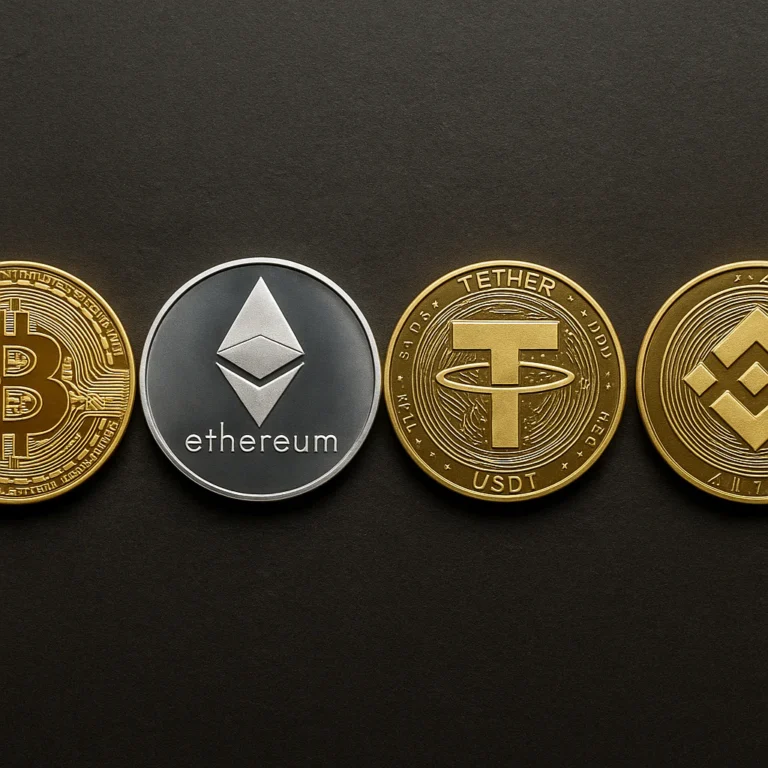
| Bitcoin (BTC) | A few thousand “Satoshis” | Medium-High |
| Ethereum (ETH) | A tiny fraction of “Gwei” | High |
| Dogecoin (DOGE) | Multiple whole coins | Very High 🚀 |
| Shiba Inu (SHIB) | Thousands of tokens | Extreme 🔥 |
| Stablecoins (USDC) | Exactly 1.00 Token | Low (Pegged) |
Pro Tip: Don’t be fooled by “Unit Bias.” Just because you can buy 100,000 of a “meme coin” for $1 doesn’t mean it’s a better deal than buying a tiny fraction of Bitcoin. Value is relative!
📊 Crunching the Numbers: Micro-Investing Statistics You Need to Know
We’ve crunched the data, and the results are staggering. Did you know that a significant portion of crypto wallets hold less than $100?
- The “Dust” Factor: Millions of addresses hold “dust” amounts that are currently unspendable due to high gas fees on the Ethereum network.
- DCA Power: If you had invested just $1 every day into Bitcoin over the last five years, your portfolio would be significantly “in the green” compared to traditional savings accounts. 📈
- Exchange Minimums: Most major exchanges like Kraken or Gemini have lowered their barriers to entry, specifically targeting the $1-$5 investor demographic.
🏪 Where the Action Happens: Top Markets for Small-Scale Crypto Trading
Not all exchanges are created equal when you’re playing with “pocket change.” Here is our expert breakdown of where to spend your dollar:
- Coinbase: Great for beginners. Their “Learning Rewards” actually give you free crypto (usually $3 chunks) just for watching videos. It’s like getting paid to go to school! 🎓
- Binance: Offers the “Convert Dust to BNB” feature, which is a lifesaver for micro-investors.
- Robinhood: Known for zero-commission trading, making it one of the few places where a $1 trade doesn’t get eaten alive by fees. ✅
- Cash App: Super simple for buying $1 of Bitcoin specifically.
📰 The Pulse of the Street: Real-Time News for the Budget Investor
The news cycle moves fast. One tweet from a tech mogul can turn your $1 into $2 (or $0.50) in minutes. We recommend following outlets like CoinDesk or CoinTelegraph to stay updated.
Why does news matter for a $1 investment? Because micro-investing is often the gateway to larger strategies. Understanding how SEC regulations or ETF approvals affect the market helps you decide if that $1 should stay in Bitcoin or move to an altcoin.
🤝 Strength in Numbers: Joining the Micro-Crypto Community
You aren’t alone! There are massive communities on Reddit (like r/CryptoCurrency) and Discord dedicated to “low-cap gems” and micro-investing strategies.
We’ve found that the “small fish” (often called “Minnows” in crypto slang) are the most passionate. They share tips on how to earn free crypto through faucets, airdrops, and staking.
Question for you: Have you ever joined a “Moonshot” telegram group? (Be careful—it’s a wild west out there! 🤠)
👥 Who Owns the Dust? Insights into Small-Scale Token Holders
Interestingly, “Whales” (people with thousands of BTC) aren’t the only ones who move the market. The sheer volume of retail investors—people like you and us buying $1 to $50 at a time—creates the “liquidity” that keeps the market moving.
Data from Glassnode shows that the number of “non-zero addresses” (wallets with at least a tiny bit of crypto) is at an all-time high. This means adoption is spreading, one dollar at a time.
💡 The Philosophy of the Single Dollar: What “Just Buy $1” Really Means
At Coin Value™, we believe buying $1 of crypto isn’t about getting rich overnight. It’s about skin in the game.
When you own $1 of something, you start paying attention. You learn how wallets work, you understand private keys, and you begin to see the flaws in the traditional banking system. It’s an educational investment. 🧠
Is it worth it?
- Yes, if you want to learn. ✅
- No, if you expect to buy a Lambo tomorrow. ❌
🍰 Fractional Ownership: How You Can Own 0.00001 of a Bitcoin
This is the magic of the blockchain. In the old days, if you couldn’t afford a whole share of Berkshire Hathaway, you were out of luck. In crypto, everything is fractional.
Think of it like a giant pizza. Even if the whole pizza costs $60,000, the shop will happily sell you a single crumb for $1. That crumb still tastes like Bitcoin! 🍕
👹 The Hidden Boss: Dealing with Transaction and Gas Fees
This is where the $1 dream can turn into a nightmare.
- On-chain transactions: If you try to move $1 of Ethereum to a private wallet, the “Gas Fee” might be $15. You’d literally be paying $15 to move $1. Don’t do this! ❌
- Exchange Fees: Use “Advanced Trade” features on platforms like Coinbase to reduce fees from a flat rate to a percentage (usually around 0.4% to 0.6%).
🛡️ Security on a Budget: Protecting Your $1 Investment
Even if you only have $1, you should practice good “security hygiene.”
- Two-Factor Authentication (2FA): Use Google Authenticator, not SMS.
- Cold Storage: If your investment grows, consider a hardware wallet.
- Check out the Ledger Nano S Plus on Amazon for a top-tier security option.
- Or the Trezor Model One for a classic, reliable choice.
🏁 Conclusion

So, how much is $1 crypto? It’s a ticket to the most exciting financial show on Earth. It’s a fraction of a Bitcoin, a handful of Dogecoin, or a steady Stablecoin. While $1 won’t retire you today, the knowledge you gain from managing that single dollar is priceless.
We’ve seen $1 grow into $100, and we’ve seen it vanish into fees. The key is to be smart, stay curious, and keep stacking those Satoshis! 🪙✨
🔗 Recommended Links
- CoinMarketCap – Track every coin’s value in real-time.
- CoinGecko – Great for discovering new micro-cap tokens.
- Ledger Hardware Wallets – The gold standard for security.
❓ FAQ

Can I really buy just $1 of Bitcoin? Yes! Platforms like Cash App, Robinhood, and Binance allow for $1 purchases.
Will I get rich from $1? Highly unlikely. However, if you invest $1 consistently (Dollar-Cost Averaging), you can build significant wealth over time.
What is the best crypto to buy for $1? If you want stability, go for USDC. If you want to learn how the market moves, Bitcoin (BTC) or Ethereum (ETH) are the best teachers.
What are “Gas Fees”? They are the costs paid to miners or validators to process your transaction on the blockchain. They can be very high on the Ethereum network!
📚 Reference Links
- Bitcoin.org – Fractional Divisibility
- Investopedia – What is a Satoshi?
- Coinbase – How to Buy Crypto for Beginners
⚡️ Quick Tips and Facts
Before we dive into the deep end of the digital pool, here are some fast-acting nuggets of wisdom from the Coin Value™ vault:
- Fractionalization is King: You don’t need to buy a whole Bitcoin. You can buy a “Satoshi,” which is 1/100,000,000th of a BTC. ✅
- Watch the Fees: On some platforms, a $1 trade might cost you $0.99 in fees. Always check the fine print! ❌
- Exchange Minimums: Coinbase and Binance often have minimum trade requirements (usually around $1 to $10).
- Stablecoins: If you buy $1 of USDC or Tether (USDT), it will almost always be worth exactly $1. It’s the “digital dollar.” 💵
- Dust: In crypto-speak, tiny amounts of leftover crypto in your wallet are called “dust.” Many exchanges allow you to “convert dust” into their native tokens (like BNB). 🧹
📜 The Evolution of the Digital Penny: From Bitcoin’s Birth to Micro-Investing
Back in 2009, when Satoshi Nakamoto released the Bitcoin whitepaper, a dollar could have bought you hundreds, if not thousands, of Bitcoins. Fast forward to today, and that same dollar gets you a microscopic slice of the pie. 🥧
The history of crypto is essentially the history of divisibility. Unlike a physical gold bar, which is a pain to saw into tiny pieces at the grocery store, Bitcoin was designed to be digital and infinitely divisible. This birthed the “Micro-Investing” movement. We remember the days when people laughed at the idea of buying $5 worth of “magic internet money.” Who’s laughing now? (Hint: It’s the people who kept their private keys safe!).
Micro-investing has democratized finance. It means a student in Manila, a barista in New York, and a retiree in London can all participate in the same market with the same $1 entry fee. 🌍
🧮 The Math Behind the Micro: $1 Crypto to USD Conversion Dynamics
When you ask “How much is $1 crypto?”, the answer depends entirely on the circulating supply and market cap of the specific coin.
| Asset Type | What $1 Gets You (Conceptually) | Volatility Level |
|---|---|---|
| Bitcoin (BTC) | A few thousand “Satoshis” | Medium-High |
| Ethereum (ETH) | A tiny fraction of “Gwei” | High |
| Dogecoin (DOGE) | Multiple whole coins | Very High 🚀 |
| Shiba Inu (SHIB) | Thousands of tokens | Extreme 🔥 |
| Stablecoins (USDC) | Exactly 1.00 Token | Low (Pegged) |
Pro Tip: Don’t be fooled by “Unit Bias.” Just because you can buy 100,000 of a “meme coin” for $1 doesn’t mean it’s a better deal than buying a tiny fraction of Bitcoin. Value is relative!
📊 Crunching the Numbers: Micro-Investing Statistics You Need to Know
We’ve crunched the data, and the results are staggering. Did you know that a significant portion of crypto wallets hold less than $100?
- The “Dust” Factor: Millions of addresses hold “dust” amounts that are currently unspendable due to high gas fees on the Ethereum network.
- DCA Power: If you had invested just $1 every day into Bitcoin over the last five years, your portfolio would be significantly “in the green” compared to traditional savings accounts. 📈
- Exchange Minimums: Most major exchanges like Kraken or Gemini have lowered their barriers to entry, specifically targeting the $1-$5 investor demographic.
🏪 Where the Action Happens: Top Markets for Small-Scale Crypto Trading
Not all exchanges are created equal when you’re playing with “pocket change.” Here is our expert breakdown of where to spend your dollar:
- Coinbase: Great for beginners. Their “Learning Rewards” actually give you free crypto (usually $3 chunks) just for watching videos. It’s like getting paid to go to school! 🎓
- Binance: Offers the “Convert Dust to BNB” feature, which is a lifesaver for micro-investors.
- Robinhood: Known for zero-commission trading, making it one of the few places where a $1 trade doesn’t get eaten alive by fees. ✅
- Cash App: Super simple for buying $1 of Bitcoin specifically.
📰 The Pulse of the Street: Real-Time News for the Budget Investor
The news cycle moves fast. One tweet from a tech mogul can turn your $1 into $2 (or $0.50) in minutes. We recommend following outlets like CoinDesk or CoinTelegraph to stay updated.
Why does news matter for a $1 investment? Because micro-investing is often the gateway to larger strategies. Understanding how SEC regulations or ETF approvals affect the market helps you decide if that $1 should stay in Bitcoin or move to an altcoin.
🤝 Strength in Numbers: Joining the Micro-Crypto Community
You aren’t alone! There are massive communities on Reddit (like r/CryptoCurrency) and Discord dedicated to “low-cap gems” and micro-investing strategies.
We’ve found that the “small fish” (often called “Minnows” in crypto slang) are the most passionate. They share tips on how to earn free crypto through faucets, airdrops, and staking.
Question for you: Have you ever joined a “Moonshot” telegram group? (Be careful—it’s a wild west out there! 🤠)
👥 Who Owns the Dust? Insights into Small-Scale Token Holders
Interestingly, “Whales” (people with thousands of BTC) aren’t the only ones who move the market. The sheer volume of retail investors—people like you and us buying $1 to $50 at a time—creates the “liquidity” that keeps the market moving.
Data from Glassnode shows that the number of “non-zero addresses” (wallets with at least a tiny bit of crypto) is at an all-time high. This means adoption is spreading, one dollar at a time.
💡 The Philosophy of the Single Dollar: What “Just Buy $1” Really Means
At Coin Value™, we believe buying $1 of crypto isn’t about getting rich overnight. It’s about skin in the game.
When you own $1 of something, you start paying attention. You learn how wallets work, you understand private keys, and you begin to see the flaws in the traditional banking system. It’s an educational investment. 🧠
Is it worth it?
- Yes, if you want to learn. ✅
- No, if you expect to buy a Lambo tomorrow. ❌
🍰 Fractional Ownership: How You Can Own 0.00001 of a Bitcoin
This is the magic of the blockchain. In the old days, if you couldn’t afford a whole share of Berkshire Hathaway, you were out of luck. In crypto, everything is fractional.
Think of it like a giant pizza. Even if the whole pizza costs $60,000, the shop will happily sell you a single crumb for $1. That crumb still tastes like Bitcoin! 🍕
👹 The Hidden Boss: Dealing with Transaction and Gas Fees
This is where the $1 dream can turn into a nightmare.
- On-chain transactions: If you try to move $1 of Ethereum to a private wallet, the “Gas Fee” might be $15. You’d literally be paying $15 to move $1. Don’t do this! ❌
- Exchange Fees: Use “Advanced Trade” features on platforms like Coinbase to reduce fees from a flat rate to a percentage (usually around 0.4% to 0.6%).
🛡️ Security on a Budget: Protecting Your $1 Investment
Even if you only have $1, you should practice good “security hygiene.”
- Two-Factor Authentication (2FA): Use Google Authenticator, not SMS.
- Cold Storage: If your investment grows, consider a hardware wallet.
- Check out the Ledger Nano S Plus on Amazon for a top-tier security option.
- Or the Trezor Model One for a classic, reliable choice.
🏁 Conclusion

So, how much is $1 crypto? It’s a ticket to the most exciting financial show on Earth. That single dollar can buy you a tiny fraction of Bitcoin, a handful of Dogecoin, or a stablecoin that holds its value like a digital dollar bill. While $1 won’t retire you tomorrow, the knowledge and experience you gain from managing that small investment are priceless.
Positives of micro-investing $1 in crypto:
- Accessibility: Anyone, anywhere can start with just a buck.
- Educational Value: You learn the ropes of wallets, exchanges, and market dynamics.
- Fractional Ownership: Own a slice of high-value coins like Bitcoin or Ethereum.
- Community Engagement: Join vibrant communities and learn from fellow micro-investors.
Negatives to consider:
- Fees Can Eat Your Gains: Transaction and gas fees sometimes exceed the value of your investment.
- Volatility: Small investments are still subject to wild price swings.
- Limited Immediate Returns: $1 alone won’t make you rich overnight.
Our confident recommendation? Start with $1 to get your feet wet, but commit to regular investing and educate yourself. Use platforms like Coinbase, Binance, or Cash App to minimize fees and maximize learning. Remember, the journey of a thousand Satoshis begins with a single dollar!
🔗 Recommended Links
-
Ledger Nano S Plus Hardware Wallet:
Amazon | Ledger Official Website -
Trezor Model One Hardware Wallet:
Amazon | Trezor Official Website -
Coinbase Exchange:
Coinbase Official Site -
Binance Exchange:
Binance Official Site -
Cash App for Bitcoin:
Cash App Official Site -
Recommended Books on Crypto Investing:
❓ FAQ

How often does the value of $1 in crypto change?
The value of $1 in crypto changes constantly — every second, in fact! Cryptocurrency markets operate 24/7 globally, so prices fluctuate based on supply, demand, news, and market sentiment. For example, $1 might buy you a slightly different fraction of Bitcoin or Ethereum every minute. To track real-time values, use reliable sites like CoinMarketCap or CoinGecko.
What are the best crypto collectibles to buy with $1?
With $1, you can start exploring crypto collectibles (NFTs) on platforms like OpenSea or Rarible, but keep in mind:
- Most NFTs have gas fees that can exceed $1, especially on Ethereum.
- Look for projects on lower-fee blockchains like Polygon or Solana.
- Some beginner-friendly collectibles include small art pieces, game items, or digital trading cards priced under $1.
How does $1 in crypto compare to traditional currency value?
Unlike traditional currency, $1 in crypto can appreciate or depreciate rapidly. While a dollar bill holds steady value in everyday transactions, $1 in Bitcoin could be worth more or less tomorrow. Crypto offers potential growth but comes with higher risk and volatility compared to fiat currency.
Is $1 enough to start investing in cryptocurrency?
✅ Yes! Many platforms allow you to buy crypto for as little as $1. It’s a great way to learn and get started without risking much. However, keep in mind fees and transaction costs, which might reduce your effective investment.
Which cryptocurrencies have the highest value for $1 investment?
- Stablecoins (USDC, USDT): $1 equals exactly 1 token, stable but no growth.
- Bitcoin (BTC): $1 buys a tiny fraction (thousands of Satoshis).
- Ethereum (ETH): Similar fractional ownership, but gas fees can be high.
- Meme coins (DOGE, SHIB): $1 can buy many tokens, but these are highly volatile and risky.
How do I check the current value of $1 in crypto?
Use real-time crypto price trackers like:
- CoinMarketCap
- CoinGecko
- Exchange platforms like Coinbase or Binance also show live conversion rates.
What can I buy with $1 worth of cryptocurrency?
With $1 worth of crypto, you can:
- Hold fractional coins or tokens.
- Participate in micro-investing or staking on some platforms.
- Buy small digital collectibles on low-fee blockchains.
- Use it for micro-transactions or tipping in crypto-friendly apps.
How much is $10 worth of Crypto?
$10 worth of crypto is simply ten times the fraction of a coin you get for $1. Over time, if the coin appreciates, your $10 investment could grow significantly. For example, if Bitcoin doubles, your $10 becomes $20. Dollar-cost averaging $10 regularly can build a meaningful portfolio.
Can I buy crypto for $1?
✅ Absolutely! Platforms like Cash App, Robinhood, Coinbase, and Binance allow $1 purchases. Just watch out for fees that might eat into your investment.
How much is 1 NEAR crypto worth in dollars?
NEAR Protocol (NEAR) price fluctuates constantly. To check its current USD value, visit CoinMarketCap NEAR page or your preferred exchange. As of the latest data, 1 NEAR is worth several dollars, but this changes with market conditions.
How much is 1 crypto worth in cash?
The value of 1 unit of any cryptocurrency depends on its current market price. For example, 1 Bitcoin might be worth tens of thousands of dollars, while 1 Dogecoin might be worth a fraction of a cent. Always check live prices on trusted platforms.
How much is $1 in crypto?
$1 in crypto equals a fraction of a coin/token depending on the current price. For Bitcoin, it might be a few thousand Satoshis; for Ethereum, a tiny fraction of an ETH; for stablecoins, exactly 1 token. The value fluctuates constantly with market prices.
📚 Reference Links