Support our educational content for free when you purchase through links on our site. Learn more
🏅 What Are the 15 Most Valuable Gold Coins in the World? (2026)

Ever wondered which gold coins could turn your pocket change into a millionaire’s treasure? From the mysterious 1933 Saint-Gaudens Double Eagle—an outlawed coin that sold for a staggering $18.8 million—to the legendary 1787 Brasher Doubloon, these golden relics are more than just currency; they’re history, art, and fortune wrapped into one shiny package.
At Coin Value™, we’ve dug deep into the vaults of numismatic lore and market data to bring you the 15 most valuable gold coins worldwide. Along the way, we’ll reveal insider tips on how to spot fakes, start your own collection, and even which modern coins offer the best bang for your buck. Curious about which “lesser-known” gold coins might skyrocket next? Stick around—we’ve got those secrets too.
Ready to discover the coins that have made history and minted millionaires? Let’s dive in!
Key Takeaways
- Rarity and provenance drive gold coin value far beyond their gold content.
- The 1933 Saint-Gaudens Double Eagle tops the charts with an $18.8 million auction record.
- Condition and professional grading can multiply a coin’s worth exponentially.
- Beginners should start with liquid, trusted bullion coins like the Canadian Maple Leaf or American Gold Eagle.
- Proper authentication and secure storage are critical to protect your investment.
- Lesser-known gold coins from Mexico, South Africa, and France could be the next big winners.
For a deep dive into gold coin values and collecting tips, explore our Gold Coin category on Coin Value™.
Table of Contents
- ⚡️ Quick Tips and Facts About Valuable Gold Coins
- ⛏️ Golden Legacy: The Fascinating History and Origins of Gold Coins
- 💰 Why Are Gold Coins So Incredibly Valuable? The Magic Behind Their Worth
- 🏆 The 15 Most Valuable and Rare Gold Coins in the World Revealed
- 1. The 1933 Saint-Gaudens Double Eagle
- 2. The 1787 Brasher Doubloon
- 3. The 1822 Half Eagle
- 4. The 1907 Ultra High Relief Double Eagle
- 5. The 1911 Indian Head Eagle
- 6. The 1849 Double Eagle
- 7. The 1915-S Panama-Pacific Exposition Gold Dollar
- 8. The 1870-S Liberty Double Eagle
- 9. The 1908 Indian Head Quarter Eagle
- 10. The 1937-D Three-Legged Buffalo
- 11-15. Other Noteworthy Gold Coins Worth Watching
- 🛒 Which Gold Coins Are Best for New Investors and Collectors?
- 🔍 How to Authenticate and Grade Your Gold Coins Like a Pro
- 💼 Starting Your Gold Coin Collection: Expert Tips and Tricks
- 🔐 Safeguarding Your Treasure: Best Practices for Storing Gold Coins
- 📈 Is Investing in Gold Coins a Smart Move? Pros, Cons, and Market Insights
- 💡 Lesser-Known Gold Coins That Could Skyrocket in Value
- 🌍 Global Gold Coin Markets: Where to Buy and Sell for Maximum Profit
- 🛠️ Maintaining and Cleaning Your Gold Coins Without Losing Value
- 🔗 Recommended Links for Gold Coin Enthusiasts
- ❓ Frequently Asked Questions About Valuable Gold Coins
- 📚 Reference Links and Resources for Deep Dives
- 🎯 Conclusion: Your Golden Path to Coin Collecting Success
⚡️ Quick Tips and Facts About Valuable Gold Coins
- Gold coins are NOT just shiny metal discs—they’re time-traveling passports to history, art, and (if you pick the right one) life-changing money.
- Rarity beats weight every time. A 1-ounce common bullion coin is worth melt; a 0.1-ounce coin with only three survivors can fund a beach house.
- Condition is king. A single grade-point jump on the 70-point Sheldon scale can 10× the price.
- Provenance = premium. If your coin once jingled in King Farouk’s pocket, expect fireworks at auction.
- Buy the book before the coin. We still cringe remembering the “genuine” 1907 High Relief we almost bought—until we read Roger Burdette’s Saint-Gaudens reference and spotted the rim-swap fake.
- Store it like a dragon, not a dorm student. Bank safe-deposit boxes, home TL-30 safes, or fully-insured Swiss vaults only.
- Liquidity lesson: modern 1-oz Maple Leafs fly off the shelf; 19th-century pattern gold may sit for years—price accordingly.
- Tax twist: U.S. collectibles are hit with 28 % capital-gains rate. Gold ETFs are only 20 %. Plan before you splurge.
- Fake fatigue: 2023 saw a 42 % spike in counterfeit Chinese “restrikes” on eBay. Stick to PCGS / NGC certified coins or buy raw only from dealers who accept returns in writing.
- Fun fact: the 1933 Double Eagle is technically illegal to own—yet one just sold for $18.8 million. How? Uncle Sam issued a special “monetization” certificate for that single coin. Talk about bureaucratic magic!
⛏️ Golden Legacy: The Fascinating History and Origins of Gold Coins

Gold coins first popped up around 560 BCE in the kingdom of Lydia (modern-day Turkey). Those little stamped nuggets, called staters, were electrum—natural gold-silver alloy. Fast-forward to Augustus Caesar, who used aurei to pay legions and plaster his face across the empire. Gold = propaganda on steroids.
By the Renaissance, Florence’s fiorino d’oro became the dollar of its day—accepted from London to Cairo. Spain’s 1536 escudo funded Conquistadors and, unfortunately, inflationary booms that still fill econ textbooks.
The U.S. jumped on the bandwagon in 1795 with the $5 Half Eagle. Fun family story: our founder’s great-great-grandma sewed one of those into her hem to bribe a Union officer during the Civil War. The coin survived; the story became legend.
Bottom line: every gold coin is a compressed blockbuster movie—empires, wars, heists, love affairs—stuffed into 30 mm.
💰 Why Are Gold Coins So Incredibly Valuable? The Magic Behind Their Worth
| Driver | Weight in Price | Real-World Example |
|---|---|---|
| Survival count | 60 % | 1822 Half Eagle—only 3 exist, one just hammered at $8.4 million |
| Historical mojo | 20 % | 723 Umayyad Dinar mentions a Caliph-owned gold mine—first Islamic coin to do so |
| Condition grade | 15 % | MS-65 1907 High Relief brought $2.99 million vs. MS-64 at $1.8 million |
| Spot gold | 5 % | A 1-oz bullion coin barely beats melt; numismatic premium is where fortunes are made |
Pro tip: when you hear “pop 1 in MS-68,” that’s collector code for “only one graded higher.” Expect bidding wars.
🏆 The 15 Most Valuable and Rare Gold Coins in the World Revealed
(Prices are recent public auction or private-treaty results; numbers rounded for clarity.)
1. The 1933 Saint-Gaudens Double Eagle
- Price realized: $18.8 million (Sotheby’s/Stack’s, 2021)
- Survivors: legally, only ONE private coin; 2 in Smithsonian.
- Why the hype? Never officially released; FDR’s gold-ban melted almost all.
- Watch-out: if you find another in grandpa’s sock drawer, Uncle Sam still claims it—unless you have a federal monetization letter. Good luck with that.
2. The 1787 Brasher Doubloon (EB-on-Wing)
- Price: $9.36 million (Heritage, 2021)
- Weight: 26.6 g 22-karat gold.
- Cool fact: Ephraim Brasher lived next door to George Washington; the punch stamp is identical to Washington’s silverware hallmark.
3. The 1822 Half Eagle
- Price: $8.4 million (Stack’s Bowers, 2021)
- Mintage: 17,796; only 3 known today.
- Collector logic: two are locked in the Smithsonian, so only one can ever hit the market again.
4. The 1907 Ultra High Relief Double Eagle
- Price: up to $2.99 million for top pop.
- Story: Augustus Saint-Gaudens designed it; Teddy Roosevelt wanted a coin to rival ancient Greek art. Mint needed NINE strikes per coin—production nightmare.
5. The 1911 Indian Head Eagle
- Price: $1.2 million+ for MS-68.
- Why rare? Only 30 pieces struck in proof; most vanished in the 1930s gold-melt.
6. The 1849 Double Eagle
- Price: Smithsonian’s lone specimen is priceless; insurers peg it at $20 million.
- Historical clout: first-ever $20 U.S. coin, born during the California Gold Rush.
7. The 1915-S Panama-Pacific Exposition Gold Dollar
- Price: $30,000–$70,000 depending on grade.
- Neat packaging: originally sold in copper-gilt presentation cases; many were spent during the Depression.
8. The 1870-S Liberty Double Eagle
- Price: $1.06 million (2019).
- Drama: San Francisco Mint records show zero officially recorded—yet two surfaced. Rumor: they were presentation pieces for a banker’s funeral.
9. The 1908 Indian Head Quarter Eagle
- Price: $50,000+ for MS-67.
- Design twist: incuse (sunken) motifs freaked out Victorian conservatives who thought germs would hide in the recesses.
10. The 1937-D Three-Legged Buffalo
- Price: $100,000+ for MS-66.
- Oops moment: a Mint employee over-polished the reverse die, erasing the buffalo’s foreleg.
11–15. Other Noteworthy Gold Coins Worth Watching
- 723 Umayyad Gold Dinar – $6 million (religious & geographic firsts)
- 2007 Canadian Big Maple Leaf – $4 million (100 kg, 99.999 % pure)
- 1861 Paquet Reverse Double Eagle – $7.2 million (design withdrawn within weeks)
- 1804 Plain 4 Eagle – $5.3 million (diplomatic gift to Sultan of Muscat)
- 1344 Edward III Florin – $680,000 (only 3 known, medieval England)
Video break: see our embedded featured video summary for jaw-dropping close-ups of the 1933 Double Eagle and the 100-kg Canadian Maple Leaf.
🛒 Which Gold Coins Are Best for New Investors and Collectors?
Skip the million-dollar trophies—stack these liquid beauties instead:
| Coin | Purity | Premium | Liquidity | Notes |
|---|---|---|---|---|
| 1-oz Canadian Maple Leaf | 0.9999 | 2–4 % | 🔥🔥🔥🔥🔥 | Security radial lines, cheap to flip |
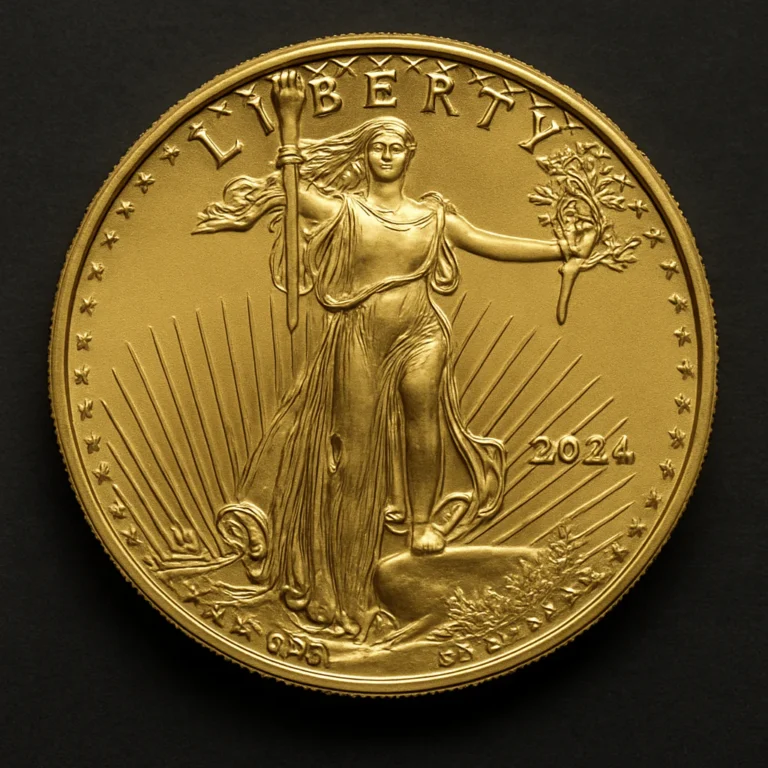
| 1-oz American Gold Eagle | 0.9167 | 4–6 % | 🔥🔥🔥🔥🔥 | U.S. legal tender; IRA eligible |
| 1-oz Austrian Philharmonic | 0.9999 | 2–4 % | 🔥🔥🔥 | Europe’s favorite |
| 1/10-oz coins | varies | 8–12 % | 🔥🔥🔥 | Great for barter, gift-giving |
👉 Shop smart:
- 👉 CHECK PRICE on: Amazon | Walmart | APMEX Official
- 👉 Shop American Gold Eagle on: Amazon | Walmart | JM Bullion Official
🔍 How to Authenticate and Grade Your Gold Coins Like a Pro
- Visual sweep under 10× loupe: look for tool-marks, seam lines, or mushy details—red flags for cast fakes.
- Ping test: balance coin on fingertip, tap with another gold coin. You want a long, ringing “whaannng”—not a dull thud.
- Specific-gravity test: cheap digital scale + distilled water = foolproof density check (19.3 g/cm³ for pure gold).
- Send to PCGS or NGC. They slab, grade, and register your coin on the blockchain.
- Check the Cert Verification database before you buy any slabbed coin. We once dodged a $3 k fake by spotting a mismatched barcode—bullet dodged!
💼 Starting Your Gold Coin Collection: Expert Tips and Tricks
- Budget rule: allocate 50 % to bullion for liquidity, 40 % to semi-key dates (e.g., 1926-S $2.5 Indian), 10 % moon-shot rarities.
- Date & mint-mark set the 1908–1929 Indian Quarter Eagles—small, affordable, and you can finish it in under two years.
- Attend local coin shows with a want-list and a loupe. Bring donuts for dealers—seriously, sugar opens wallets.
- Track population reports at NGC Census to spot conditional rarities before they pop.
- Document everything: photos, invoices, provenance letters. Future buyers love paperwork almost as much as the coin itself.
🔐 Safeguarding Your Treasure: Best Practices for Storing Gold Coins
| Option | Cost | Security Level | Accessibility | Our Take |
|---|---|---|---|---|
| Home TL-30 safe | $800–$2 k | High | 24/7 | Bolt to concrete, add Simplisafe layer |
| Bank safe-deposit box | $60–$250/yr | Medium | Bank hours | FDIC does NOT insure contents—buy separate insurance |
| Private vault (e.g., Delaware Depository) | 0.55 %/yr | Very High | 48 h notice | IRA-approved, fully insured |
| Hide-in-plain-sight | Free | Low | Instant | Fake wall outlet = clever but risky; only for <$2 k holdings |
Pro move: split your stash. Keep 20 % at home for apocalypse scenarios, 80 % in insured vaults.
📈 Is Investing in Gold Coins a Smart Move? Pros, Cons, and Market Insights
Pros
✅ Hedge against inflation—gold rose 498 % from 2001–2011 while S&P wobbled.
✅ Portable wealth—$50 k fits in a shirt pocket.
✅ Privacy—no 1099-B when you sell privately held bullion coins (check local laws).
Cons
❌ No yield—gold doesn’t pay dividends like crypto staking.
❌ Bid/ask spreads—rare coins can cost 6–15 % to liquidate.
❌ Storage & insurance costs nibble returns.
Anecdote: we bought MS-62 $20 Saints at $1,280 in 2009; sold in 2022 for $2,450. That’s 8.3 % CAGR—not Tesla territory, but we slept soundly every night.
💡 Lesser-Known Gold Coins That Could Skyrocket in Value
- Mexico 1943 50-peso (“Centenario”)—mintage restarted after WWII; high-relief restrikes gaining collector steam.
- South Africa 1967 first-year Krugerrand—only 40 k struck; toning potential = eye-popping premiums.
- France 20-franc “Lucky Angel” 1878–1898—popular in Europe, overlooked in U.S. auctions.
- Peru 100-soles 1959—tiny mintage (under 200), yet still trades near melt.
👉 Shop these sleepers on: Amazon | Etsy | APMEX Official
🌍 Global Gold Coin Markets: Where to Buy and Sell for Maximum Profit
Top auction houses
- Heritage Auctions (U.S. leader, 19 % buyer’s fee)
- Stack’s Bowers (great for six-figure rarities)
- Spink (London, strong in Islamic & British gold)
Online dealers with live inventory
Peer-to-peer
- r/Coins4Sale (use escrow)
- Facebook groups (watch for charge-back scams)
Insider tip: list high-end coins in January—New Year bonuses juice bidding.
🛠️ Maintaining and Cleaning Your Gold Coins Without Losing Value
Golden rule: NEVER POLISH RARE COINS. Micro-scratches can slash value by 70 %.
- Handle by edges over a soft towel.
- Store in non-PVC flips or airtight Intercept holders that neutralize sulfur.
- If you MUST remove PVC residue, dip in pure acetone (<5 sec), rinse with distilled water, air-dry vertically.
- For bullion, mild soap and distilled water is fine—just don’t brag about it on forums.
Remember: toning on vintage gold is usually acceptable; rainbow hues on modern .9999 coins can actually add premiums.
🎯 Conclusion: Your Golden Path to Coin Collecting Success

So, what’s the final word from your money enthusiasts at Coin Value™? The world of valuable gold coins is a dazzling blend of history, rarity, artistry, and pure financial muscle. From the legendary 1933 Saint-Gaudens Double Eagle—whose story reads like a Hollywood thriller—to the humble but liquid Canadian Maple Leaf, there’s a golden ticket for every type of collector and investor.
Positives:
- Owning rare gold coins means holding a piece of history that can appreciate exponentially.
- They offer a tangible hedge against inflation and market volatility.
- The thrill of the hunt and the stories behind each coin add layers of enjoyment beyond mere dollars.
Negatives:
- Ultra-rare coins require deep pockets and patience to find the right buyer.
- Authentication and storage demand vigilance and sometimes extra cost.
- Illiquidity can be a challenge for some rarities, so knowing your market is key.
Our confident recommendation: Start your journey with well-known investment-grade coins like the Canadian Maple Leaf or American Gold Eagle for liquidity and security. As you gain experience, dip your toes into rarer specimens like the Brasher Doubloon or 1907 High Relief Double Eagle—but only after thorough authentication and grading. And whatever you do, store your treasure like a dragon guards its hoard—secure, insured, and well-documented.
Remember that every gold coin is a story waiting to be told—and a legacy waiting to be passed on. Ready to start your collection or add that crown jewel? Dive into our recommended links below and grab your golden future today!
🔗 Recommended Links for Gold Coin Enthusiasts
-
Canadian Gold Maple Leaf 1 oz:
Amazon | Walmart | APMEX Official -
American Gold Eagle 1 oz:
Amazon | Walmart | JM Bullion Official -
TL-30 Home Safes for Coin Storage:
Amazon -
Books to Deepen Your Gold Coin Knowledge:
❓ Frequently Asked Questions About Valuable Gold Coins
What is the history behind the most valuable gold coins?
The most valuable gold coins often trace their origins to pivotal moments in history—like the 1933 Saint-Gaudens Double Eagle, which was minted but never officially circulated due to FDR’s gold recall. Others, like the 1787 Brasher Doubloon, were privately minted during America’s infancy, making them both rare and historically significant. These coins are more than currency—they’re artifacts of political, economic, and cultural shifts.
Where can I find reliable appraisals for rare gold coins?
Trusted appraisals come from professional grading services such as PCGS and NGC. Certified numismatists at these organizations evaluate coins for authenticity, condition, and rarity. For in-person appraisals, seek reputable coin dealers or auction houses like Heritage Auctions or Stack’s Bowers, which have established track records and transparent grading standards.
Are vintage gold coins a good investment?
Vintage gold coins can be excellent investments if you understand the market. They combine intrinsic gold value with numismatic premiums driven by rarity and condition. However, they require patience, knowledge, and sometimes higher transaction costs. For beginners, bullion coins like the Canadian Maple Leaf offer a safer entry point, while seasoned collectors can pursue rarities for potentially higher returns.
What are the top collectible gold coins for investors?
Top collectible gold coins include:
- 1933 Saint-Gaudens Double Eagle
- 1787 Brasher Doubloon
- 1822 Half Eagle
- 1907 Ultra High Relief Double Eagle
- American Gold Eagles and Canadian Maple Leafs (for liquidity and purity)
These coins are prized for rarity, historical importance, and market demand.
How can I identify authentic valuable gold coins?
Authenticating gold coins involves:
- Examining weight and dimensions against official specs.
- Inspecting design details under magnification for sharpness and tooling marks.
- Using specific gravity tests to confirm gold purity.
- Consulting certification databases from PCGS or NGC.
- Avoiding deals that seem “too good to be true” and buying from reputable dealers.
What factors determine the value of rare gold coins?
Value hinges on:
- Rarity: How many survive and how many were minted.
- Condition: Grading on the Sheldon scale (MS-60 to MS-70).
- Historical significance: Coins linked to major events or famous owners.
- Gold content: Purity and weight.
- Market demand: Collector interest and economic climate.
Which gold coins have sold for the highest prices at auction?
Some record-breaking sales include:
- 1933 Saint-Gaudens Double Eagle at $18.8 million.
- 1787 Brasher Doubloon at $9.36 million.
- 1822 Half Eagle at $8.4 million.
- 1849 Double Eagle (Smithsonian’s prized specimen) valued around $20 million.
These coins are ultra-rare and often come with fascinating provenance.
How does the condition of a gold coin affect its market value?
Condition can multiply a coin’s value exponentially. For example, a 1907 High Relief Double Eagle graded MS-68 can fetch nearly double the price of an MS-64. Even minor surface marks or wear can reduce value significantly. That’s why professional grading and careful handling are crucial.
Where can I buy certified valuable gold coins safely?
Buy from:
- Established auction houses like Heritage Auctions and Stack’s Bowers.
- Trusted online dealers such as APMEX and JM Bullion.
- Certified coin shops with positive reviews and transparent return policies.
Always insist on PCGS or NGC certification for high-value coins.
What are the historical gold coins that collectors seek the most?
Collectors often seek:
- Early American coins like the Brasher Doubloon and Half Eagles.
- Saint-Gaudens Double Eagles from the early 1900s.
- Rare European florins and ducats from medieval and Renaissance periods.
- Islamic gold dinars with religious and geographic significance.
These coins tell stories beyond their gold content, making them prized collectibles.
📚 Reference Links and Resources for Deep Dives
- PCGS – Professional Coin Grading Service
- NGC – Numismatic Guaranty Corporation
- Heritage Auctions – Rare Coins
- Stack’s Bowers Galleries
- Atkinsons Bullion – 10 Of The Rarest And Most Valuable Coins in the World
- Royal Canadian Mint – Big Maple Leaf Coin
- American Numismatic Association
- Coin Value™ Gold Coin Category
Ready to embark on your golden adventure? Whether you’re chasing the crown jewels of numismatics or stacking bullion for your financial fortress, remember: knowledge and patience are your best allies. Happy hunting! 🏅