Support our educational content for free when you purchase through links on our site. Learn more
🪙 Gold Coins vs. Bars: The Ultimate 2026 Showdown

The core difference is simple: gold coins are government-backed legal tender with higher liquidity and collectibility, while gold bars are private-refined bulk metal offering lower premiums and maximum efficiency. When you ask What is the difference between a gold coin and a gold bar, you are really asking whether you value the trust and resale ease of a coin or the cost savings of a bar.
Imagine trying to sell a 10 kg gold bar to a local pawn shop versus a single 1 oz gold coin. The shop owner might not have the equipment to verify the bar’s purity, but they’ll take the coin instantly because they recognize the mint mark. That split-second hesitation is the real cost of buying bars.
Did you know that the Lydians created the first gold coins over 2,60 years ago, establishing a tradition of trust that still drives premiums today? Meanwhile, the modern gold bar only became a mainstream investment vehicle in the 20th century, prioritizing raw weight over artistry.
Key Takeaways
- Legal Tender Status: Gold coins carry a face value and government guarantee, whereas gold bars are valued solely by their weight and purity.
- Premiums vs. Liquidity: You pay a higher premium for coins, but they are significantly easier to sell in small denominations.
- Investment Strategy: Choose coins for flexibility and long-term collectibility; choose bars for large-scale accumulation and lower entry costs.
- Verification: Coins are easier to authenticate with simple tests like the “ping test”, while bars often require assay cards or professional X-ray verification.
👉 Shop Gold Coins: American Gold Eagle | Canadian Maple Leaf
👉 Shop Gold Bars: PAMP Suisse Bars | Valcambi Bars
Table of Contents
- ⚡️ Quick Tips and Facts
- 🏛️ A Brief History of Gold: From Ancient Coins to Modern Bars
- 🪙 Gold Coins vs. 🧱 Gold Bars: The Core Differences Explained
- 💰 Understanding Premiums: Why Coins Cost More Than Bars
- 🔍 Spoting Authenticity: Hallmarks, Mint Marks, and Security Features
- 📊 Liquidity Showdown: Which Asset Sells Faster?
- 🏦 Storage and Security: Safeguarding Your Shiny Assets
- 🎨 Collectibility vs. Investment: Numismatic Value vs. Bullion Value
- 🧮 Tax Implications: Capital Gains and Reporting Requirements
- 🛒 How to Buy: Reputable Dealers, Online Marketplaces, and Auctions
- ❓ Frequently Asked Questions About Gold Coins and Bars
- 🔗 Recommended Links for Further Research
- 📚 Reference Links and Sources
- 🏁 Conclusion
⚡️ Quick Tips and Facts
Before we dive into the deep end of the bullion pool, let’s hit the shallow end with some rapid-fire truths that will save you from making a costly mistake. Here at Coin Value™, we’ve seen too many investors buy the wrong shape of gold because they didn’t know these basics.
- The “Legal Tender” Lophole: Gold coins are legal tender issued by government mints (like the US Mint or Royal Canadian Mint), giving them a face value (even if it’s just $50 on a $2,0 coin). Gold bars are private property with no face value, valued strictly by weight and purity.
- The Premium Paradox: You will almost always pay a higher premium for a gold coin than a gold bar of the same weight. Why? Because coins are harder to counterfeit and easier to sell.
- The “Ping” Test: You can verify a gold coin by dropping it on a hard surface; it should ring like a bell for several seconds. A gold bar? It just makes a dull thud. This acoustic signature is a quick, free authenticity check you can’t do with a bar.
- Liquidity is King: If you need cash yesterday, a 1 oz gold coin is generally easier to sell to a pawn shop or local dealer than a 1 kg gold bar.
- Divisibility Matters: Selling a 1 oz coin is easy. Selling a 10 oz bar? You might have to sell the whole thing or find a buyer willing to cut it (which destroys value).
For a deeper dive into how we value these assets, check out our guide on gold coin valuation.
🏛️ A Brief History of Gold: From Ancient Coins to Modern Bars

Gold has been the ultimate store of value for millennia, but the shape it takes has evolved as much as human civilization itself.
The Era of the Coin
It all started with the Lydians around 60 BC. They were the first to stamp gold and silver into standardized discs, creating the world’s first gold coins. These weren’t just bullion; they were currency. The stamp of the king (or the lion) guaranteed the weight and purity. This tradition continued through the Roman Empire, the Spanish Doubloon, and the British Sovereign.
The beauty of the coin was trust. If you were a merchant in ancient Rome, you didn’t need a scale to know the value of a coin; you just needed to recognize the Emperor’s face. This concept of government backing is why modern gold coins still command a premium today.
The Rise of the Bar
Fast forward to the 19th century. As global trade exploded, moving massive amounts of gold became cumbersome. Carying thousands of coins was heavy and risky. Enter the gold bar.
Private refineries and banks began casting large blocks of gold. These were efficient for moving wealth between banks but lacked the “trust stamp” of a government. For a long time, bars were the domain of the ultra-wealthy and central banks. It wasn’t until the 20th century, with the rise of investment-grade bullion, that bars became accessible to the average investor.
Fun Fact: The largest gold bar in the world, the “Golden Goose,” weighs over 250 kg! It’s currently sitting in the Tokyo Mint. Try fitting that in your pocket next to your wallet.
🪙 Gold Coins vs. 🧱 Gold Bars: The Core Differences Explained
So, you have your cash ready. Do you grab the shiny disc or the heavy block? Let’s break down the anatomy of these two titans.
The Anatomy of a Gold Coin
A gold coin is a masterpiece of engineering and art.
- Issuer: Exclusively government mints (e.g., US Mint, Royal Canadian Mint, Perth Mint).
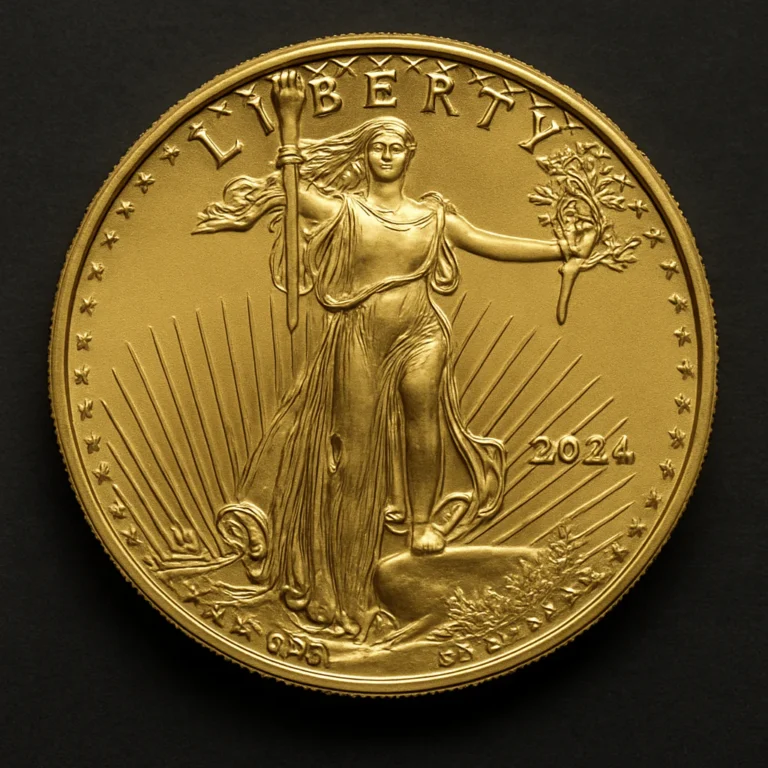
- Face Value: They carry a legal tender value (e.g., $50 for a 1 oz American Eagle), though this is symbolic.
- Design: Intricate, often changing annually, featuring national symbols, historical figures, or wildlife.
- Sizes: Typically 1/10 oz, 1/4 oz, 1/2 oz, and 1 oz. Some mints offer 2 oz or 5 oz, but 1 oz is the standard.
The Anatomy of a Gold Bar
A gold bar is pure function.
- Issuer: Private refineries (e.g., PAMP Suisse, Valcambi, Credit Suisse) or government mints.
- Face Value: None. It is worth exactly what the gold inside is worth.
- Design: Minimalist. Usually just the weight, purity, and the refiner’s logo. Some come in assay cards (tamper-evident packaging).
- Sizes: Ranging from 1 gram (tiny!) to 1 kilogram (heavy!) and even 40 oz “Good Delivery” bars used by central banks.
Comparison Table: At a Glance
| Feature | Gold Coins 🪙 | Gold Bars 🧱 |
|---|---|---|
| Issuer | Government Mints Only | Private Refineries & Mints |
| Legal Tender | Yes (Face Value) | No |
| Premium Over Spot | Higher (10-20%+) | Lower (3-10%) |
| Divisibility | High (Sell 1/10 oz, keep rest) | Low (Sell whole bar or cut) |
| Counterfeit Risk | Lower (Harder to fake) | Higher (Tungsten cores possible) |
| Verification | Visual, Weight, “Ping” Test | Assay, X-Ray, Specific Gravity |
| Best For | Liquidity, Collectibility, Small Buys | Large Capital, Cost Efficiency |
💰 Understanding Premiums: Why Coins Cost More Than Bars
Here is the million-dollar question: Why pay more for a coin?
When you buy gold, you pay the Spot Price (the current market price of raw gold) plus a Premium.
The Coin Premium Breakdown
Coins have higher premiums because:
- Manufacturing Costs: Striking a coin with intricate details requires more energy and precision than pouring a bar.
- Distribution: Government mints have complex distribution networks.
- Trust Factor: You are paying for the government guarantee. If a coin is fake, the government stands behind the program. If a bar is fake, you’re on your own.
- Collectibility: Even modern bullion coins can appreciate if they are rare or in perfect condition.
The Bar Premium Breakdown
Bars are the “bulk buy” option.
- Economies of Scale: Casting a 10 oz bar is cheaper per ounce than casting ten 1 oz bars.
- Simplicity: Less art, less labor, lower cost.
- The Trade-off: You save money upfront, but you might lose money later if you can’t sell the bar easily.
Pro Tip: If you are buying 10 oz of gold, buying ten 10 oz bars is often cheaper than buying one 10 oz bar, but selling ten 10 oz bars is much easier than selling one 10 oz bar. It’s a balancing act!
🔍 Spoting Authenticity: Hallmarks, Mint Marks, and Security Features
This is where things get exciting (and scary). The world of gold is rife with counterfeits.
The Gold Coin Advantage
Coins are generally safer because:
- Mint Marks: Every government coin has specific, hard-to-replicate markings.
- Dimensions: A 1 oz American Gold Eagle has a precise diameter (32.7mm) and thickness. If it’s off by a millimeter, it’s fake.
- The Ping Test: As mentioned, drop it. A real gold coin rings like a bell. A fake (often tungsten) sounds dull.
- Magnetic Test: Gold is not magnetic. If it sticks to a magnet, it’s a fake. (Note: Tungsten is also not magnetic, so this isn’t foolproof, but it catches cheap fakes).
The Gold Bar Challenge
Bars are trickier.
- Assay Cards: Most investment bars come in a plastic card with a certificate. Never cut the card unless you are selling to a refiner. The card is your proof of purity.
- Tungsten Cores: This is the biggest risk. Tungsten has a density almost identical to gold. A bar can be tungsten plated with gold and pass a weight test.
- Verification: To be sure, you need X-ray fluorescence (XRF) or ultrasonic testing. This is why many dealers will only buy back bars if they are in original assay packaging.
Story Time: We once had a client bring in a “1 kg PAMP Suisse” bar that looked perfect. The assay card was pristine. But when we ran the specific gravity test, the density was slightly off. It was a tungsten core. The client lost thousands. Always buy from reputable dealers!
📊 Liquidity Showdown: Which Asset Sells Faster?
When the music stops, who can dance out of the room fastest?
Gold Coins: The Sprinters
Coins are the most liquid form of physical gold.
- Global Recognition: A 1 oz American Eagle or Canadian Maple Leaf is recognized by any dealer, from New York to Tokyo.
- Small Denominations: Need $50? Sell a 1/10 oz coin. Need $2,0? Sell a 1 oz coin. You have flexibility.
- Private Sales: It’s easier to sell a coin to a private buyer because they trust the government stamp.
Gold Bars: The Marathon Runers
Bars are liquid, but with conditions.
- Size Matters: A 1 oz bar is almost as liquid as a coin. A 10 oz bar? Less so. A 1 kg bar? You might have to wait for the right buyer.
- The Spread: Dealers often offer a lower buy-back price for bars, especially if they need to verify the purity.
- The “Cut” Problem: If you need cash but only have a 10 oz bar, you can’t sell half. You must sell the whole thing or find a buyer who wants a massive chunk.
The Verdict: If you think you might need to sell in small chunks, coins win. If you are a “buy and hold for 20 years” investor, bars are fine.
🏦 Storage and Security: Safeguarding Your Shiny Assets
You’ve bought your gold. Now, where do you hide it?
Home Storage
- Coins: Great for home storage. You can keep a few in a home safe. They are small, easy to hide, and you can access them quickly.
- Bars: A 1 kg bar is heavy and conspicuous. If you have a 10 kg bar, you need a serious safe. Plus, if you get robbed, a thief can grab one bar and walk away with $70,0. With coins, they’d have to grab a whole box.
Bank Safe Deposit Boxes
- Pros: High security, fireproof.
- Cons: You can’t access them 24/7. If the bank closes for a holiday, your gold is locked. Also, some banks have restrictions on storing bullion.
Third-Party Depositories
- Best for Large Holdings: If you have $50k+ in gold, a non-bank depository (like Brink’s or Loomis) is the way to go. They offer insurance, 24/7 monitoring, and the ability to store bars and coins separately.
- Allocated vs. Unallocated: Always choose allocated storage. This means your specific bars/coins are yours, not part of the bank’s general inventory.
🎨 Collectibility vs. Investment: Numismatic Value vs. Bullion Value
Here is where the line blurs. Not all gold coins are created equal.
Bullion Coins
These are bought for their gold content. The price is Spot Price + Premium.
- Examples: American Gold Eagle, Canadian Maple Leaf, Austrian Philharmonic.
- Goal: Preserve wealth, hedge against inflation.
Numismatic Coins
These are bought for their rarity, condition, and historical significance. The price can be 10x the gold value!
- Examples: 193 Double Eagle, Saint-Gaudens Double Eagle, ancient Roman aureus.
- Goal: Capital appreciation based on collector demand.
Warning: Don’t buy a “numismatic” coin thinking it’s a safe investment unless you are an expert. The market for rare coins is volatile and illiquid. Stick to bullion coins if you are a beginner.
For more on identifying rare coins, visit our Coin Identification category.
🧮 Tax Implications: Capital Gains and Reporting Requirements
Let’s talk money—specifically, the money the IRS wants.
The “Collectible” Tax Rate
In the US, physical gold (both coins and bars) is taxed as a collectible, not a capital asset.
- Long-term Capital Gains: If you hold for more than a year, the max tax rate is 28%, compared to 15-20% for stocks.
- Short-term: Taxed as ordinary income if held less than a year.
Reporting Requirements
- Form 109-B: Dealers must report sales of gold coins and bars over certain thresholds.
- Cash Transactions: If you pay more than $10,0 in cash, the dealer must file a Form 830.
- No Sales Tax: In many US states, gold coins and bars are exempt from sales tax, but this varies by state and by the type of coin (some states tax coins but not bars, or vice versa).
Note: Always consult a tax professional. Tax laws change, and the IRS is getting smarter about tracking crypto and precious metals.
🛒 How to Buy: Reputable Dealers, Online Marketplaces, and Auctions
Ready to pull the trigger? Here is how to buy safely.
1. Reputable Dealers
Stick to the big names. They have a reputation to lose.
- APMEX: Huge selection, good customer service.
- JM Bullion: Competitive pricing, great for beginners.
- SD Bullion: Often has the lowest prices.
- Local Coin Shops (LCS): Great for seeing the product in person and building a relationship.
2. Online Marketplaces
- eBay: Risky. Only buy from sellers with 10% positive feedback and “Authenticity Guarantee.”
- Etsy: Good for vintage/numismatic coins, but be careful with modern bullion.
3. Auctions
- Heritage Auctions, Stack’s Bowers: Great for rare coins, but expect to pay a premium.
What to Avoid
- TV Comercials: “Gold IRA” companies often charge massive fees.
- Unknown Websites: If the price is too good to be true, it’s a scam.
- Private Sellers: Unless you are an expert, avoid buying from random people on Facebook or Craigslist.
👉 CHECK PRICE on:
- American Gold Eagle: Amazon | APMEX | JM Bullion
- PAMP Suisse Gold Bar: Amazon | APMEX | JM Bullion
❓ Frequently Asked Questions About Gold Coins and Bars
Is a gold coin worth more than a gold bar?
It depends on your definition of “worth.”
- Intrinsic Value: A 1 oz coin and a 1 oz bar contain the same amount of gold. Their metal value is identical.
- Market Value: Coins usually sell for a higher price due to premiums. However, if you are selling, a dealer might pay less for a bar if they have to verify it, whereas they might pay more for a coin due to liquidity.
- Verdict: Coins are “worth” more in terms of liquidity and trust; bars are “worth” more in terms of cost-efficiency per ounce.
What are the tax implications of buying gold coins versus gold bars?
There is no difference in tax treatment between coins and bars in the US. Both are taxed as collectibles at a maximum 28% long-term capital gains rate. However, some states have different sales tax exemptions for coins vs. bars, so check your local laws.
Why do gold coins have higher premiums than gold bars?
Coins cost more to produce (detailed minting), carry a government guarantee (legal tender), and are easier to resell. You are paying for convenience, trust, and liquidity. Bars are cheaper because they are simple to cast and lack the “brand” of a government mint.
Which is better for investment: gold coins or gold bars?
- Choose Coins if: You want flexibility, plan to sell in small amounts, or want a “safe” asset that is easy to verify.
- Choose Bars if: You have a large budget, want to minimize premiums, and plan to hold for the long term without selling.
How does the resale value of gold coins compare to gold bars?
Coins generally have a tighter buy/sell spread. Dealers are more willing to pay close to spot for coins because they can resell them easily. Bars, especially large ones, often have a wider spread because the dealer takes on more risk and storage cost.
Are gold coins more liquid than gold bars?
Yes. Coins are more liquid because they are smaller, more recognizable, and easier to verify. A 1 oz coin can be sold to almost any dealer. A 10 oz bar might require a specialized buyer.
What is the purity difference between gold coins and gold bars?
- Bars: Typically 9.9% (24k) pure.
- Coins: Varies.
- American Gold Eagle: 91.67% (2k) (mixed with copper/silver for durability).
- Canadian Maple Leaf: 9.9% (24k).
- South African Krugerrand: 91.67% (2k).
Note: The lower purity of some coins (like the Eagle) does not affect their gold content value; you still get 1 oz of pure gold in a 1 oz Eagle.
🏁 Conclusion

So, what’s the final verdict? Should you grab the coin or the bar?
If you are a beginer or someone who values flexibility, the gold coin is your best friend. The slightly higher premium is the price of admission for peace of mind, easy verification, and the ability to sell in small chunks. The American Gold Eagle and Canadian Maple Leaf are the gold standards (pun intended) for a reason.
If you are a serious investor with a large lump sum and you plan to hold for decades, the gold bar is the smart money move. You save on premiums, and you don’t need to worry about selling in small increments. Just make sure you buy from a reputable refiner and keep the assay card safe.
The Bottom Line: Don’t let the shape of the gold dictate your strategy. Let your goals dictate the shape. Whether you choose the ring of a coin or the heft of a bar, the most important thing is that you own physical gold in a world of digital uncertainty.
And remember, the “ping” of a coin might just be the sound of your portfolio sleeping soundly.
🔗 Recommended Links for Further Research
Ready to start your journey? Here are the best places to buy and learn.
👉 Shop Gold Coins on:
- American Gold Eagle: Amazon | APMEX | JM Bullion
- Canadian Gold Maple Leaf: Amazon | APMEX | JM Bullion
👉 Shop Gold Bars on:
- PAMP Suisse Gold Bars: Amazon | APMEX | JM Bullion
- Valcambi Gold Bars: Amazon | APMEX | JM Bullion
Recommended Books:
📚 Reference Links and Sources
- United States Mint: Gold Coins
- Royal Canadian Mint: Gold Coins
- Perth Mint: Gold Bars
- The Difference Between Gold Bullion, Gold Bars, and Gold Coins: US Gold Bureau
- Coin Value Categories:
- Coin Values
- Coin Collecting
- Coin Identification
🎥 Featured Video Perspective
In the video analysis of gold coins vs. bars, the host highlights a crucial point: “Gold bars are almost always going to be cheaper than the gold coins.” However, they also emphasize the trust factor. The video notes that while bars are cheaper, the acoustic signature (the “ping”) of a coin provides a unique, low-tech verification method that bars simply cannot offer. The host concludes that for the average investor, the American Gold Eagle offers the perfect balance of trust, beauty, and liquidity, making the extra premium worth it for the peace of mind it provides.
For a visual demonstration of the “ping test” and a detailed comparison of premiums, check out the full video analysis here.