Support our educational content for free when you purchase through links on our site. Learn more
🏦 Can You Really Buy Gold Coins From a Bank? (2026 Truth)

The hard truth is that while you can technically buy gold coins from a bank, it is rarely the smartest move due to sky-high premiums and limited availability. If you want to buy gold coins from bank branches, be prepared for a frustrating hunt, special orders, and prices that often exceed market rates by 20% or more.
Most major commercial banks in the U.S. have quietly stopped selling physical gold to the general public, leaving that role to specialized dealers. We once watched a friend spend weeks chasing a local bank manager only to find out the “gold” they had in stock was actually a special order with a 25% markup.
The reality is that specialized dealers like APMEX or JM Bullion offer better prices, instant availability, and secure delivery right to your door. Don’t let the allure of a bank vault fool you into overpaying for your investment.
Key Takeaways
- Banks rarely sell gold: Most commercial banks do not stock gold coins for the general public, often requiring special orders with long wait times.
- Premiums are higher: Expect to pay 15–25% over spot price at a bank, compared to 3–8% with reputable dealers.
- Selection is limited: Banks typically offer only one or two coin types, whereas dealers provide a vast global inventory.
- Convenience matters: Buying from a bank often means in-person pickup and no insurance on safe deposit boxes, while dealers offer insured home delivery.
- Better alternatives exist: For the best value and variety, specialized precious metal dealers are the superior choice for investors.
Table of Contents
- ⚡️ Quick Tips and Facts
- 🏛️ The Bank Vault Myth: Can You Actually Buy Gold Coins From a Bank?
- 📜 A Brief History of Bank-Backed Gold and the Shift to Private Dealers
- 🏦 How to Buy Gold Coins From a Bank: The Step-by-Step Reality
- 🆚 Banks vs. Precious Metal Dealers: Where Should You Buy Your Bullion?
- 1. The American Gold Eagle
- 2. The Canadian Gold Maple Leaf
- 3. The South African Krugerrand
- 4. The Austrian Philharmonic
- 5. The British Gold Sovereign
- 6. The Chinese Gold Panda
- 7. The Australian Gold Kangaroo
- 💰 Understanding Gold Coin Premiums, Spot Prices, and Hidden Fees
- 🔒 Safety First: Secure Storage, Insurance, and Delivery Options
- 🧾 Tax Implications and Capital Gains on Gold Coin Investments
- 🚫 Common Scams and Red Flags When Buying Gold Online
- 🤔 Frequently Asked Questions About Buying Gold Coins
- ✅ Conclusion
- 🔗 Recommended Links
- ❓ FAQ
- 📚 Reference Links
⚡️ Quick Tips and Facts
Before you march down to your local branch with a briefcase full of cash, let’s hit the pause button and drop some hard truths about the “buy gold coins from bank” dream. We’ve seen too many folks get the runaround, only to realize their bank teller is more interested in selling you a CD than a Krugerrand.
Here is the lowdown on what you need to know right now:
- The Myth Buster: Most commercial banks in the U.S. do not sell gold coins to the general public. It’s not a standard service like buying a money order.
- The Exception: A select few private banks or specific branches might offer it, but you’ll likely face higher premiums and a limited selection.
- The Better Path: Specialized precious metal dealers (like U.S. Money Reserve or APMEX) offer a vastly superior inventory and often lower prices.
- Verification is Key: Whether you buy from a bank or a dealer, always verify authenticity. A fake gold coin is just a very expensive paperweight.
- Storage Matters: If you buy from a bank, ask about safe deposit boxes, but remember: banks often disclaim liability for the contents of these boxes regarding precious metals.
For a deeper dive into the nuances of valuing these shiny assets, check out our guide on gold coin values.
🏛️ The Bank Vault Myth: Can You Actually Buy Gold Coins From a Bank?
Let’s address the elephant in the vault. You’ve probably seen movies where the hero walks into a bank, whispers “gold,” and the manager slides a heavy bag of coins across the marble counter. Reality check: That scene is pure Hollywood fiction.
While it is technically possible to buy gold coins from a bank, it is extremely rare in the modern banking landscape. As noted by CBS News, “Some U.S. banks do sell gold bars, gold coins as well as silver coins, but the vast majority of U.S. banks do not make gold or silver available to the public.”
Why Don’t Banks Sell Gold Anymore?
It comes down to risk management and profit margins.
- Inventory Risk: Gold prices fluctuate wildly. Banks hate holding assets that can drop 10% in a week.
- Storage Costs: Keeping gold in a vault requires insurance and security, eating into the bank’s bottom line.
- Focus Shift: Banks prefer selling you loans, mortgages, and insurance policies. Gold doesn’t generate interest for them.
The “Special Order” Lophole
Some banks might order gold for you if you ask, but this is often a special order process.
- Wait Times: You might wait weeks or even months for the bank to source the coins.
- High Premiums: Because it’s a special order, the bank adds a hefty markup.
- Minimums: They might require you to buy a $10,0 minimum just to make it worth their while.
Pro Tip: If your bank says “yes,” ask for the premium over spot price in writing before you commit. You might be shocked to find a local coin shop offers the same coin for 30% less.
📜 A Brief History of Bank-Backed Gold and the Shift to Private Dealers

To understand why your bank doesn’t have a gold counter, we have to look back at the gold standard.
The Gold Standard Era
For centuries, paper money was directly backed by physical gold held in bank vaults. If you walked into a bank with a $20 bill, you could theoretically walk out with a gold coin of equivalent value. This system created a direct link between currency and bullion.
The Great Shift: 193 and Beyond
The game changed in 193 when President Franklin D. Roosevelt issued Executive Order 6102, making it illegal for U.S. citizens to hold significant amounts of gold. Banks were forced to turn in their gold to the Federal Reserve.
It wasn’t until 1974 that Americans could legally own gold again. By then, the banking system had evolved. Banks realized they could make more money lending money than holding heavy, non-interest-bearing metal.
The Rise of Private Dealers
As banks stepped back, private dealers stepped in. Companies like APMEX, JM Bullion, and SD Bullion filled the void. These entities specialize in precious metals, offering:
- Real-time pricing based on the spot market.
- Huge inventories of coins from around the world.
- Competitive premiums due to high volume.
Today, the “bank” is no longer the primary source of gold for the average investor. The specialized dealer is the new gatekeeper of the vault.
🏦 How to Buy Gold Coins From a Bank: The Step-by-Step Reality
So, you’re still determined to try your luck at the bank? We respect the hustle, but you need a game plan. Here is the step-by-step reality of attempting this purchase.
Step 1: The Phone Call (The Filter)
Do not just walk in. Call your local branch first.
- Ask the Right Questions: “Do you sell gold coins to the general public?” “Do you have any in stock, or is it a special order?”
- Expect the “No”: 90% of the time, the answer will be a polite “No.”
- Ask for the Manager: If the teller says no, ask to speak to a private banking manager or a wealth advisor. They might have access to different resources.
Step 2: The Verification
If a bank says “yes,” verify the details.
- Purity: Ensure the coins are 9.9% pure (investment grade).
- Authenticity: Ask if the coins come with a certificate of authenticity or are sealed in a tamper-evident capsule.
- Price: Get the total cost including any handling fees.
Step 3: The Purchase
If you proceed, be prepared for the process.
- Payment: Banks usually require a wire transfer or a cashier’s check. They rarely accept cash for large transactions due to reporting laws.
- Pickup: You will likely need to pick up the coins in person. Secure delivery is rarely an option for bank purchases.
Step 4: The Storage Dilemma
Once you have the coins, where do they go?
- Safe Deposit Box: You can rent one, but remember: banks do not insure the contents of safe deposit boxes for precious metals.
- Home Safe: You’ll need a high-quality, fireproof, and bolted-down safe.
🆚 Banks vs. Precious Metal Dealers: Where Should You Buy Your Bullion?
This is the million-dollar question (or rather, the ounce-of-gold question). Let’s break it down with a comparison that might save you a fortune.
| Feature | Commercial Banks | Specialized Dealers (e.g., APMEX, JM Bullion) |
|---|---|---|
| Availability | ❌ Extremely Rare | ✅ Always Available |
| Selection | ❌ Limited (often just 1-2 types) | ✅ Massive (Eagles, Maples, Krugerrands, etc.) |
| Pricing | ❌ High Premiums (often 15-25%+) | ✅ Competitive (often 3-8% over spot) |
| Convenience | ❌ In-person only, long wait times | ✅ Online ordering, home delivery |
| Expertise | ❌ Generalist staff | ✅ Dedicated precious metal specialists |
| Insurance | ❌ Often excluded for safe deposit boxes | ✅ Insured shipping included |
| Buyback Policy | ❌ Rarely buy back | ✅ Robust buyback programs |
The Verdict: Unless you have a specific relationship with a private bank that offers gold at a competitive rate, specialized dealers are almost always the better choice. They offer transparency, variety, and better value.
1. The American Gold Eagle
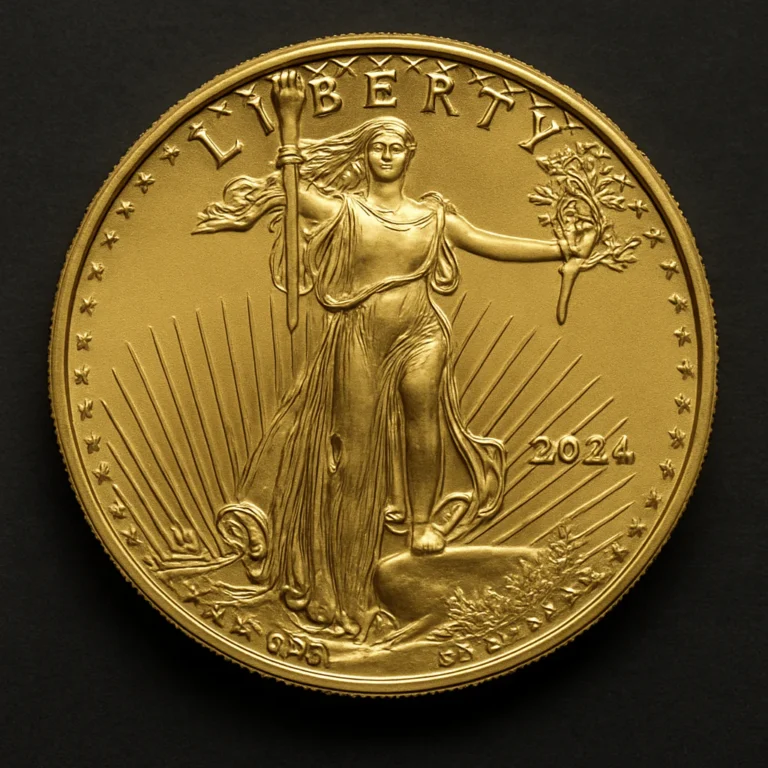
If you are in the U.S., this is the gold standard (pun intended). The American Gold Eagle is the official bullion coin of the United States, minted by the U.S. Mint.
- Purity: 91.67% gold (2 karat), alloyed with silver and copper for durability.
- Design: Features the iconic “Standing Liberty” on the obverse and a family of eagles on the reverse.
- Why Buy It: It has legal tender status in the U.S., making it highly liquid. It’s the most recognized gold coin in America.
👉 CHECK PRICE on:
- APMEX: Shop American Gold Eagle on APMEX
- JM Bullion: Shop American Gold Eagle on JM Bullion
- U.S. Mint: Official U.S. Mint Page
2. The Canadian Gold Maple Leaf
Minted by the Royal Canadian Mint, this coin is famous for its ultra-high purity.
- Purity: 9.9% pure gold (24 karat).
- Design: Features Queen Elizabeth II (or King Charles III, depending on the year) and a maple leaf.
- Why Buy It: The 9.9% purity makes it a favorite for investors who want the highest gold content per ounce. It also features advanced security features like micro-engraved radial lines to prevent counterfeiting.
👉 CHECK PRICE on:
- APMEX: Shop Canadian Gold Maple Leaf on APMEX
- JM Bullion: Shop Canadian Gold Maple Leaf on JM Bullion
3. The South African Krugerrand
The Krugerrand was the first gold bullion coin made specifically for the international market, introduced in 1967.
- Purity: 91.67% gold (2 karat).
- Design: Features Paul Kruger (former President of the South African Republic) and a springbok antelope.
- Why Buy It: It’s historically significant and often trades at a lower premium than the American Eagle or Canadian Maple Leaf, making it a great entry-level coin.
👉 CHECK PRICE on:
- APMEX: Shop South African Krugerrand on APMEX
- JM Bullion: Shop South African Krugerrand on JM Bullion
4. The Austrian Philharmonic
Minted by the Austrian Mint, this coin is a favorite in Europe and increasingly popular in the U.S.
- Purity: 9.9% pure gold.
- Design: Features the Great Organ of the Vienna Musikverein on the reverse.
- Why Buy It: It is tax-exempt in many European countries and offers a unique aesthetic. It’s also a great option for diversifying your portfolio with non-U.S. coins.
👉 CHECK PRICE on:
- APMEX: Shop Austrian Philharmonic on APMEX
- JM Bullion: Shop Austrian Philharmonic on JM Bullion
5. The British Gold Sovereign
One of the oldest gold coins still in production, the Sovereign has a history dating back to 1489.
- Purity: 91.67% gold (2 karat).
- Design: Features St. George slaying a dragon on the reverse.
- Why Buy It: It’s a collectible favorite and often comes in smaller denominations (half sovereigns, quarter sovereigns), making it accessible for smaller budgets.
👉 CHECK PRICE on:
- APMEX: Shop British Gold Sovereign on APMEX
- JM Bullion: Shop British Gold Sovereign on JM Bullion
6. The Chinese Gold Panda
Minted by the People’s Bank of China, the Panda is unique because its design changes every year.
- Purity: 9.9% pure gold.
- Design: Features a different panda scene annually, making each year’s coin a unique collectible.
- Why Buy It: The changing design adds a numismatic (collectible) value on top of the bullion value. It’s a favorite for collectors who want to track the history of the series.
👉 CHECK PRICE on:
- APMEX: Shop Chinese Gold Panda on APMEX
- JM Bullion: Shop Chinese Gold Panda on JM Bullion
7. The Australian Gold Kangaroo
Minted by the Perth Mint, the Kangaroo (formerly the Gold Nuget) is a staple of the Australian bullion market.
- Purity: 9.9% pure gold.
- Design: Features a kangaroo, with the design changing annually.
- Why Buy It: Like the Panda, the annual design change adds collectible appeal. The Perth Mint is renowned for its quality control and security features.
👉 CHECK PRICE on:
- APMEX: Shop Australian Gold Kangaroo on APMEX
- JM Bullion: Shop Australian Gold Kangaroo on JM Bullion
💰 Understanding Gold Coin Premiums, Spot Prices, and Hidden Fees
Here is where the rubber meets the road. You see a gold coin listed for $2,0, but the spot price of gold is only $1,90. What gives?
The Spot Price
The spot price is the current market price for one ounce of pure gold. It fluctuates constantly, like the stock market. This is your baseline.
The Premium
The premium is the extra amount you pay over the spot price. This covers:
- Minting costs: The expense of designing and striking the coin.
- Distribution: Shipping, insurance, and dealer margins.
- Demand: Popular coins (like the American Eagle) often have higher premiums due to high demand.
Why Banks Charge More: Banks often have higher overhead and lower volume, leading to premiums of 15-25%. A specialized dealer might charge only 3-8%.
Hidden Fees to Watch For
- Handling Fees: Some dealers charge a flat fee for processing.
- Shipping Costs: While many offer free shipping on large orders, smaller orders might incur a fee.
- Sales Tax: In some states, gold coins are tax-exempt, but in others, you might pay sales tax. Always check your local laws.
Pro Tip: Always calculate the total cost per ounce (Spot Price + Premium + Fees) before buying. A coin with a lower spot price but a massive premium might be a bad deal.
🔒 Safety First: Secure Storage, Insurance, and Delivery Options
You’ve bought your gold. Now, how do you keep it safe? This is a question we get asked daily at Coin Value™.
Home Storage
- The Safe: Invest in a TL-15 or TL-30 rated safe. These are fire and burglar-resistant.
- The Location: Don’t keep it in the bedroom closet. Use a hidden safe or a bolted-down safe in a less obvious location.
- Insurance: Standard homeowners insurance often does not cover precious metals fully. You may need a rider or a separate valuables policy.
Bank Safe Deposit Boxes
- Pros: High security, fireproof.
- Cons: No insurance for contents (unless you buy a separate policy), limited access hours, and the bank can seize the box if you have legal issues.
Professional Vaulting
- Pros: Fully insured, 24/7 security, often tax-advantaged (if held in an IRA).
- Cons: You don’t have physical access to the coins.
- Providers: Companies like Brink’s or Loomis offer secure storage solutions.
Delivery Safety: When buying online, choose dealers that offer discret, insured shipping. Reputable dealers like APMEX and JM Bullion use specialized carriers that guarantee delivery.
🧾 Tax Implications and Capital Gains on Gold Coin Investments
Gold isn’t just a shiny object; it’s an asset with tax consequences.
Capital Gains Tax
In the U.S., gold coins are considered collectibles by the IRS.
- Short-term: If you hold for less than a year, profits are taxed as ordinary income.
- Long-term: If you hold for more than a year, profits are taxed at the collectibles capital gains rate, which is a maximum of 28% (higher than the standard 15-20% for stocks).
Sales Tax
- Exemptions: Many states (like Texas, Florida, and Arizona) exempt gold coins from sales tax if they meet certain purity standards.
- Taxable States: Some states still charge sales tax on gold purchases. Always check your state’s regulations.
1031 Exchanges
Unlike real estate, gold coins do not qualify for a 1031 exchange (tax-defered swap). You must pay taxes when you sell.
Pro Tip: Consult with a tax professional before making large gold investments to understand your specific liability.
🚫 Common Scams and Red Flags When Buying Gold Online
The internet is full of gold scams. Here’s how to spot them.
The “Too Good to Be True” Price
If a coin is listed for below the spot price, it’s a scam. No one sells gold for less than it’s worth.
The “Rare Coin” Pitch
Scammers often sell “rare” coins at inflated prices, claiming they are worth thousands. In reality, they are just common bullion coins with a high markup.
The “Guaranteed Buyback” Trap
Some scammers promise to buy back your gold at a high price later, but they never exist when you try to sell.
How to Verify Authenticity
- Buy from Reputable Dealers: Stick to well-known names like APMEX, JM Bullion, or U.S. Money Reserve.
- Check Reviews: Look for independent reviews on Trustpilot or the Better Business Bureau.
- Verify the Coin: Use a magnet test (gold is not magnetic) or a ping test (gold has a distinct ring). For serious collectors, consider third-party grading from PCGS or NGC.
🤔 Frequently Asked Questions About Buying Gold Coins
We know you have questions. We’ve got answers.
Do banks still give out gold coins?
Rarely. Most commercial banks have stopped selling gold coins to the public due to high premiums and limited inventory.
Can I buy gold coins at a bank?
Technically yes, but practically no. You might find a few private banks that offer it, but the selection is tiny and the price is high.
What is the best 1 oz gold coin to buy?
It depends on your goal. For liquidity, the American Gold Eagle is king. For purity, the Canadian Gold Maple Leaf is unbeatable. For value, the South African Krugerrand often has the lowest premium.
What banks sell gold coins?
Very few. Some examples of banks that have offered gold in the past include Bank of America (in limited cases) and Wells Fargo (via special order), but availability is not guaranteed.
What is the best way to buy gold coins?
Buying from a reputable online dealer is the best way. You get competitive prices, huge selection, and secure delivery.
Can you buy gold coins through a bank?
Yes, but it’s inconvenient and expensive. You’ll likely need to place a special order and wait weeks.
Can I buy gold coins directly from my local bank?
Probably not. Most local branches do not stock gold. You’d need to contact the head office or a private banking division.
Which banks sell gold coins to the general public?
There is no definitive list because it changes frequently. It’s better to assume no bank sells gold and look to specialized dealers instead.
What is the price of gold coins at banks compared to dealers?
Banks typically charge 15-25% over spot, while dealers charge 3-8% over spot. That’s a huge difference in your pocket.
Do banks sell collectible gold coins or only bullion?
Banks that do sell gold usually only sell bullion coins (like the American Eagle). They rarely deal in numismatic (collectible) coins.
How do I verify the authenticity of gold coins bought from a bank?
Even from a bank, verify the coin. Use a magnet test, scale, and calipers. If in doubt, send it to a grading service.
Are there any fees associated with buying gold coins from a bank?
Yes. Banks often charge handling fees, storage fees (if using a safe deposit box), and high premiums.
Can I exchange bank-bought gold coins for cash later?
Yes, but banks rarely buy back gold coins. You’ll likely need to sell to a local coin shop or a dealer, which might offer a lower price than the bank charged you.
✅ Conclusion

So, can you buy gold coins from a bank? Yes, but you probably shouldn’t.
The dream of walking into your local bank and walking out with a bag of gold is just that—a dream. The reality is a maze of high premiums, limited stock, and inconvenience. While a select few private banks might offer the service, the value proposition simply doesn’t hold up against the specialized dealers that dominate the market today.
Our Recommendation:
Skip the bank. Go straight to a reputable precious metals dealer like APMEX, JM Bullion, or U.S. Money Reserve. You’ll get:
- Better prices (lower premiums).
- Wider selection (Eagles, Maples, Krugerrands, Pandas, and more).
- Convenience (order online, delivered to your door).
- Expertise (dedicated specialists to guide you).
Final Thought: Gold is a timeless asset, but how you buy it matters. Don’t let the “bank” myth cost you thousands in unnecessary premiums. Do your homework, compare prices, and buy from the pros.
Ready to start your gold journey? Check out our Coin Values category for more insights, or dive into our Coin Collecting guide to learn how to build a portfolio that shines.
🔗 Recommended Links
- 👉 Shop American Gold Eagles: APMEX | JM Bullion | U.S. Mint
- 👉 Shop Canadian Gold Maple Leaf: APMEX | JM Bullion
- 👉 Shop South African Krugerrand: APMEX | JM Bullion
- 👉 Shop Austrian Philharmonic: APMEX | JM Bullion
- 👉 Shop Chinese Gold Panda: APMEX | JM Bullion
- 👉 Shop Australian Gold Kangaroo: APMEX | JM Bullion
- Books on Gold Investing: The Gold Bug’s Handbook on Amazon
- Secure Storage Solutions: Brink’s Home Security
❓ FAQ
Do banks still give out gold coins?
No, not typically. While it is technically possible at some private banks, the vast majority of commercial banks in the U.S. have stopped selling gold coins to the public. The U.S. Money Reserve notes that “the vast majority of U.S. banks do not make gold or silver available to the public.”
Read more about “💰 What Is a Gold Coin Worth Today? (2026)”
Can I buy gold coins at a bank?
Rarely. You might find a few exceptions, but the process is often cumbersome, involving special orders and long wait times. It’s usually better to buy from a specialized dealer.
Read more about “🏦 2026 List of Banks That Sell Gold Coins: The Ultimate Guide”
What is the best 1 oz gold coin to buy?
The “best” depends on your goal.
- For Liquidity: American Gold Eagle.
- For Purity: Canadian Gold Maple Leaf.
- For Value: South African Krugerrand.
- For Collectibility: Chinese Gold Panda.
Read more about “🪙 How to Start a Gold Coin Collection: The Ultimate 2026 Guide”
What banks sell gold coins?
There is no consistent list. Some banks like Bank of America or Wells Fargo have offered gold in the past, but availability is not guaranteed and varies by branch. It’s safer to assume no bank sells gold and look to dealers instead.
Read more about “🚀 Crypto Coin Value: The 2026 Guide to Real Worth & Hidden Gems”
What is the best way to buy gold coins?
The best way is through a reputable online dealer. They offer competitive prices, wide selection, and secure shipping. Avoid pawnshops and random online marketplaces.
Read more about “Is a $20 Gold Coin Real? 5 Ways to Spot the Fakes (2026)”
Can you buy gold coins through a bank?
Yes, but it’s not recommended. The process is often slow, expensive, and limited. Specialized dealers are a better alternative.
Read more about “Amazon Digital Currency Unveiled: What to Expect in 2026 💰”
Can I buy gold coins directly from my local bank?
Probably not. Most local branches do not stock gold. You’d need to contact the head office or a private banking division, and even then, availability is uncertain.
Read more about “Can You Mine Crypto on Your Own? The Ultimate 2025 Guide 🔥”
Which banks sell gold coins to the general public?
Very few. Most banks have discontinued this service. If you find one, expect high premiums and limited selection.
What is the price of gold coins at banks compared to dealers?
Banks typically charge 15-25% over spot, while dealers charge 3-8% over spot. This difference can add up to thousands of dollars on a large purchase.
Do banks sell collectible gold coins or only bullion?
Banks that do sell gold usually only sell bullion coins. They rarely deal in numismatic (collectible) coins, which require specialized knowledge.
Read more about “🏛️ Is It Legal to Own Gold Coins? The 2026 Truth Revealed”
How do I verify the authenticity of gold coins bought from a bank?
Even from a bank, verify the coin. Use a magnet test, scale, and calipers. For high-value coins, consider third-party grading from PCGS or NGC.
Are there any fees associated with buying gold coins from a bank?
Yes. Banks often charge handling fees, storage fees (if using a safe deposit box), and high premiums.
Can I exchange bank-bought gold coins for cash later?
Yes, but it’s difficult. Banks rarely buy back gold coins. You’ll likely need to sell to a local coin shop or a dealer, which might offer a lower price than the bank charged you.
📚 Reference Links
- U.S. Money Reserve: Can You Buy Gold or Silver From a Bank?
- CBS News: Where to Buy Gold Bars & Coins
- The Bullion Bank: Market Data & Insights
- U.S. Mint: American Gold Eagle
- Royal Canadian Mint: Gold Maple Leaf
- South African Mint: Krugerrand
- Austrian Mint: Philharmonic
- Perth Mint: Gold Kangaroo
- PCGS: Coin Grading
- NGC: Coin Grading