Support our educational content for free when you purchase through links on our site. Learn more
How to Store and Preserve Your Coin Collection 🪙

To answer “How do I store and preserve my coin collection to maintain its value?”: keep coins in holders made for numismatic storage, handle them by the edges, and store them in a cool, dry, stable place away from sunlight, moisture, and household chemicals. Just as important, don’t clean collectible coins—a well-meant polish can permanently alter their surfaces.
At Coin Value™, we’ve seen how quickly a quick sort can become a handful of coins sliding across a tabletop. Individual holders, a soft work surface, and a simple inventory help prevent those small mishaps—and make it easier to find the coin you’re looking for without rummaging through the whole collection.
The right setup depends on what you collect: albums make sets easy to browse, tubes suit groups of similar coins, and capsules or professionally graded holders keep individual coins secure. We’ll show you how to weigh those trade-offs and protect your coins without turning storage into a costly science project.
Key Takeaways
- Choose coin-safe storage that fits each coin; avoid unknown plastics and holders containing PVC.
- Handle coins by the edges over a soft surface to reduce fingerprints, scratches, and drops.
- Store coins in stable conditions away from humidity, heat, direct sunlight, and household fumes.
- Don’t polish or casually clean collectible coins. Seek qualified advice before attempting treatment.
- Match the holder to the job: albums for browsing, tubes for suitable bulk storage, and individual holders or slabs for coins needing more protection.
- Keep an inventory and inspect storage periodically so you can track the collection and catch problems early.
Table of Contents
- ⚡️ Quick Tips and Facts for Preserving Your Coin Collection
- 🪙 Why Proper Coin Storage Protects Condition and Value
- 🌡️ The Biggest Threats to Coins: Humidity, Heat, Light, and Chemicals
- ✅ How to Store and Preserve Your Coin Collection
- Choose the Right Coin Holders, Albums, and Storage Supplies
- Handle Coins Safely to Prevent Fingerprints and Scratches
- Control Temperature and Humidity
- Protect Coins from Light, Air, and Household Chemicals
- Organize, Label, and Inventory Your Collection
- 📦 Coin Storage Options Compared: Flips, Tubes, Albums, and Slabs
- When to Use Coin Flips and 2×2 Holders
- When Coin Tubes Make Sense
- Choosing Coin Albums and Folders
- Storing Certified Coins in Slab Holders
- 🧼 Cleaning, Conservation, and What Not to Do
- Why Cleaning Can Reduce a Coin’s Collectible Value
- What to Do About Dirt, Toning, and Corosion
- 🔍 Inspecting Coins and Catching Storage Problems Early
- 🚚 Safely Moving, Shipping, and Displaying Your Coins
- 🛡️ Coin Collection Security, Insurance, and Documentation
- 🎥 Coin Storage Demonstrations and Preservation Resources
- 🏛️ How Coin Collecting and Preservation Practices Have Evolved
- 🏁 Conclusion
- 🔗 Recommended Links
- ❓ FAQ
- What is the safest way to store a coin collection?
- Should I store coins in plastic bags or sleeves?
- What humidity level is best for coin storage?
- Can I store coins in a safe or bank deposit box?
- Should I remove coins from their original packaging?
- How often should I check my coin collection?
- 📚 Reference Links
Table of Contents
- ⚡️ Quick Tips and Facts for Preserving Your Coin Collection
- 🪙 Why Proper Coin Storage Protects Condition and Value
- 🌡️ The Biggest Threats to Coins: Humidity, Heat, Light, and Chemicals
- ✅ How to Store and Preserve Your Coin Collection
- Choose the Right Coin Holders, Albums, and Storage Supplies
- Handle Coins Safely to Prevent Fingerprints and Scratches
- Control Temperature and Humidity
- Protect Coins from Light, Air, and Household Chemicals
- Organize, Label, and Inventory Your Collection
- 📦 Coin Storage Options Compared: Flips, Tubes, Albums, and Slabs
- When to Use Coin Flips and 2×2 Holders
- When Coin Tubes Make Sense
- Choosing Coin Albums and Folders
- Storing Certified Coins in Slab Holders
- 🧼 Cleaning, Conservation, and What Not to Do
- Why Cleaning Can Reduce a Coin’s Collectible Value
- What to Do About Dirt, Toning, and Corosion
- 🔍 Inspecting Coins and Catching Storage Problems Early
- 🚚 Safely Moving, Shipping, and Displaying Your Coins
- 🛡️ Coin Collection Security, Insurance, and Documentation
- 🎥 Coin Storage Demonstrations and Preservation Resources
- 🏛️ How Coin Collecting and Preservation Practices Have Evolved
- 🏁 Conclusion
- 🔗 Recommended Links
- ❓ FAQ
- What is the best way to store coins to prevent tarnishing?
- Should I use coin holders, albums, or capsules to protect my collection?
- How do humidity and temperature affect coin preservation?
- Can touching coins with bare hands reduce their value?
- What materials should I avoid when storing collectible coins?
- How should I store silver coins to prevent corrosion?
- Does professional grading help preserve a coin’s value?
- 📚 Reference Links
⚡️ Quick Tips and Facts for Preserving Your Coin Collection
If you’re wondering how coin value is assessed, remember that condition is only one part of the picture, but it’s one you can protect. At Coin Value™, we’ve seen a good storage habit prevent avoidable damage—and a careless five-second handling mistake leave a mark that outlasts the moment.
| Preservation question | Coin Value™ short answer |
|---|---|
| Where should I keep coins? | In a cool, dry, stable, secure place away from sunlight, fumes, and household moisture. |
| What should touch a coin? | Ideally, only a coin-specific holder made from materials suitable for long-term storage. |
| How should I handle one? | Hold it by the edge, over a soft surface, and avoid touching either face. |
| Should I clean it? | No—not casually. Abrasive cleaning can permanently alter a coin’s surface and collector appeal. |
| Is every plastic holder safe? | No. Some flexible plastics, especially PVC-containing material, can deteriorate and leave harmful residue. |
| How do I choose a storage method? | Match the holder to the coin’s value, metal, handling frequency, and display needs. |
| What should I record? | Identification, date, mintmark, images, provenance, storage location, and relevant insurance details. |
A practical starting checklist:
- ✅ Use coin holders, albums, capsules, or tubes made specifically for coins.
- ✅ Keep coins away from kitchens, bathrooms, basements, attics, and garages if those spaces have changing humidity or temperature.
- ✅ Separate coins that could rub together.
- ✅ Label holders without writing on the coin or using adhesive near its surface.
- ✅ Check your collection periodically for moisture, residue, loose holders, and new spots.
- ❌ Don’t polish, dip, scrub, or “shine up” a collectible coin.
- ❌ Don’t assume an airtight container is automatically safe: the coin and holder still need to be dry and chemically compatible.
For more collecting basics, browse Coin Value™’s Coin Collecting and Coin Values sections. We’ll get to the crucial choice—which holder suits which coin—after looking at what storage is actually trying to prevent.
🪙 Why Proper Coin Storage Protects Condition and Value
Coins are metal, but they are not invincible little discs. Their surfaces can be affected by abrasion, skin oils, moisture, pollutants, and chemical residues. Changes to a coin’s original surface can influence its appearance and desirability to collectors, though the degree depends on the coin, the damage, and the market.
The Royal Canadian Mint’s storage and display guidance highlights several everyday threats: skin oils and dirt, air pollution, humidity, and temperature extremes. Its broad recommendation is to use products intended for coins, rather than improvised household containers.
Storage is preservation, not a value guarantee
Good storage helps prevent new damage. It doesn’t restore a coin that was already scratched, cleaned, coroded, or mishandled. Nor does a safe holder guarantee a particular market value: rarity, demand, authenticity, grade, and eye appeal also matter. For background on valuation, see our guide to coin value and related gold coin collecting.
Think of a proper holder as a seat belt, not a time machine. It reduces risk; it doesn’t reverse what has happened.
The three jobs of a storage system
A useful storage setup should:
- Limit physical contact. Coins shouldn’t rattle, slide, or rub against each other.
- Reduce exposure. Keep contaminants, moisture, and handling away from the surfaces.
- Make the collection manageable. Identification and inventory reduce unnecessary handling and help you locate a coin without rummaging.
Different collectors weigh those goals differently. A beginner with circulated coins may prefer labeled cardboard holders and a binder. Someone preserving a scarce, high-grade coin may choose an individually fitted capsule or professional encapsulation. And a collector who loves displaying a complete set may accept less convenient access in exchange for an album.
🌡️ The Biggest Threats to Coins: Humidity, Heat, Light, and Chemicals
The main preservation lesson is simple: avoid instability and contamination. A coin’s metal composition affects how it responds, so there is no single storage hazard that behaves identically for every coin. Silver, copper, nickel alloys, and gold alloys each have different properties; a coin can also contain several metals.
| Threat | How it can affect coins | Safer habit |
|---|---|---|
| High or fluctuating humidity | Encourages corrosion or spotting, especially when contaminants are present | Choose a dry, stable indoor location; monitor damp areas |
| Heat and rapid temperature changes | Can worsen instability in some storage materials and create condensation when conditions shift | Avoid attics, vehicles, radiators, and sunlit windowsills |
| Airborne pollutants | May react with a coin’s surface or leave deposits | Keep coins away from cleaning fumes, smoke, and industrial pollution |
| Skin oils and sweat | Fingerprints and residues can mark surfaces | Handle by the edge with clean, dry hands or suitable cotton gloves |
| Abrasion and impact | Creates scratches, rim dings, and contact marks | Use individual holders for coins that should not touch |
| PVC and unsuitable plastics | Degrading material may leave greenish, sticky residue | Prefer holders sold as PVC-free and designed for coins |
| Adhesives, cardboard dust, and staples | May cause residue, spots, or accidental scratches | Use quality holders; manage staples carefully |
| Direct sunlight and intense display lighting | Can heat the holder or cause unwanted environmental fluctuation | Display away from direct sun and heat sources |
A “dry location” does not mean a bone-dry, wildly fluctuating environment. The goal is steady conditions, not turning your collection into a climate-control experiment. If a room is damp enough to develop mildew or musty smells, it is a poor choice for long-term coin storage.
Important distinction: a coin changing colour is not automatically damaged. Natural toning can be part of a coin’s surface history, while corrosion, contamination, or artificial alteration may be harmful. Don’t try to diagnose a mysterious mark by scrubbing it off; inspect it carefully and seek experienced numismatic advice if the coin may be valuable.
✅ How to Store and Preserve Your Coin Collection
A reliable process doesn’t need to be fancy. It does need to be consistent. Here’s a step-by-step approach that works for a growing collection, from inherited pocket change to carefully assembled type sets.
Choose the Right Coin Holders, Albums, and Storage Supplies
Start by grouping coins according to size, metal, condition, and how often you plan to handle or display them. A bulk tube can be sensible for common coins of the same type; an individual capsule is better for a coin that should not contact anything else.
Before buying storage supplies, check:
- Material: Is it specifically made for coin storage? Is it labeled PVC-free when appropriate?
- Fit: Does the coin sit securely without being forced, rattling, or rubbing?
- Access: Will you need to remove it often, or is long-term storage the goal?
- Visibility: Do you need to see one face, both faces, or neither?
- Organization: Can you label the holder without putting adhesive or ink near the coin?
- Future handling: Can you open it safely without scraping a coin or damaging a seal?
Brands such as Guardhouse, Whitman, Dansco, and Air-Tite offer coin-related storage products. Product materials and designs differ by model, so verify the specific holder’s dimensions and material rather than relying on the brand name alone.
Coin Value™ tip: Buy a small quantity first, test the fit and handling, then expand your system. That prevents the classic collector’s drawer full of holders that are almost the right size.
Handle Coins Safely to Prevent Fingerprints and Scratches
- Prepare a clean workspace. Clear food, drinks, tools, and loose coins away. Work over a soft, clean surface so a dropped coin has less chance of taking a hard landing.
- Wash and dry your hands. Clean hands reduce surface oils and grime. For delicate or high-value coins, suitable cotton gloves may help, but gloves can reduce grip; don’t use them if they make a drop more likely.
- Pick up the coin by its edge. Keep fingers off the obverse and reverse—the two broad faces.
- Move one coin at a time. Put it straight into its holder instead of setting it down among other coins.
- Close the holder carefully. Check for trapped dust, a loose fit, or an edge caught in a seam.
- Return it to a stable, labeled location. The less you rummage, the less you handle.
If you sneeze, fumble, or discover you’ve touched a coin’s face, don’t panic and don’t rub it. Put it down safely and leave the surface alone. A well-meaning “quick wipe” can turn a tiny fingerprint into a larger problem.
Control Temperature and Humidity
Choose a room with stable indoor conditions and keep the collection away from damp foundations, plumbing, exterior walls prone to condensation, and places with dramatic seasonal swings. A basic hygrometer can help you notice whether a storage area is consistently damp, but it is the trend—not one isolated reading—that matters.
Useful habits:
- Store the collection above floor level, especially if there is any risk of leaks or flooding.
- Don’t place coin boxes directly against a cold exterior wall.
- Avoid storing coins in a garage, shed, vehicle, or unconditioned attic.
- If using desiccant, keep it in the storage environment—not loose against a coin—and follow its replacement or reactivation instructions.
- Do not seal damp coins in a container. Dry the storage environment first; never improvise by heating coins.
For a bank safety deposit box, ask the bank about location, access, and environmental conditions. The American Numismatic Association’s video guidance also raises a practical concern about boxes close to the floor and cleaning-related moisture or chemicals. That is a reason to ask questions, not a guarantee that every bank has the same risk.
Protect Coins from Light, Air, and Household Chemicals
Store coins away from:
- Household cleaners, bleach, ammonia, polish, and aerosols
- Paint, solvents, adhesives, and freshly treated wood
- Smoke, cooking vapours, and strong fragrances
- Rubber bands, ordinary plastic bags, PVC-containing flips, and unknown plastics
- Direct sunlight, radiators, and high-intensity lamps
A display case can look beautiful and still be a bad environment if it sits above a heater or in direct sun. Keep presentation and preservation in balance: a coin should not have to endure heat and fumes just to look good on a shelf.
For display, use holders designed for coins and cases with secure closures. If you want the visual effect without exposing the actual collection, a digital inventory or photographs can show off your set without increasing handling.
Organize, Label, and Inventory Your Collection
An inventory makes the collection easier to preserve, value, insure, and share with family. The Royal Canadian Mint recommends keeping records as a collection grows; its guidance suggests documenting details such as coin type, dates, mintmarks, images, and storage history.
| Record | Why it helps |
|---|---|
| Country, denomination, date, and mintmark | Identifies the coin and separates similar issues |
| Metal or composition, if known | Helps guide storage and risk assessment |
| Photographs of both sides | Documents appearance and distinctive features |
| Purchase or acquisition details | Supports provenance and insurance records |
| Storage location and holder type | Makes retrieval easier and helps track materials |
| Condition notes | Creates a useful reference for future inspections |
| Grading or authentication information | Links the coin to any professional documentation |
Use a spreadsheet, notebook, or collection-management app. Store a backup separately from the physical collection. Avoid publishing a detailed public inventory that reveals where valuable coins are kept.
A small anecdote from our team: one of us once spent an evening searching through identical flips for a coin already in the collection—because the label was on the outer box, not the holders. A few clear labels would have saved the hunt and the unnecessary handling. Organization is preservation wearing a sensible hat.
📦 Coin Storage Options Compared: Flips, Tubes, Albums, and Slabs
No storage option wins every category. The best choice depends on the coin’s fragility, value, how often you handle it, and whether display matters. The American Numismatic Association’s storage video makes the same central point: decide how you want to present coins and how much protection the situation calls for.
| Storage method | Best suited to | Benefits | Drawbacks to consider |
|---|---|---|---|
| Cardboard 2×2 holder | Individual coins, sorting, labeled collections | Compact, easy to label, often affordable | Staple handling, cardboard dust, variable materials |
| Flexible coin flip | Temporary storage or dealer-style organization | Easy to open and label | PVC risk in some products; coin can shift |
| Coin tube | Groups of similar-size, lower-risk coins | Efficient for bulk storage | Coins can rub; difficult to inspect one coin without moving others |
| Coin album or folder | Building and viewing a set | Organized, easy to browse, often shows both sides | Coins may be exposed during insertion; designs vary |
| Coin capsule | Individual display and protection | Secure fit when sized correctly; good visibility | Must be opened carefully; not all capsules fit all coins |
| Grading-service slab | Authenticated or professionally graded coins | Encapsulated, labeled, convenient to store and identify | Fees and submission risks; not a guarantee of value or invulnerability |
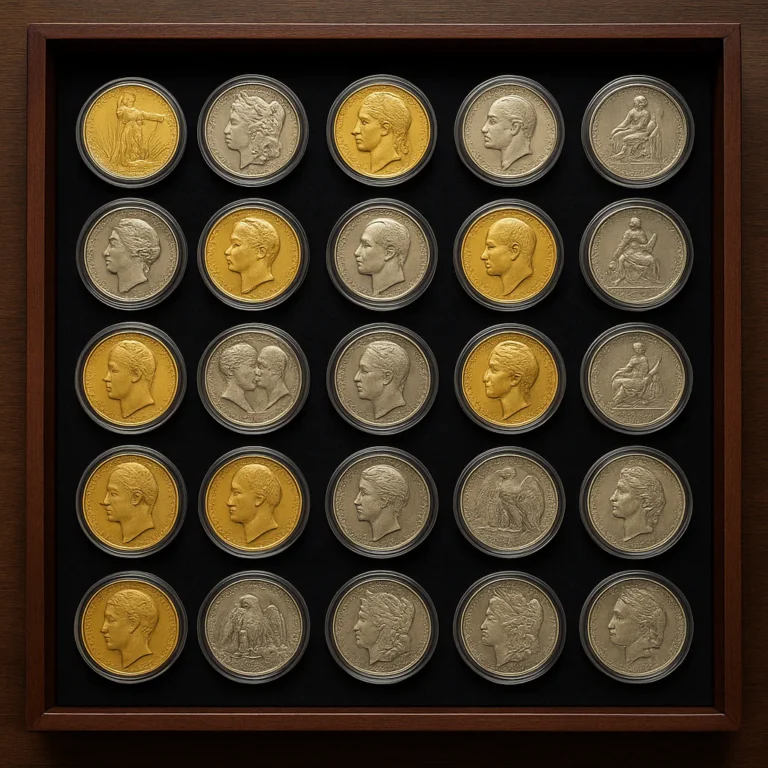
| Display box or cabinet | Presentation and organized storage | Attractive, convenient for viewing | Case materials and location matter; may add little physical protection |
The Mint of Canada’s storage guidance describes a broad range, from paper sleeves and 2×2 holders to capsules, slabs, and display cases. Its advice is useful because it treats storage as a set of trade-offs rather than a single magic product.
When to Use Coin Flips and 2×2 Holders
Cardboard 2×2 holders typically fold around a coin, with a clear window on each face. They’re popular for organization because you can write identification on the cardboard without marking the coin.
Check that:
- The inner window is the right size.
- The holder is designed for coins and uses suitable materials.
- The coin cannot slide around excessively.
- Staples are closed flat and kept clear of the coin.
Use a staple remover or carefully open the holder when it’s time to remove a coin. A staple that catches the edge can scratch it. Some collectors prefer adhesive-sealed holders to avoid staples, but adhesives can fail or leave residue, so choose a purpose-made product and inspect it periodically.
Flexible flips are convenient, but the word “flip” covers different plastics. Some older or unsuitable soft vinyl holders can contain PVC. Avoid assuming a flip is safe because it is clear or feels soft. Look for explicit material information, especially for long-term storage.
When Coin Tubes Make Sense
Coin tubes are useful for bulk storage of coins that share a size and do not need individual viewing. They reduce clutter and make it easy to group a roll or set by denomination, year, or mintmark.
Their main compromise is contact. Coins may shift or rub against each other as the tube moves, and inspecting one coin means handling the group. For that reason, we generally reserve tubes for common or circulated coins where individual, pristine surfaces are not the main concern.
Choose tubes that fit the coins properly and are specifically intended for coin storage. Keep tubes upright and secured in a labeled box so they cannot tumble around. Don’t force oversized coins into a tube that makes them scrape the walls.
Choosing Coin Albums and Folders
Albums are excellent when you want to build a series, see what is missing, and enjoy the collection without opening every holder. Older push-in folders may show only one face and can leave part of a coin exposed. Modern albums with sliding windows often display both sides and provide more enclosure, though the actual protection depends on the design and materials.
Before choosing one:
- Confirm the coin sizes the album accepts.
- Check how coins are inserted and removed.
- Look for secure sliding covers and clear viewing windows.
- Confirm the album’s materials are suitable for long-term coin contact.
- Avoid repeatedly pushing a valuable coin into and out of a tight opening.
Album brands such as Whitman and Dansco are familiar names among collectors. Compare the specific album construction rather than assuming that every album in a brand’s range offers the same materials or protection.
Storing Certified Coins in Slab Holders
Professional grading companies such as PCGS and NGC encapsulate coins in sealed holders and provide grading or authentication information according to their services. A slab protects a coin from routine handling and makes identification easier, but it is not indestructible. A hard drop can crack a holder, and unsuitable storage conditions can still harm a coin or its packaging.
Keep slabs:
- In a protective storage box or fitted tray.
- Away from heat, sunlight, and sharp impacts.
- In a consistent position so labels remain easy to read.
- Separate from loose coins that could scratch the plastic.
The American Numismatic Association video calls third-party grading “probably the most expensive—but the best way” to protect a coin, while also advising collectors to consider whether the coin justifies the expense. That recommendation is about a high level of encapsulation, not a universal rule: many collections are safely stored in quality individual holders without professional grading.
🧼 Cleaning, Conservation, and What Not to Do
The safest default is don’t clean collectible coins. A coin’s surface is part of its condition and history. Rubbing, polishing, abrasive cloths, household chemicals, and improvised dips may leave hairlines, uneven colour, or other changes that collectors can recognize.
The United States Mint’s collecting-care resource is a useful starting point for coin-care basics. For coins that may be valuable, ask a qualified numismatist or conservation professional before attempting treatment.
Why Cleaning Can Reduce a Coin’s Collectible Value
Cleaning can remove or alter a coin’s original surface, even when the goal is simply to make it “look better.” A polished coin may appear brighter, but brightness is not the same as an undamaged surface. Scratches caused by cleaning can be visible under angled light or magnification.
Avoid:
- Toothpaste, baking soda, metal polish, or erasers
- Brushes, scouring pads, and ordinary cloths
- Kitchen dips or acid-based cleaners
- Rubbing a coin to remove fingerprints or spots
- Treating every colour change as tarnish that must be removed
A coin with a suspicious deposit is a reason to pause, not to experiment. If the coin is rare, high-grade, or emotionally important, professional advice is a safer first step.
What to Do About Dirt, Toning, and Corosion
First, separate observation from treatment:
- Look at the coin under good, indirect light.
- Note whether the mark appears to be surface dirt, toning, residue, or corrosion; don’t assume you can identify it by appearance alone.
- Photograph both sides for your records.
- Check whether the coin’s holder is deteriorating or contaminated.
- If the coin is valuable or the surface change is active, consult a qualified numismatic conservation specialist.
Natural toning can be stable and attractive to collectors. Corosion may indicate continuing damage. A sticky green residue on a coin or holder can be a warning sign of deteriorating PVC. Do not scrape or wipe the residue away. Isolate the affected holder from the rest of the collection and seek expert guidance on next steps.
🔍 Inspecting Coins and Catching Storage Problems Early
Routine inspection is useful, but constant opening and handling defeats the purpose. Set a modest schedule—perhaps during inventory updates or seasonal home checks—and inspect the holder and storage area first.
Look for:
- Green, sticky, or oily residue
- New spots, haze, or unexplained changes in appearance
- Cracked capsules or loose seals
- Flips that have become cloudy, brittle, or sticky
- Dampness, musty odours, or evidence of pests
- Bent staples or protruding edges on 2×2 holders
- A storage box exposed to sunlight, leaks, or heat
If you find a problem, don’t open every holder in a panic. Move the affected item carefully, document what you see, and determine whether the holder itself may be the source. If one item shows signs of PVC deterioration, inspect nearby storage materials and separate any questionable plastics.
A simple inspection log can record the date, holder condition, and any changes. That gives you a baseline; otherwise, the memory of “it looked fine last year” can be as fuzzy as a coin tube full of similar cents.
🚚 Safely Moving, Shipping, and Displaying Your Coins
Moving day is when a careful storage system can suddenly become a box of rattling surprises. Before transporting coins:
- Place individual holders in a fitted tray or padded, rigid container.
- Keep coin tubes, albums, and slabs from shifting.
- Avoid packing coins with heavy objects, tools, or loose metal.
- Keep the collection with you when practical; don’t leave it in a hot vehicle.
- Photograph and inventory the collection before a major move.
- Use tracked, appropriately insured shipping when sending items, and follow carrier rules.
Display without creating new risks
Display cases can be attractive, but they should be out of direct sun, away from heaters, and secured against tipping or accidental handling. Don’t put loose coins into ordinary frames or floating displays unless the materials are designed for coin contact. Check that display materials won’t trap moisture or press unevenly on the coin.
For a collection you want to show often, consider displaying reproductions or digital images while keeping the originals protected. Digital inventory features—such as collection-tracking tools offered by mints and coin platforms—can make browsing easy without repeatedly opening holders.
🛡️ Coin Collection Security, Insurance, and Documentation
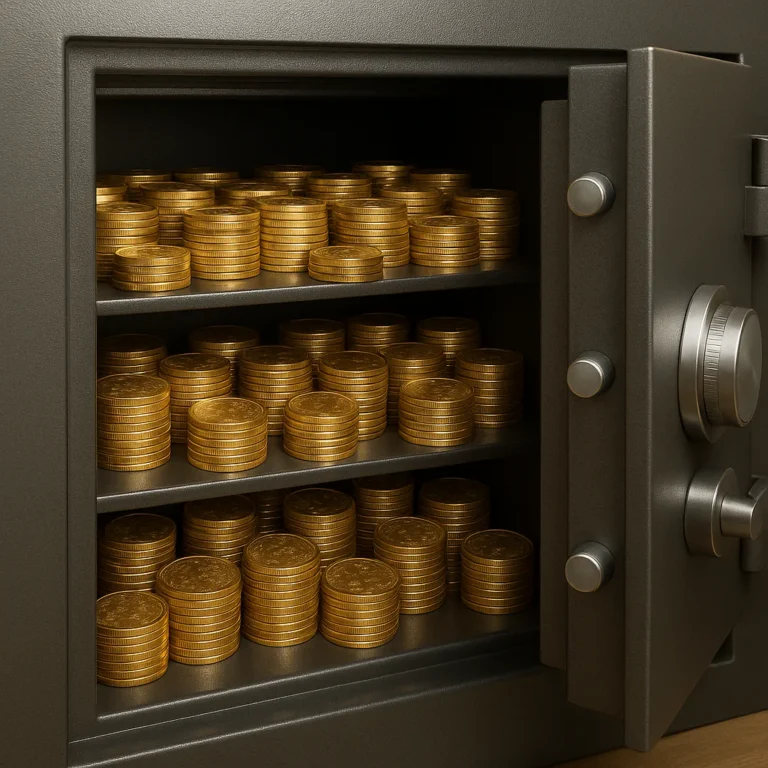
Preservation includes protection from loss, theft, and misidentification. Keep valuable coins in a secure, unobvious location and avoid discussing exact storage details publicly. A home safe should be anchored or otherwise difficult to remove, and you should review its fire and water protection claims rather than relying on a label alone.
A bank safety deposit box may suit a collection that you do not need to access frequently. Trade-offs include limited access, bank hours, and the need to understand the box agreement. Ask about the box’s location and any relevant environmental considerations; don’t assume a deposit box is insured by the bank for the full contents.
For insurance and documentation:
- Maintain a current inventory with photographs and identifying details.
- Keep copies of receipts, grading records, and appraisals separately.
- Ask your insurer whether a homeowners or renters policy covers collectible coins, and what documentation or special coverage is required.
- Store digital records securely, with a backup that is not kept beside the coins.
- Revisit the inventory when you buy, sell, inherit, or move coins.
A properly stored coin can still be lost without a record of what it was. Good documentation protects the collection’s story as well as its practical value.
🎥 Coin Storage Demonstrations and Preservation Resources
The American Numismatic Association’s coin-storage video offers a useful collector’s perspective on choosing among tubes, flips, albums, individual holders, and grading services. Its practical theme is that the system should match both your presentation goals and your level of protection.
The video describes tubes as economical but notes that coins can rub; it presents cardboard flips as convenient while warning that staples can scratch; and it describes third-party encapsulation as a high-protection option that may not make sense for every coin. For secure storage, it recommends an unobvious home location or a properly secured fire-retardant safe, while noting that bank boxes offer less immediate access.
That perspective lines up with the Mint of Canada’s recommendation to use products intended for coin storage, but the sources emphasize different things: the video focuses on choice and practical trade-offs, while the Mint’s written guidance gives more attention to materials, handling, inventory, and display. Both are useful; neither turns a holder into a substitute for sensible environmental control.
If you’re studying collecting more broadly, Coin Value™ also covers crypto coins and crypto coin mining. Those digital assets have very different storage and security needs from physical numismatic coins, so don’t confuse a crypto wallet with a coin album. One holds keys; the other holds metal. 🙂
🏛️ How Coin Collecting and Preservation Practices Have Evolved
Collectors have used everything from paper envelopes and cardboard folders to fitted albums and sealed grading-service holders. The basic goal has stayed the same: identify coins, keep them organized, and reduce unnecessary damage. What has changed is the range of purpose-made materials and the amount of information available about how those materials age.
The Mint of Canada’s article, “Got coins? How to safely store and display your collection”, describes the trade-offs between sleeves, 2×2 holders, flips, tubes, albums, capsules, slabs, and display cases. It also recommends inventorying the collection as it grows. Meanwhile, the ANA video gives a collector-oriented view of options from bulk tubes to professional encapsulation.
Those viewpoints are compatible, not contradictory. There is no single best holder for every coin. A tube may be sensible for a group of common coins and a poor choice for a coin you want to preserve individually. A slab offers strong protection and clear identification, but that doesn’t make grading worthwhile for every piece. The best answer is the one that protects the coin without adding needless handling, unsuitable materials, or cost.