Support our educational content for free when you purchase through links on our site. Learn more
💎 Valuing Rare Coins: The Ultimate 2026 Guide to Hidden Fortunes

Have you ever rumaged through an old attic, a dusty jar of change, or a forgotten safe deposit box and wondered, “Is this just pocket lint, or is it a fortune waiting to happen?” We at Coin Value™ have seen it all: from a teenager finding a 1943 Bronze Penny worth over a million dollars in a cereal box to seasoned collectors losing thousands by cleaning a pristine Morgan Dollar. The truth is, valuing rare coins isn’t just about the metal content; it’s a thrilling detective game where rarity, condition, and eye appeal collide to create history’s most fascinating treasures.
In this comprehensive guide, we’re pulling back the curtain on the secrets of the numismatic world. We’ll walk you through the Sheldon Scale, decode the difference between a common coin and a key date, and show you exactly how to spot the mint errors that turn $0.05 into $50,0. Whether you are holding a worn-out Lincoln Cent or eyeing a potential 193 Double Eagle, our expert team has distilled years of experience into a roadmap that will save you from costly mistakes and help you uncover the true worth of your collection.
Curiosity Check: Did you know that a single 195 Doubled Die error can be worth more than a new car? We’ll reveal exactly how to spot this elusive error and why most people miss it entirely later in this article.
Key Takeaways
- Condition is King: A coin’s value is primarily driven by its grade; a difference of a single point on the Sheldon Scale can multiply value by 10x or more.
- Never Clean Your Coins: Cleaning destroys the original luster and can instantly slash a coin’s value by 90% or render it worthless to serious collectors.
- Rarity vs. Scarcity: Understand the critical difference between how many were minted and how many survive in high grades to accurately assess true market value.
- Authentication Matters: Always verify mint marks, weights, and dimensions, and consider professional grading from PCGS or NGC for high-value finds.
- Market Dynamics: Value is determined by demand, auction results, and eye appeal, not just the metal content or age of the coin.
Table of Contents
- ⚡️ Quick Tips and Facts
- 📜 A Brief History of Numismatics: From Ancient Drachmas to Modern Mint Marks
- 🔍 The Art of Grading: Understanding Coin Condition and the Sheldon Scale
- 💎 Key Factors Influencing Rare Coin Valuation: Rarity, Demand, and Eye Appeal
- 🏆 Top 15 Most Valuable Coins in History That Will Make Your Jaw Drop
- 🛡️ Authentication and Security: Avoiding Counterfeits and Fake Slabs
- 📊 Comparing the Titans: PCGS vs. NGC vs. ANACS Grading Services
- 💰 How to Determine the Market Value of Your Coins: Auctions, Price Guides, and Dealers
- 🏦 Building a Profitable Collection: Strategies for Beginners and Seasoned Investors
- 📱 Digital Tools and Apps for Coin Valuation and Portfolio Management
- 🚫 Common Mistakes New Collectors Make When Valuing Rare Coins
- 💡 Quick Tips and Facts
- 🏁 Conclusion
- 🔗 Recommended Links
- ❓ FAQ
- 📚 Reference Links
⚡️ Quick Tips and Facts
Welcome to the treasure hunt, folks! Before we dive into the deep end of numismatic waters, let’s get our feet wet with some golden nugets of wisdom that every aspiring collector needs to know. At Coin Value™, we’ve seen collections turn into fortunes and vice versa, often based on a single overlooked detail.
Here is the cheat sheet to getting started:
- Condition is King: A coin in Mint State (MS) can be worth 10x more than the same coin in Good (G) condition. Never clean a coin! Cleaning destroys the original luster and can slash value by 90%.
- Rarity vs. Scarcity: Just because a coin is old doesn’t mean it’s rare. The 1909-S VDB Lincoln Cent is rare; the 1943 Steel Penny is common (unless it’s the bronze error).
- The “Eye Appeal” Factor: Two coins with the same grade can have vastly different values. A coin with toning that looks like a sunset is worth more than a dull, gray one.
- Mint Marks Matter: The tiny letter under the date (like S for San Francisco or D for Denver) can change everything.
- Errors are Goldmines: As we’ll see later, a simple mistake at the mint (like a doubled die or off-center strike) can turn pocket change into a car payment.
Did you know? The most valuable coin in the world isn’t a gold doubloon from the 170s, but a modern error coin found in a jar of change!
For those of you eyeing the shiny stuff, don’t forget to check out our deep dive on Gold Coins to understand why precious metals hold their value differently than copper or silver.
📜 A Brief History of Numismatics: From Ancient Drachmas to Modern Mint Marks

You might think coin collecting is a hobby for grandpas in cardigans, but numismatics (the study of coins) is actually a time machine. It’s the only hobby where you can hold a piece of history in your hand that was touched by a Roman Emperor, a Medieval King, or a Founding Father.
The Evolution of Currency
The story begins around 60 BC in Lydia (modern-day Turkey) with the first electrum coins. These weren’t just money; they were the first standardized value system. Fast forward to the US, and we see the evolution from the 1793 Flowing Hair Cent to the intricate designs of today.
- Ancient Era: Coins were hand-struck, making every single one unique. This is why die varieties are so crucial in ancient numismatics.
- Industrial Revolution: The introduction of the screw press in the 16th century allowed for mass production, but it also introduced the concept of mintage numbers.
- The Modern Era: Today, we have computerized minting and laser-etched security features, yet the thrill of finding a rare error remains unchanged.
Why History Matters for Valuation
When you’re valuing rare coins, you aren’t just looking at metal; you’re looking at a narrative. A coin from a short-lived mint (like the 1804 Draped Bust Dollar) carries a premium because of its historical context.
Fun Fact: The 193 Double Eagle gold coin was never officially released. Most were melted down, making the few that survived some of the most valuable coins in existence.
If you’re fascinated by the history of money, you’ll love our Coin Collecting category, where we explore the stories behind the stories.
🔍 The Art of Grading: Understanding Coin Condition and the Sheldon Scale
Here is the million-dollar question: How do we know what a coin is worth? The answer lies in grading. It’s the science of assessing a coin’s condition, and it’s the single most important factor in valuing rare coins.
The Sheldon Scale Explained
Developed by Dr. William Sheldon in 1949, the Sheldon Scale ranges from 1 (Poor) to 70 (Perfect Mint State). It’s the global standard for US coins.
| Grade | Abbreviation | Description | Visual Cue |
|---|---|---|---|
| Poor | P-1 | Heavily worn, date barely visible. | “I can’t even tell what it is.” |
| Fair | FR-2 | Major details worn, but outline visible. | “It’s a coin, I think.” |
| About Good | AG-3 | Date readable, but design is flat. | “Definitely a coin.” |
| Good | G-4 to G-6 | All major details visible, but worn. | “Worn but intact.” |
| Very Good | VG-8 to VG-10 | Moderate wear, some detail remains. | “You can see the hair lines.” |
| Fine | F-12 to F-15 | Moderate to heavy wear, but clear. | “Good detail on the eagle.” |
| Very Fine | VF-20 to VF-40 | Light to moderate wear. | “Sharp details, some luster gone.” |
| Extremely Fine | EF-40 to EF-45 | Light wear on high points. | “Almost mint, just a few scratches.” |
| About Uncirculated | AU-50 to AU-58 | Trace of wear on high points. | “Looks mint, but has a tiny rub.” |
| Mint State | MS-60 to MS-70 | No wear, only contact marks. | “Perfect! (MS-70)” |
Why Grading is Subjective (and Dangerous)
Grading is an art as much as a science. Two experts might disagree on whether a coin is an MS-63 or an MS-64. This is why professional grading services like PCGS and NGC exist. They encapsulate the coin in a “slab” with a consensus grade.
Warning: Never try to “clean” a coin to improve its grade. You will likely turn a MS-65 into a MS-60 (or worse, a “cleaned” coin with zero numismatic value).
For a deeper dive into specific coin values based on these grades, visit our Coin Values section.
💎 Key Factors Influencing Rare Coin Valuation: Rarity, Demand, and Eye Appeal
So, you have a coin. It’s old. It’s shiny. Is it worth a fortune? Not necessarily. To truly understand valuing rare coins, you need to master the Holy Trinity of Numismatics: Rarity, Demand, and Eye Appeal.
1. Rarity (The “How Many?” Factor)
Rarity isn’t just about how old a coin is; it’s about how many survive in a specific grade.
- Absolute Rarity: The total number of coins minted.
- Survival Rarity: How many exist today in MS-65 or better.
- Example: The 1913 Liberty Head Nickel is rare because only 5 were made. The 195 Doubled Die is rare because few survived in high grades.
2. Demand (The “Who Wants It?” Factor)
A coin can be rare, but if no one wants it, it’s worthless.
- Series Popularity: Lincoln Cents and Morgan Dollars have massive demand.
- Key Dates: Collectors need specific dates to complete a set. The 1909-S VDB is a “key date” for Lincoln Cents.
- Market Trends: Silver coins are hot right now due to the precious metal market.
3. Eye Appeal (The “Wow” Factor)
This is the X-factor. Two coins can both be graded MS-65, but one might have brilliant luster and atractive toning, while the other is dull and scratched. The former could be worth 30% more.
Pro Tip: Always look at the luster. It’s the “cartwheel” effect you see when you rotate the coin under a light. No luster = no value.
🏆 Top 15 Most Valuable Coins in History That Will Make Your Jaw Drop

Ready to see what the big leagues look like? We’ve compiled a list of the 15 most valuable coins that have sold at auction. These aren’t just numbers; they are legends.
Note: Prices fluctuate based on market conditions and specific auction results.
- 193 Double Eagle Gold Coin: The holy grail. Only one legally sold, fetching millions.
- 1794 Flowing Hair Silver Dollar: The first US dollar. A symbol of the new nation.
- 1804 Draped Bust Silver Dollar: Known as the “King of American Coins.”
- 1913 Liberty Head Nickel: Only 5 exist. A mystery of the mint.
- 1894-S Barber Dime: Only 24 minted, fewer survive.
- 1787 Brasher Doubloon: Pre-Constitution gold, struck by a silversmith.
- 1907 Saint-Gaudens Ultra High Relief Double Eagle: A masterpiece of art and engineering.
- 1870-S Seated Liberty Dollar: Extremely rare San Francisco mint issue.
- 1916-D Mercury Dime: The key date for the Mercury series.
- 1893-S Morgan Silver Dollar: The rarest Morgan in the series.
- 1927-D Saint-Gaudens Double Eagle: A low mintage gold coin.
- 1873-CC Seated Liberty Dollar: The “CC” mint mark makes it rare.
- 1909-S VDB Lincoln Cent: The most famous modern key date.
- 195 Doubled Die Obverse Lincoln Cent: The error that started it all.
- 1943 Bronze Lincoln Cent: The copper error in a steel year.
Curiosity Check: Have you ever wondered how a 1943 penny could be made of copper when the war demanded steel? We’ll reveal the minting error story in the “Common Mistakes” section later!
For more on gold investments, check out our Gold Coins guide.
🛡️ Authentication and Security: Avoiding Counterfeits and Fake Slabs
The dark side of valuing rare coins is the prevalence of counterfeits. With prices soaring, scammers are getting smarter. You could buy a “rare” coin only to find out it’s a cast fake or a slabed counterfeit.
How to Spot a Fake
- Weight and Dimensions: Use a precision scale. A fake might be off by a fraction of a gram.
- Magnetic Test: Silver and copper aren’t magnetic. If it sticks, it’s fake.
- Sound Test: Silver has a distinct “ring.” Fakes often sound dull.
- Visual Inspection: Look for porosity (tiny holes) or flow lines that look unnatural.
The Danger of “Fake Slabs”
Even the plastic holders (slabs) from grading companies can be faked. Scammers take a common coin, put it in a fake holder, and sell it as a rare graded coin.
- Verify the Serial Number: Always check the serial number on the PCGS or NGC website.
- Buy from Reputable Dealers: Avoid “too good to be true” deals on eBay or Facebook Marketplace.
Real Story: We once saw a collector buy a “MS-65 1909-S VDB” for $5,0. It turned out to be a cast replica in a fake slab. He lost everything.
🏆 Comparing the Titans: PCGS vs. NGC vs. ANACS Grading Services
When it comes to valuing rare coins, the grading service you choose matters. The “Big Two” are PCGS (Professional Coin Grading Service) and NGC (Numismatic Guaranty Company). ANACS is also a player, but with a different history.
Comparison Table
| Feature | PCGS | NGC | ANACS |
|---|---|---|---|
| Market Acceptance | Highest (Gold Standard) | Very High | Moderate |
| Grading Consistency | Extremely Strict | Very Consistent | Variable |
| Turnaround Time | 10-30 days (Standard) | 10-30 days (Standard) | Varies |
| Cost | Higher | Slightly Lower | Lower |
| Best For | High-value, rare coins | Modern coins, world coins | Errors, older US coins |
| Authentication | Top-tier | Top-tier | Good |
Which One Should You Use?
- For Investment Grade Coins: Stick with PCGS. Their slabs hold the highest premium in the market.
- For Modern Collections: NGC is excellent and often faster.
- For Errors and Varieties: ANACS has a strong reputation for identifying specific errors.
Did you know? A coin graded by PCGS can sell for 10-20% more than the same coin graded by NGC in some cases, simply due to market preference.
💰 How to Determine the Market Value of Your Coins: Auctions, Price Guides, and Dealers
So, you’ve graded your coin (or sent it in). Now, how much is it worth? There is no single “price.” Value is determined by the market.
1. Auction Results (The Real Truth)
The only true value is what someone is willing to pay.
- Heritage Auctions: The largest coin auctioneer.
- Stack’s Bowers: Another giant in the space.
- eBay Sold Listings: Good for lower-end coins, but be wary of “Buy It Now” prices that never sell.
2. Price Guides (The Baseline)
- Red Book (A Guide Book of United States Coins): The bible for retail prices.
- Blue Book (Handbook of United States Coins): Dealer buy prices (usually lower).
- PCGS Price Guide: Based on actual sales.
3. Dealer Offers (The Quick Cash)
Dealers need to make a profit. They will offer you 50-70% of the retail value. It’s fast, but you leave money on the table.
Strategy: If you have a rare coin, auction it. If you have common coins, sell to a dealer or trade them in.
🏦 Building a Profitable Collection: Strategies for Beginners and Seasoned Investors
Collecting isn’t just about hoarding; it’s about building a portfolio. Whether you’re a beginner or a seasoned pro, you need a strategy.
For Beginners: The “Type Set” Approach
Don’t try to buy every date. Start with a Type Set: one example of each major design (e.g., one Morgan, one Barber, one Seated Liberty). It’s affordable and educational.
For Investors: The “Key Date” Strategy
Focus on key dates and high-grade coins. These hold value better during economic downturns.
- Diversify: Don’t put all your eggs in the Morgan basket. Mix in gold, silver, and errors.
- Long-Term Hold: Rare coins are a long-term investment. Don’t expect to flip them for a quick buck.
Personal Anecdote: One of our team members started with a $50 budget and a single 1943 Steel Penny. Ten years later, that collection was worth five figures. Patience pays off!
For more on digital assets, check out our Crypto Coins section to see how traditional and digital assets compare.
📱 Digital Tools and Apps for Coin Valuation and Portfolio Management
Gone are the days of carrying heavy books. Today, valuing rare coins is just a tap away.
Top Apps to Download
- PCGS CoinFacts: The ultimate tool. It has the PCGS Price Guide, Population Reports, and Photograde.
Feature: Scan a barcode on a slab to instantly see the coin’s history. - NGC Coin Explorer: Similar to PCGS, great for NGC-graded coins.
- Coinoscope: Uses your camera to identify coins and find values.
How to Use Them
- Check Population: See how many coins exist in your grade.
- Track Prices: Set alerts for specific coins.
- Manage Portfolio: Keep a digital record of your collection.
Tip: The PCGS CoinFacts app is a must-have. It’s free (with premium options) and used by professionals worldwide.
🚫 Common Mistakes New Collectors Make When Valuing Rare Coins
We’ve seen it all, and we want to save you from these catastrophic errors.
- Cleaning Your Coins: As mentioned, this is the #1 value killer.
- Buying “Too Good to Be True” Deals: If a 1909-S VDB is $50, it’s a fake.
- Ignoring the Grade: A “raw” coin is hard to value. Always get it graded if it’s valuable.
- Overpaying for Common Coins: Don’t pay $10 for a common date in a nice slab.
- Not Checking the Mint Mark: Missing the “S” or “D” can cost you thousands.
The 1943 Bronze Penny Myth: Many people think they have a 1943 bronze penny. In reality, 9.9% of them are steel. The bronze ones are incredibly rare and worth $10,0+. If you think you have one, get it authenticated immediately!
💡 Quick Tips and Facts (Recap)
Let’s circle back to the basics before we wrap up.
- Never clean a coin.
- Buy the book before the coin. (Do your research!)
- Grading is subjective.
- Rarity + Demand = Value.
- Use a magnifying glass.
Final Teaser: We mentioned earlier that a 1943 bronze penny could be worth a fortune. But what about the 195 Doubled Die? How do you spot it? And why is the 197 D Quarter on a silver planchet so special? We’ll dive deep into these specific errors in the FAQ section!
🏁 Conclusion

Valuing rare coins is a journey that blends history, art, and finance. It’s not just about the metal; it’s about the story and the rarity. Whether you’re a beginner holding a pocket change or a seasoned investor looking for the next 193 Double Eagle, the key is education and patience.
Our Recommendation:
- Start Small: Buy common coins to learn the ropes.
- Get Graded: For anything valuable, use PCGS or NGC.
- Stay Curious: Keep learning about mint errors and varieties.
- Avoid Scams: If it looks too good to be true, it is.
Remember, the most valuable coin in your collection might be the one you find in your grandma’s attic. Keep your eyes open, and happy hunting!
🔗 Recommended Links
Ready to start your collection or upgrade your tools? Here are our top picks:
- Grading Services:
PCGS: PCGS Official Website
NGC: NGC Official Website - Auction Houses:
Heritage Auctions: Heritage Auctions Coins
Stack’s Bowers: Stack’s Bowers Galleries - Books & Guides:
A Guide Book of United States Coins (Red Book): Buy on Amazon
Handbook of United States Coins (Blue Book): Buy on Amazon - Tools:
Coin Microscope: Search on Amazon
Digital Scale: Search on Amazon
❓ FAQ

How do I determine the value of a rare coin at home?
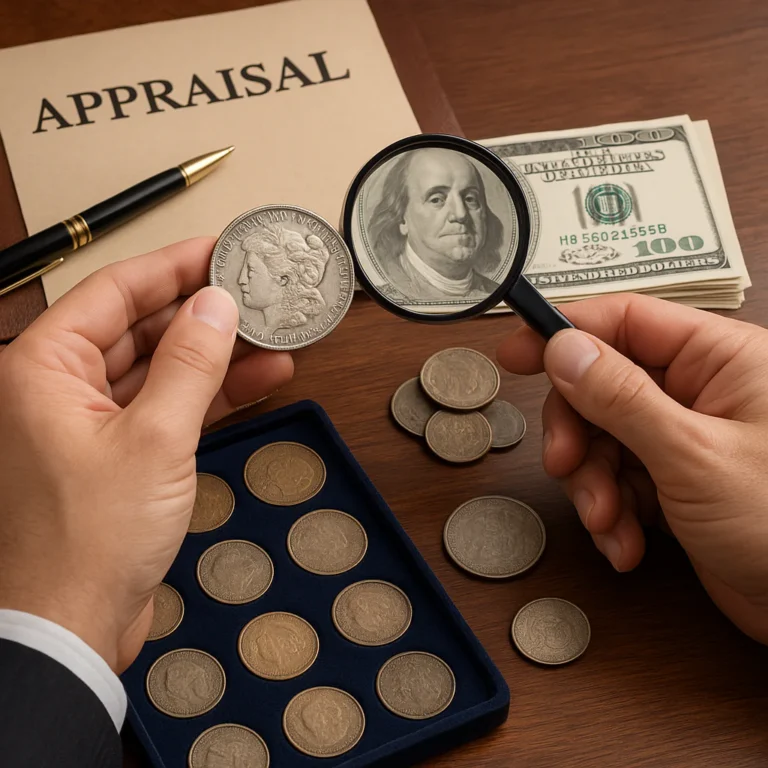
Start by identifying the date, mint mark, and design. Use a magnifying glass to check for errors. Then, compare your coin to images in the PCGS Photograde or NGC Coin Explorer. Finally, check recent auction results for similar coins. Remember, condition is everything!
Read more about “💰 How Much Is a US $20 Gold Coin Worth? (2026 Guide)”
What are the most valuable rare coins currently on the market?
The 193 Double Eagle, 1794 Flowing Hair Dollar, and 1804 Draped Bust Dollar are consistently the most valuable. In modern times, the 1909-S VDB and 195 Doubled Die are highly sought after.
Read more about “15 Must-Know Gold Coins to Collect & Invest in (2026) ✨”
Where can I get my rare coins appraised for free?
Many coin shows offer free appraisals by experts. Warwick & Warwick (in the UK) and similar firms in the US often provide free initial consultations. However, for a formal written appraisal (for insurance), there is usually a fee.
How does the condition of a coin affect its value?
Condition is the primary driver of value. A coin in Mint State (MS-65) can be worth 10 times more than the same coin in Good (G-4) condition. Even a slight difference in grade (e.g., MS-64 vs. MS-65) can result in a massive price jump.
Read more about “The 12 Rarest Gold Coins to Collect in 2026 — And Why They’re Priceless! 💰”
What mistakes should I avoid when selling rare coins?
- Cleaning your coins: This destroys value.
- Selling to a pawn shop: They offer low prices.
- Not getting it graded: Ungraded coins sell for less.
- Selling too quickly: Research the market first.
Read more about “🏛️ Is It Legal to Own Gold Coins? The 2026 Truth Revealed”
Are rare coins a good investment in the current economy?
Yes, rare coins are often seen as a safe haven asset, similar to gold. They tend to hold value during inflation. However, they are illiquid (hard to sell quickly) and require expertise. Diversify your portfolio!
How do I find a reputable coin dealer near me?
Look for members of the Professional Numismatists Guild (PNG) or the American Numismatic Association (ANA). Check reviews on Google and Better Business Bureau. Always ask for references.
What is the “1943 Bronze Penny” and why is it so valuable?
The 1943 Bronze Penny is a rare error where a copper planchet was used instead of the steel one required during WWII. Only a few exist, making them worth $10,0 to $1.7 million. If you find one, do not clean it and get it authenticated immediately!
How can I spot a “Doubled Die” error?
Look for doubling in the letters and numbers on the coin. The 195 Doubled Die Obverse shows clear doubling in “IN GOD WE TRUST” and the date. Use a magnifying glass or microscope to see the details.
What is the difference between “Rarity” and “Scarcity”?
Rarity refers to the total number of coins that exist. Scarcity refers to the number of coins available in a specific grade. A coin can be rare overall but common in low grades, or common overall but rare in high grades.
Read more about “12 Expert Coin Collecting Tips to Boost Your Collection in 2026 🪙”
📚 Reference Links
- PCGS: Professional Coin Grading Service
- NGC: Numismatic Guaranty Company
- Heritage Auctions: Heritage Coin Auctions
- Stack’s Bowers: Stack’s Bowers Galleries
- American Numismatic Association: ANA Official Site
- PCGS CoinFacts App: Download on Apple App Store
- Warwick & Warwick: Coin Valuation Services